
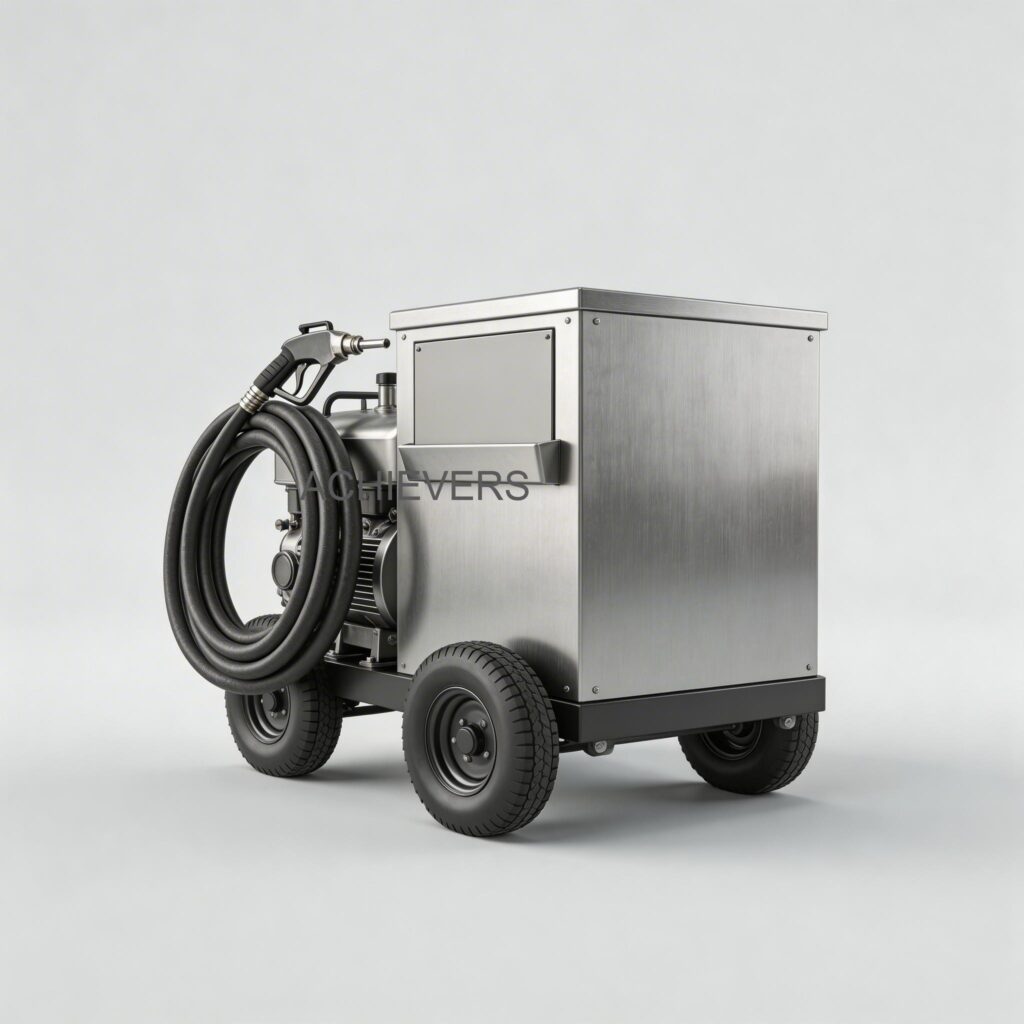
It is simply not economical to keep heavy equipment idle without refueling for any length of time. When excavators, cranes, or stationary generators run dry, the cost of downtime compounds by the minute. Driving this machinery across rugged terrain or busy public roads to reach a static petrol pump is often impossible, unsafe, or prohibitively expensive. This is exactly where a Mobile Diesel Dispenser becomes critical infrastructure. It allows your fuel supply to travel directly to the machinery, bridging the gap between bulk storage and the point of consumption.
However, when facility managers and procurement heads decide to buy mobile diesel dispenser for fleet refuelling, they are immediately faced with a crucial design choice: should they opt for a trolley-mounted unit or a skid-mounted system? While both configurations utilize the same high-accuracy metering and robust pumping internals, their physical frames dictate how they are deployed, transported, and maintained on-site. Making the wrong choice can lead to awkward logistics, increased physical strain on operators, and potential safety hazards on uneven terrain.
This comprehensive guide breaks down the mobile diesel dispenser trolley vs skid mounted comparison, helping global project managers and domestic buyers alike make an informed, budget-conscious decision. By analyzing mobility, footprint, application suitability, and total cost of ownership, we will clarify which design best serves your operational demands.
1. Overview of the Mobile Diesel Dispenser Family
A Mobile Diesel Dispenser is a compact, self-contained refueling unit designed to safely transfer diesel from a mobile or temporary tank into the fuel tank of operational machinery. Fabricated to eliminate unsafe, messy barrel refueling and strictly protect against theft and pilferage, these units act as the cash register for your fuel inventory.
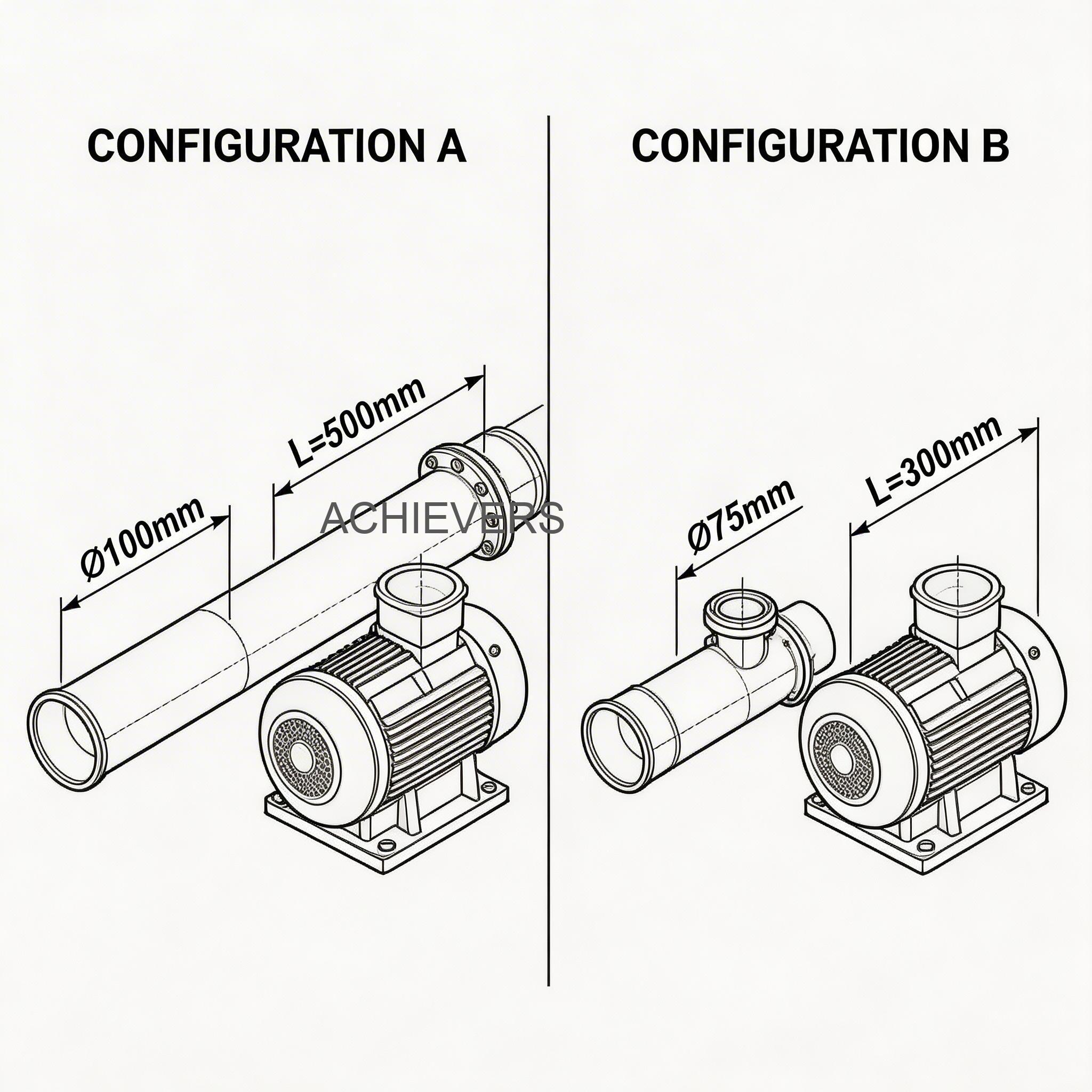
At the core of these machines is advanced engineering. Manufactured in Ahmedabad by Lumen Instruments, these units integrate a heavy-duty pump, a high-precision Diesel Flow Meter, heavy-duty hoses, and robust dispensing nozzles. The standard offering boasts a volumetric accuracy of +/- 0.2%, ensuring that every drop of diesel is accounted for, which is a vital metric when managing operating expenses.
While the internal mechanics remain consistent across the product line, the external architecture is tailored for specific deployment strategies. The two most dominant architectures in the industrial sector are:
- Trolley-Mounted Dispensers: Built onto a sturdy, two-wheeled or four-wheeled cart with an ergonomic handle. These are designed for manual mobility across relatively flat surfaces.
- Skid-Mounted Dispensers: Integrated into a flat, rigid metal base (a skid) that lacks wheels. These are designed to be lifted by forklifts or cranes and secured onto the flatbed of a pickup truck or lorry, transforming a standard vehicle into a dedicated fuel bowser.
In Simple Terms
Think of a trolley-mounted dispenser like a heavy-duty piece of wheeled luggage. A single worker can tilt it back and roll it across a warehouse floor or a paved yard to reach a machine. A skid-mounted dispenser, on the other hand, is like a shipping pallet. It has no wheels. You use a forklift to pick it up, place it in the back of a truck next to a diesel tank, and bolt it down so the truck can drive it to remote off-road sites.
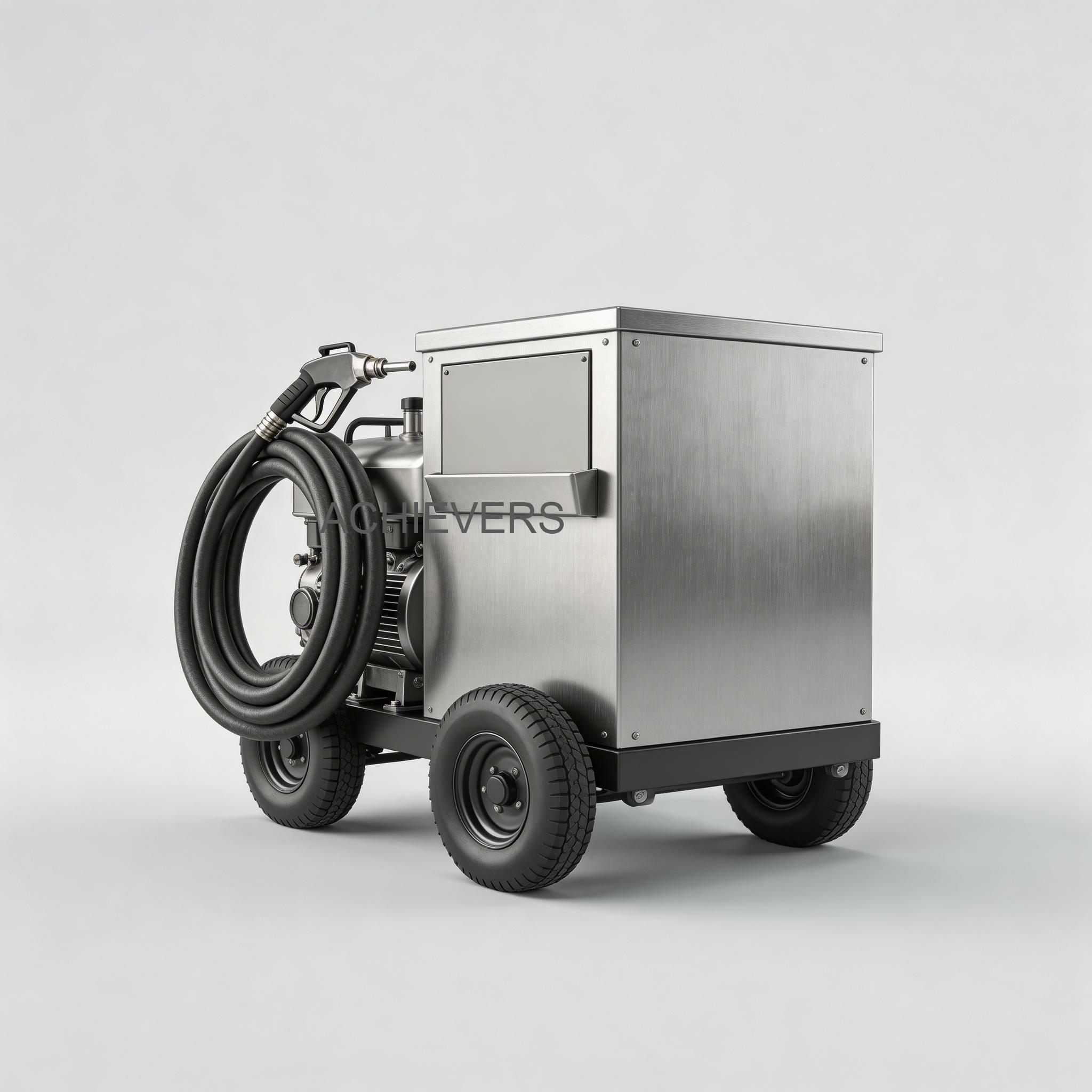
When evaluating a Mobile Diesel Dispenser in India manufacturer, or looking at export-grade equipment, buyers must recognize that both formats frequently utilize 12V DC or 24V DC Fuel Transfer Pumps. This allows the system to run directly off the vehicle’s battery or the battery of the machinery being refueled, making them entirely independent of the main electrical grid.
2. Head-to-Head Specification Comparison
To fully understand the mobile diesel dispenser specifications for industrial buyers, it is necessary to compare the engineering and operational parameters of both frames side-by-side. The table below outlines the core differences between standard trolley and skid configurations.
| Feature / Specification | Trolley-Mounted Dispenser | Skid-Mounted Dispenser |
| :— | :— | :— |
| Mobility Mechanism | Heavy-duty caster or pneumatic wheels for manual pushing/pulling. | Forklift pockets or crane lifting lugs for mechanized transport. |
| Primary Deployment | Floor-level operation. Rolled from a static tank to nearby machinery. | Vehicle-mounted. Bolted to a flatbed truck alongside a bulk tank. |
| Footprint & Profile | Taller, upright vertical profile to accommodate an ergonomic push handle. | Low, flat, horizontal profile to maintain a low center of gravity on vehicles. |
| Vibration Tolerance | Moderate. Designed for walking speeds across paved or semi-paved yards. | Extremely High. Built to endure constant shock and vibration on off-road vehicles. |
| Power Source Integration | 12V/24V DC battery clips (often connected to the receiving machine's battery) or 220V AC for indoor use. | 12V/24V DC, typically hardwired directly into the host truck’s electrical system. |
| Metering Accuracy | +/- 0.2% (Standard mechanical or digital preset variants). | +/- 0.2% (Standard mechanical or digital preset variants). |
| Hose Management | Often integrated with an external hook or a small, manual hose reel. | frequently equipped with heavy-duty, spring-retractable hose reels due to truck mounting. |
| Security & Theft Protection | Lockable nozzle boot; unit is typically rolled indoors at night for security. | Lockable nozzle boot; unit remains on the truck, often housed inside a lockable metal cabinet. |
| Installation Time | Zero. Ready to use out of the box. | 1 to 3 hours for bolting to flatbed and hardwiring to truck battery. |
3. Application Comparison Table
Selecting the right chassis configuration is rarely about which unit is inherently "better," but rather which unit is fundamentally suited to your site's physical environment. An excellent Mobile Diesel Dispenser supplier for exporters will always ask about the final application environment before recommending a build.
| Application Scenario | Recommended Option | Reason for Recommendation |
| :— | :— | :— |
| Deep-Pit Mining & Excavation | Skid-Mounted | Uneven, muddy terrain makes wheels useless. Skid mounts turn 4×4 trucks into mobile refuelers that can reach excavators anywhere. |
| Indoor GIDC Warehouses & Factories | Trolley-Mounted | Smooth concrete floors allow easy manual rolling. Electric forklifts and backup generators can be refueled quietly and efficiently. |
| Highway Construction Projects | Skid-Mounted | Roadwork spans kilometers. A skid bolted to a utility vehicle travels at highway speeds to service rollers and pavers along the route. |
| High-Volume Port Yards | Skid-Mounted | Ports cover massive acreage. Forklifts and reach stackers require rapid fueling from a dedicated, fast-moving service truck. |
| Static Fleet Parking Yards | Trolley-Mounted | Trucks park in a designated area. A trolley can be rolled from a central bulk tank to each truck parked in the immediate vicinity. |
| Remote Telecom Tower Generators | Skid-Mounted | Requires navigating steep, unpaved access roads. Skids are easily secured to the back of service jeeps. |
| Agriculture & Farming | Trolley-Mounted | Ideal for rolling out of a barn to refuel tractors parked in the immediate yard before they head into the fields. |
| Hazardous Areas (Zone 1/Zone 2) | Skid-Mounted (ATEX/PESO) | Stationary bolting allows for rigorous, permanent grounding and bonding to prevent static discharge in explosive atmospheres. |
4. Total Cost Comparison and Market Economics
When budgeting for this equipment, buyers must account for the initial capital expenditure, taxation, and long-term maintenance. As a proud participant in the Make in India initiative, Lumen Instruments manufactures robust systems in Gujarat that rival European imports at a fraction of the cost.
For domestic procurers, it is important to note the GST implications. Mobile Diesel Dispensers are classified under industrial machinery, typically attracting an 18% GST. The 'Typical Indian market price range' noted below gives a broad view of the capital required, though final export pricing will vary based on INCOTERMS, customization, and international compliance certifications (like ATEX or CE marks).
| Dispenser Configuration | Typical Indian Market Price Range (INR, Ex-Works) | Annual Maintenance Cost Estimate | Expected Operational Life | Best Suited For |
| :— | :— | :— | :— | :— |
| Standard 12V/24V Trolley | ₹45,000 – ₹65,000 + 18% GST | Low (Filters, occasional hose checks) | 7 to 10 Years | Small transport yards, workshops, agriculture. |
| Preset Trolley with Receipt Printer | ₹85,000 – ₹1,10,000 + 18% GST | Moderate (Printer paper, digital calibration) | 7 to 10 Years | Operations requiring strict fuel audits and printed slips. |
| Basic Skid-Mounted Unit | ₹40,000 – ₹60,000 + 18% GST | Low (Filter changes, bolt tightening) | 10+ Years | Conversion of existing flatbeds into basic fuel bowsers. |
| Heavy-Duty Skid with Auto Hose Reel | ₹75,000 – ₹1,20,000 + 18% GST | Moderate (Hose reel spring tensioning) | 10+ Years | Rugged mining, continuous remote construction use. |
Note: Prices are indicative and vary based on exact flow rates (e.g., 40 LPM vs 80 LPM), motor specifications, and raw material costs at the time of order.
5. Decision Guide: Which One for Your Plant?
Making a confident, technically sound buying decision requires looking beyond the spec sheet. Here are eight specific decision scenarios to help you finalize your procurement choice:
- You need to service a fast-moving, linear worksite (e.g., pipeline or road construction).
- Your facility features flat, paved concrete, and equipment comes to a central area.
- Theft and pilferage are severely impacting your profit margins.
- Your terrain consists of deep mud, loose gravel, and steep inclines.
- You frequently swap equipment between different service vehicles.
- You have limited capital and cannot dedicate a truck solely to fuel delivery.
- You operate in highly corrosive coastal environments or chemical plants.
- You require maximum flexibility for factory floor reorganizations.
Recommendation: Skid-Mounted. Your equipment is moving further away every day. A trolley cannot keep up. You need a skid bolted to a pickup truck that can drive 20 kilometers down the road to fuel the advance team.
Recommendation: Trolley-Mounted. If your buses, delivery vans, or forklifts return to a central depot at night, a single operator can roll a trolley between them efficiently without tying up a motorized vehicle.
Recommendation: Either, but must be a Preset model with a Receipt Printer. Regardless of the frame, you need a unit that requires authorized input. The receipt printer provides an immediate, tamper-proof paper trail of exactly how much fuel was dispensed, matching the +/- 0.2% accuracy of the meter.
Recommendation: Skid-Mounted. Wheels will sink in the mud. Pushing a 50kg to 80kg trolley (plus the weight of fuel in the hoses) through loose gravel is a massive ergonomic hazard for workers and can lead to workplace injuries.
Recommendation: Skid-Mounted. Because skids feature standard forklift pockets, you can unbolt the unit from Truck A and load it onto Truck B in under 20 minutes if a vehicle breaks down.
Recommendation: Trolley-Mounted. Skids generally require a host vehicle. If you do not have a spare flatbed, a trolley can be hooked up to a static intermediate bulk container (IBC) to create a highly effective, low-cost fueling station.
Recommendation: Skid-Mounted with Custom Coating. Skids generally have fewer moving parts (no axles, casters, or bearings) that can seize up due to salt-air corrosion. They can be heavily powder-coated and left secured on a truck.
Recommendation: Trolley-Mounted. In active manufacturing environments, floor layouts change. A trolley can be stored in a corner and moved out of the way instantly when heavy parts are being moved through the factory.
6. Standard Operating Procedure: 6 Steps to Commissioning Your Dispenser on Site
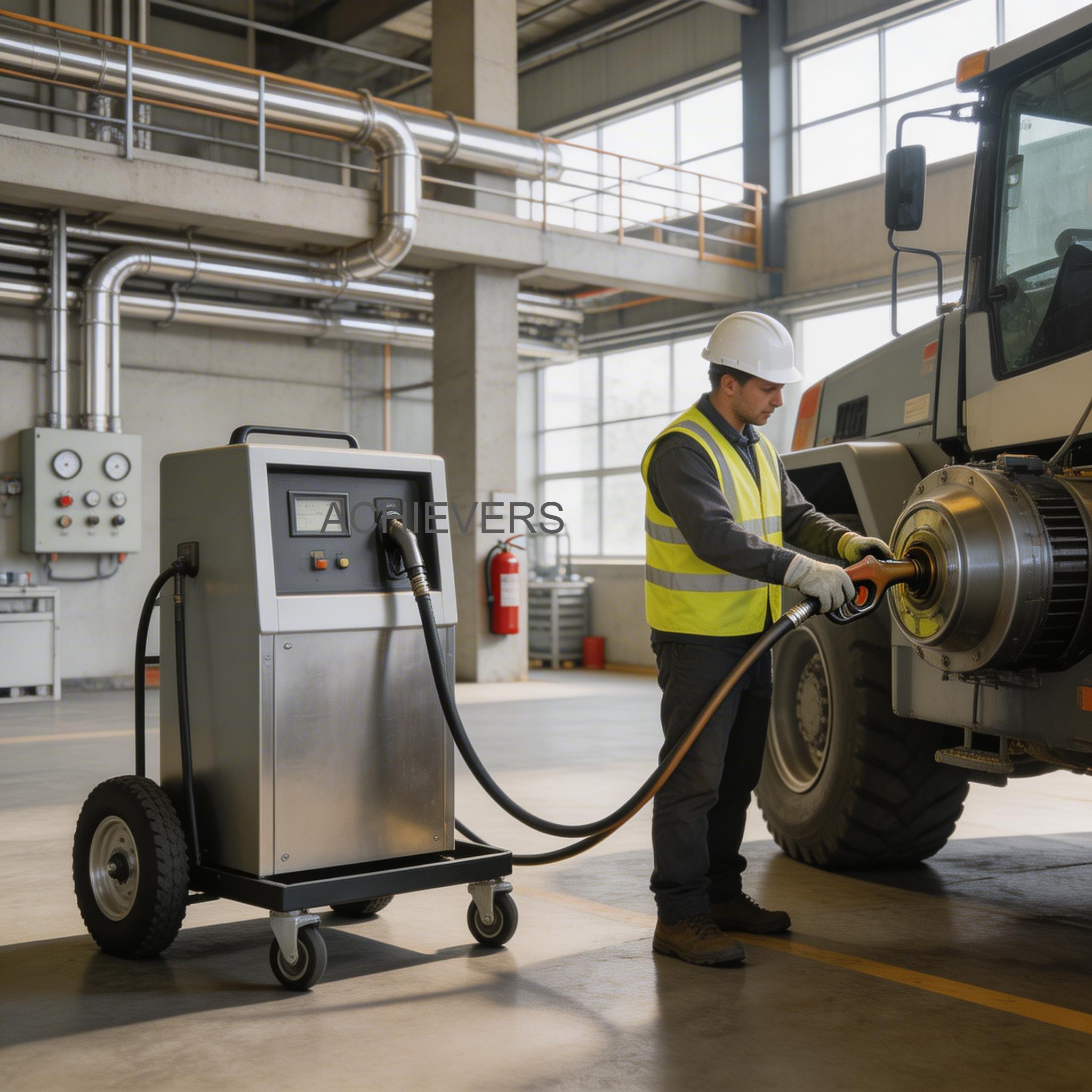
Proper installation and commissioning are crucial for safety, metering accuracy, and extending the life of the equipment. Whether you are operating in a local GIDC estate or an overseas mining operation, follow these steps when setting up your new fuel dispenser:
- Perform Physical Inspection and Unboxing:
- Determine and Secure the Mounting Location:
- Establish Proper Grounding and Bonding (Crucial Safety Step):
- Connect the Suction and Delivery Lines:
- Connect to the Power Supply:
- Prime the System and Calibrate:
Carefully remove the packaging. Inspect the pump casing, the digital or mechanical meter display, the delivery hose, and the auto-shutoff nozzle for any transit damage. For skid mounts, verify the integrity of the baseplate welds.
For Skids: Position the unit onto the vehicle flatbed using a forklift. Ensure it is placed as close to the mobile storage tank as possible to minimize suction line length. Bolt it securely using heavy-duty, vibration-resistant lock nuts.
For Trolleys: Ensure the wheels are lubricated, the brakes (if applicable) function correctly, and the unit rests stably on flat ground.
Diesel flowing through hoses generates static electricity. Connect the provided grounding wire from the dispenser frame to a known earth ground (or the chassis of the vehicle for skids) to safely dissipate static charges, complying with local fire safety and BIS/international norms.
Attach the reinforced suction hose from your bulk diesel tank to the pump inlet. Ensure all threaded connections are wrapped with fuel-rated PTFE tape to prevent air leaks, which can cause the pump to cavitate and damage the internal vanes.
For DC models (12V/24V), connect the color-coded alligator clips directly to a heavy-duty battery. Ensure the voltage matches the motor plate exactly. Connecting a 12V pump to a 24V battery will instantly burn out the motor.
Turn the pump on. Squeeze the nozzle into a certified calibration container to purge air from the lines. Once a steady flow is achieved, dispense exactly 10 or 20 liters. Check the dispenser’s meter against the container's markings. If there is a slight deviation, use the calibration screw on the meter to fine-tune the accuracy to the promised +/- 0.2%.
FAQ
Q: Can a 12V DC trolley dispenser run continuously all day?
A: No. DC motors, whether 12V or 24V, are generally designed with a duty cycle (typically 30 minutes ON, 30 minutes OFF) to prevent overheating. They are meant for intermittent fueling of equipment, not continuous bulk transfer.
Q: Does the +/- 0.2% accuracy change depending on whether I use a skid or a trolley?
A: No. The structural frame does not impact metering. Both designs utilize the identical high-precision flow meters internally. The accuracy depends purely on proper calibration and maintaining a clean fluid flow without air pockets.
Q: Is it difficult to export these units from India to international sites?
A: Not at all. As an experienced exporter, Lumen Instruments packages skid and trolley dispensers in custom, seaworthy wooden crates. The units are designed to meet global standards, and customized packaging ensures they arrive safely anywhere in the world.
Q: Can I use these dispensers for petrol or highly volatile chemicals?
A: Absolutely not. These units are specifically designed, sealed, and rated for diesel and light oils. Pumping petrol or aviation fuel requires completely different, explosion-proof ATEX/PESO certified equipment to prevent catastrophic fires.
Q: How often do I need to change the internal filters?
A: This depends heavily on the cleanliness of your bulk diesel. However, as a general rule in harsh industrial or dusty mining environments, you should inspect the strainer weekly and replace inline particulate filters every 3 to 6 months to protect the pump vanes and meter gears.
Q: Does the 18% GST apply if I am purchasing for an export project?
A: If the goods are being directly exported out of India, the supply can be treated as a zero-rated supply under GST laws (subject to proper documentation like a Letter of Undertaking). However, domestic buyers utilizing the equipment within India will incur the standard 18% GST on capital goods.
Q: Can the receipt printer data be integrated into my computer system?
A: Standard receipt printers provide a physical paper audit trail immediately on site. If you require PC integration, you will need to specify a digital preset meter with data management software or telematics capabilities, which is available as an advanced upgrade.
Ready to eliminate idle time and take absolute control of your fuel inventory? Contact Lumen Instruments today with your required flow rate, preferred voltage (12V/24V/220V), and your site’s specific operating conditions. Our engineers will help you select the perfect Mobile Diesel Dispenser to keep your fleet running smoothly and profitably.