
Diesel is one of the most significant operational expenses for Indian manufacturing plants, construction sites, logistics hubs, and mining operations. With commercial diesel prices hovering tightly around ₹90 to ₹100 per liter depending on your state, even a tiny 1% to 2% daily loss due to spillage, pilferage, or inaccurate manual measurement can bleed lakhs of rupees from your bottom line annually. Many plant managers at GIDC (Gujarat Industrial Development Corporation) estates and industrial parks across India hesitate to upgrade their fuel monitoring systems because they focus purely on the upfront purchase price. They view industrial flow meters as an expense rather than a high-return investment.
However, evaluating the total cost of ownership (TCO) and return on investment (ROI) tells a very different financial story. A budget-conscious buying decision does not mean buying the cheapest uncertified equipment; it means buying equipment that pays for itself the fastest while surviving harsh Indian site conditions—such as 45°C+ summer heat, heavy monsoon humidity, dusty environments, and contaminated fuel. This post breaks down the true financial impact of installing accurate measurement systems, from initial GST-inclusive costs to calibration, maintenance, and the rapid payback period achieved by stopping invisible fuel losses.
1. Product Overview and Cost Context
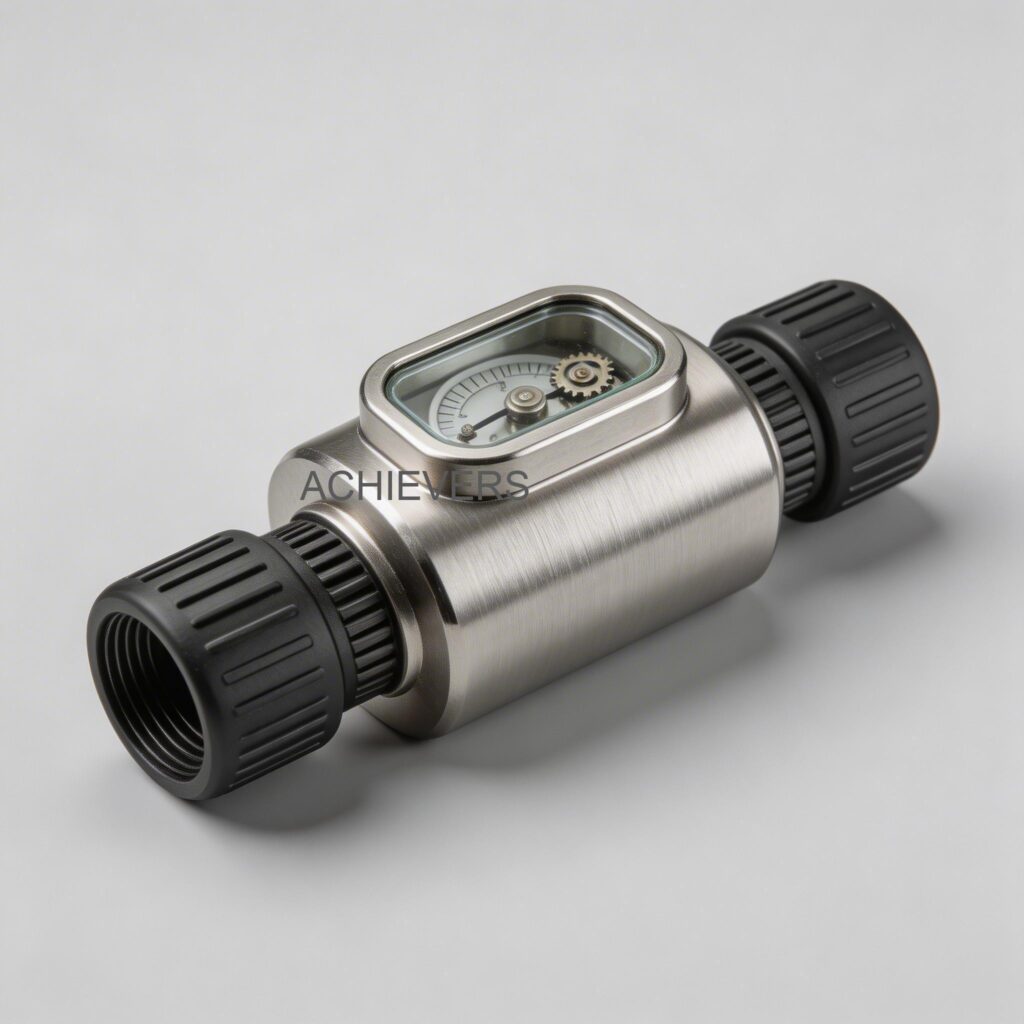
Before calculating costs, you need to understand the specifications of the equipment you are evaluating. The Fuel Flow Meters manufactured by Lumen Instruments are designed specifically to handle the reality of Indian industrial liquid transfer. Operating on a highly reliable turbine measuring system, these meters are primarily used for metering the exchange of diesel fuel and kerosene.
According to the official product specifications, these Fuel Flow Meters deliver a flow rate of 11 to 98 LPM (Liters Per Minute), making them perfectly sized for standard industrial dispensing and day-tank filling. They can handle a maximum pressure of 50 psi (3.4 bar). The physical construction is critical for ROI: they are made out of anodized aluminum, which prevents corrosion even in humid coastal areas of Gujarat or South India. The unit features a 1-inch inlet and outlet, which easily reduces down to a 3/4-inch connection using a standard reducer bushing, allowing for easy retrofit into your existing piping or end-of-hose dispensing setups.
Crucially for your financial calculations, these Fuel Flow Meters offer a +/- 1% accuracy rate and feature a five-digit LCD readout with a resettable totalizer. They can measure in Gallons, Liters, Quarts, and Pints. Backed by a one-year warranty, this combination of compact size, accurate digital display, and robust aluminum housing ensures that your measurement errors are minimized, directly translating to saved fuel and protected profits.
In Simple Terms: TCO (Total Cost of Ownership) means looking past the price tag. If a cheap meter costs ₹10,000 but miscounts your fuel by 5% every day, you will lose lakhs of rupees a year in "missing" diesel. A slightly better meter that stops that 5% loss effectively pays for itself in just a few weeks.
2. Total Cost of Ownership Breakdown
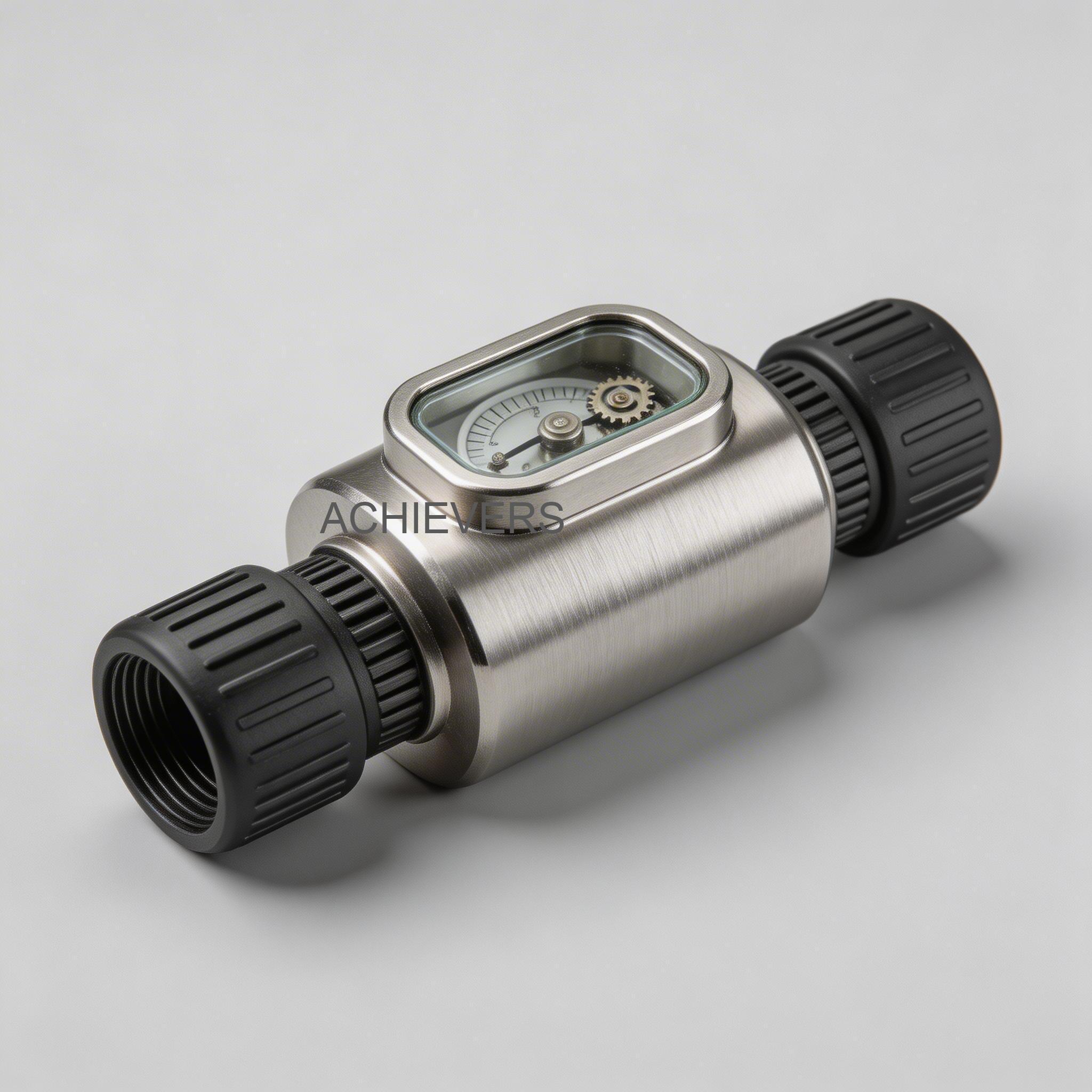
When budgeting for Fuel Flow Meters, Indian business owners must account for the complete lifecycle cost. A typical Indian market price range for a high-quality, digital turbine flow meter is roughly ₹15,000 to ₹35,000, depending on the exact material grade and capacity. However, the purchase price is only the beginning. You must also calculate installation, Legal Metrology Act compliance, and maintenance.
Below is a detailed TCO breakdown over a typical 5-year lifespan for a standard industrial diesel dispensing setup in India.
| Cost Component | Typical Range (INR) | Frequency | Notes |
| — | — | — | — |
| Upfront Purchase Price | ₹15,000 – ₹35,000 | Once | Capital expense for the meter and digital LCD unit. GST is typically 18%, which registered businesses can claim as Input Tax Credit (ITC). |
| Installation & Labor | ₹2,000 – ₹5,000 | Once | Local piping modifications. Includes attaching 1-inch to 3/4-inch reducer bushings and mounting inline or at the delivery hose. |
| Initial Calibration & Stamping | ₹1,500 – ₹4,000 | Once | Essential for Legal Metrology compliance if used for commercial custody transfer. Ensures the +/- 1% accuracy is verified. |
| Y-Strainer / Filtration Setup | ₹2,500 – ₹6,000 | Once | Indian diesel often contains dust and particulates. A pre-filter protects the turbine measuring system from damage. |
| Periodic Recalibration | ₹1,500 – ₹3,000 | Annually | Required to prevent accuracy drift caused by vibration and wear over time. |
| Consumables (Batteries/Seals) | ₹500 – ₹1,500 | Annually | The five-digit readout LCD requires battery replacements to maintain consistent performance. |
| Planned Maintenance (Downtime) | ₹2,000 – ₹4,000 | Annually | Cost of labor and 1-2 hours of dispensing downtime while the strainer is cleaned and the turbine is inspected. |
| Total Replacement Lifespan | ₹15,000 – ₹35,000 | Every 5-7 Years | Eventual replacement cost at the end of the product's mechanical lifecycle. |
Understanding these numbers allows procurement heads to accurately forecast budgets without being surprised by hidden maintenance costs. By investing in an anodized aluminum unit with a one-year warranty, your replacement frequency and maintenance downtime are significantly reduced compared to cheap plastic alternatives.
3. ROI Calculation: Real-World Indian Example
To understand the financial power of upgrading from manual dipsticks to digital Fuel Flow Meters, let us look at a realistic scenario for a medium-sized logistics company or a manufacturing plant utilizing diesel generators in a typical Indian industrial zone.
Here is a step-by-step ROI calculation based on real-world consumption:
- Establish Baseline Consumption: The facility consumes 1,000 liters of diesel per day to power heavy machinery, forklift trucks, and backup DG sets.
- Calculate Fuel Cost: At a local Gujarat price of approximately ₹92 per liter, the daily fuel expenditure is ₹92,000. Annual expenditure (assuming 300 working days) is roughly ₹2.76 Crores.
- Identify the Error Margin: Currently, the company uses manual dipsticks and visual checks, resulting in a known measurement error, spillage, and minor pilferage rate of 2.5%.
- Calculate Daily Financial Loss: 2.5% of 1,000 liters is 25 liters lost per day. At ₹92 per liter, the company is losing ₹2,300 every single day to inaccurate measurement.
- Determine the Solution Cost: The company purchases a high-quality turbine flow meter. With the unit cost, installation, strainer, and calibration, the total upfront investment is roughly ₹28,000.
- Factor in GST Benefits: Assuming an 18% GST rate on the equipment, the registered business claims the Input Tax Credit (ITC), effectively reducing the net cash impact of the purchase. Furthermore, the asset qualifies for depreciation under the Income Tax Act.
- Calculate the New Accuracy Savings: The new meter boasts a +/- 1% accuracy. The error margin drops from 2.5% down to a maximum of 1%. The daily lost volume is reduced from 25 liters to just 10 liters. The company is now saving 15 liters (₹1,380) per day.
- Determine the Payback Period: Divide the total investment (₹28,000) by the daily savings (₹1,380). The payback period is exactly 20.2 days.
Within less than one month, the meter has completely paid for itself. For the remaining 4 to 5 years of its operational lifespan, that ₹1,380 saved every single day goes directly to the company's bottom line—yielding over ₹4 Lakhs in pure annual savings.
4. Cost Comparison: Available Approaches
Plant managers often weigh different measurement technologies. Understanding the cost versus reliability of each method is crucial for a Make in India manufacturing environment.
| Approach | Upfront Cost | Annual Maintenance Cost | Accuracy | Reliability / Best For |
| — | — | — | — | — |
| Manual Dipstick/Level | ₹500 – ₹2,000 | Minimal | Poor (+/- 3% to 5%) | High human error. Only suitable for rough estimates in small, non-critical static tanks. |
| Basic Mechanical Meter | ₹8,000 – ₹15,000 | ₹2,000 | Moderate (+/- 2%) | Budget-friendly but lacks digital precision. Good for very basic, low-volume fuel transfer. |
| Digital Turbine Meter | ₹15,000 – ₹35,000 | ₹2,500 | High (+/- 1%) | Best overall ROI for SMEs. Five-digit resettable LCD makes auditing easy. Ideal for daily diesel dispensing and day tanks. |
| Coriolis Mass Flow | ₹1,50,000+ | ₹10,000+ | Extremely High (0.1%) | Extremely expensive. Best reserved for high-volume petrochemical custody transfer where every drop equals thousands of rupees. |
For the vast majority of small and medium Indian businesses, the digital turbine system hits the perfect sweet spot. It provides high precision without the exorbitant upfront capital required for Coriolis or heavy-duty positive displacement meters. If you are also moving fuel from barrels to tanks, pairing this meter with robust Fuel Transfer Pumps ensures a highly efficient, closed-loop handling system.
5. Hidden Costs to Budget For
While the ROI calculation is highly favorable, experienced Indian engineers know that site conditions can introduce hidden costs. Ignoring these can stall your project or lead to premature equipment failure. When deploying Fuel Flow Meters for diesel dispensing, budget for these six specific factors:
- Fuel Contamination and Pre-Filtration: Indian diesel can sometimes carry dirt, rust from old storage tanks, or water condensation during the monsoon. Turbine measuring systems rely on freely spinning rotors. If a solid particle jams the turbine, you face downtime. Always budget for an inline Y-strainer or fuel filter placed before the meter's inlet.
- Legal Metrology and BIS Certification: If you are selling fuel or conducting custody transfer where money changes hands based on the meter reading, your meter must be stamped and certified by the local Weights and Measures department (Legal Metrology Act). Budget for initial stamping fees and annual renewal costs.
- Plumbing Modifications: The meter comes with a 1-inch inlet and outlet, with a reducer bushing down to 3/4 inch. However, if your existing Diesel Dispensing pipeline uses 1.5-inch or 2-inch pipes, you will need to pay for fabrication, welding, and specific flange adapters to step down the pipeline size accurately without causing excessive backpressure.
- Power Conditioning and Battery Management: Digital readouts rely on consistent power. While LCD models often run on internal batteries, ensure you factor in the cost of high-quality industrial batteries. Heat degrades batteries faster; in an Ahmedabad summer, you may need to replace them annually rather than bi-annually.
- Air Elimination: If your pump sucks in air (due to an empty tank or a leak in the suction line), the meter will count the air passing through the turbine as fuel. This inflates your totalizer reading. Budgeting for an air eliminator valve upstream of the meter is a smart move for high-accuracy applications.
- Operator Training: An accurate meter is useless if the operator bypasses it or forgets to use the resettable totalizer correctly. Budget time and minor resources to train your floor staff on reading the five-digit display, logging the daily totals, and recognizing when flow rates drop (which usually indicates a clogged filter).
6. How to Justify the Purchase to Management
Procurement heads often face resistance from management when asking for capital to upgrade existing equipment. "If the old mechanical meter sort of works, why spend ₹25,000 on a new one?" is a common question. Here are the exact steps to build an unshakeable business case for your Indian SME:
- Conduct a Baseline Audit: Do not guess your losses. For one week, measure your fuel receipt against your actual machine consumption output. Prove that there is a discrepancy (usually 2% to 4%) between what you pay for and what you use.
- Quantify the Financial Bleed: Translate that percentage into INR. Management responds to rupees, not percentages. Show them that 20 liters lost a day equals ₹50,000+ lost a month.
- Present the Exact Solution: Propose the specific digital turbine meter. Highlight its +/- 1% accuracy, its durable anodized aluminum body suited for local conditions, and its ability to handle 11-98 LPM securely.
- Showcase the Rapid Payback Period: Use the ROI calculation from Section 3. Explain that the upfront cost is a one-time CAPEX that will pay for itself in less than 30 days, generating pure savings thereafter.
- Highlight Compliance and GST Benefits: Remind management that purchasing from a legitimate Indian manufacturer allows the company to claim 18% GST Input Tax Credit. Emphasize that having a precise five-digit readout makes internal audits and ISO compliance much easier.
- Focus on Accountability: Explain that a digital resettable totalizer removes human error and prevents internal pilferage. When operators know every liter is tracked digitally, fuel theft organically drops to zero.
FAQ
Q: Will this meter work if our diesel contains dirt or rust from old tanks?
A: The turbine measuring system requires relatively clean fuel to maintain its +/- 1% accuracy. You must install a Y-strainer or an inline filter before the meter's inlet to catch particulates; otherwise, debris can jam the turbine blades.
Q: Can I install this meter directly onto my delivery hose?
A: Yes. The unit is designed for versatile installation. It can be installed directly inline within your rigid piping network, or it can be mounted at the end of a flexible delivery hose right before the dispensing nozzle.
Q: How do I handle the piping connection if my current pipe is not 1 inch?
A: The meter features a standard 1-inch inlet and outlet. However, it comes designed to reduce down to a 3/4-inch connection using a reducer bushing. If your pipes are larger, local plumbers can easily fit standard MS or SS reducers to match your line.
Q: Do I need continuous electricity to run the digital display?
A: No. The five-digit LCD readout operates on internal batteries, making it highly suitable for remote Indian sites, mining areas, or construction sites where grid power is unreliable or fluctuating.
Q: How often does the meter need to be calibrated?
A: For general internal use, calibrating once a year is standard practice. However, if your operation involves heavy continuous vibration or you are using it for commercial billing, checking the calibration every 6 months ensures the +/- 1% accuracy remains intact.
Q: Does it handle high-pressure pumping systems?
A: The meter is rated for a maximum pressure of 50 psi (3.4 bar). This is more than sufficient for standard diesel transfer pumps and gravity-fed systems. If your system exceeds 50 psi, you will need a pressure reducing valve upstream.
Q: What happens if water gets mixed into our diesel during the monsoons?
A: The anodized aluminum body prevents internal rusting, but water passing through will be measured as fluid volume. To ensure you are only measuring fuel, you should install a water-separating filter upstream of the flow meter.
Are you ready to stop invisible fuel losses and bring strict accountability to your plant's fuel consumption? Contact Lumen Instruments today to get a precise quote on our industrial fuel measurement solutions. Please share your required flow rate, application details, and site conditions so our technical team in Ahmedabad can recommend the exact configuration and accessories you need to guarantee a rapid ROI.