
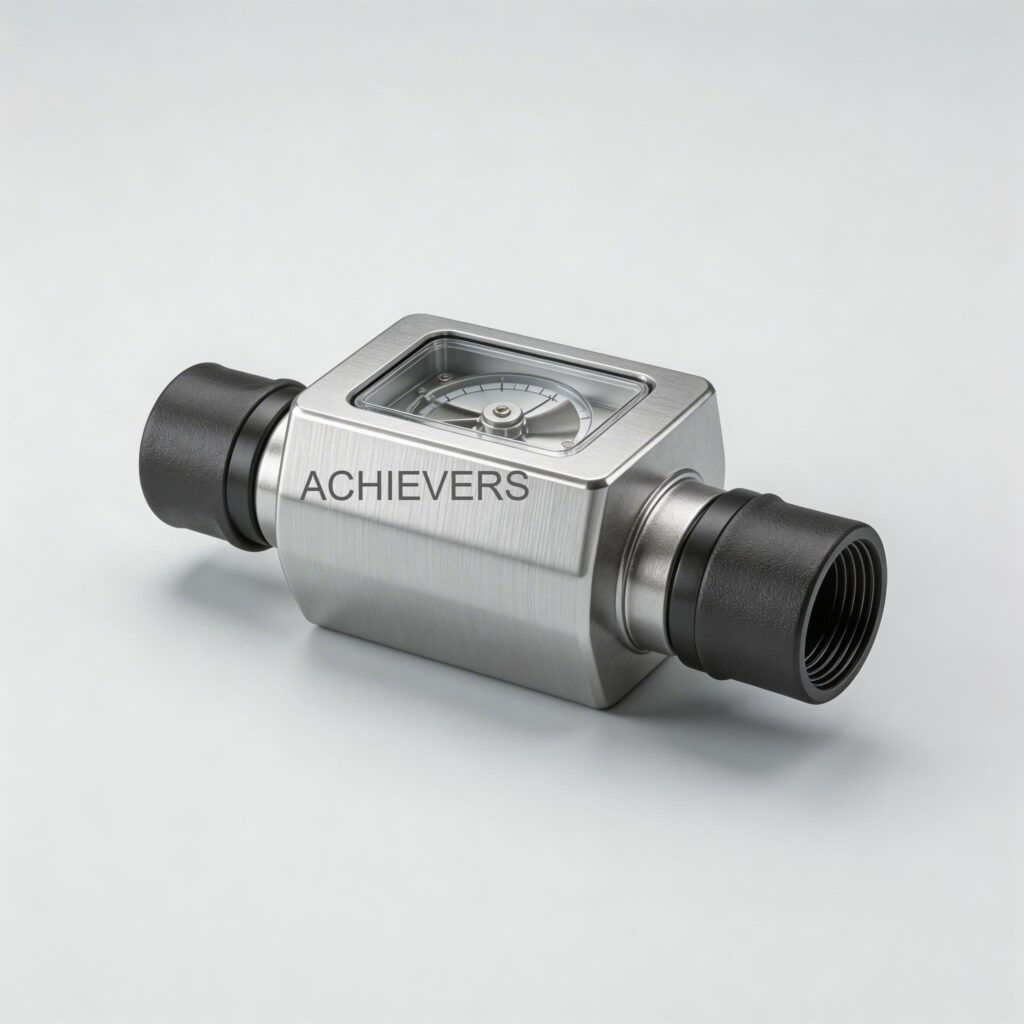
Selecting the correct flow measurement technology for your fluid transfer systems is one of the most critical decisions an industrial plant manager or procurement engineer can make. Whether you are managing custody transfer at a sprawling petrochemical complex, outfitting mobile refueling trucks, or monitoring diesel consumption for backup power generation, the financial stakes are high. Inaccurate measurement leads to unaccounted fuel loss, while selecting a meter with the wrong viscosity or pressure tolerance can result in catastrophic line blockages, pump failure, and excessive maintenance downtime. This guide resolves the frequent confusion buyers experience when choosing Fuel Flow Meters by directly comparing the three most prevalent technologies: turbine, positive displacement (PD), and oval gear meters.
For engineers and buyers operating within India's booming manufacturing sectors—such as those based in GIDC estates across Gujarat—or global project managers importing under the Make in India initiative, evaluating these options requires a blend of technical scrutiny and commercial awareness. You need a solution that balances international engineering standards (like ISO, CE, and API specifications) with practical budget considerations, local GST implications, and long-term spare parts availability. As an established export quality fuel flow meters supplier based in Ahmedabad, Lumen Instruments manufactures robust metering solutions designed to perform under extreme temperature fluctuations, corrosive chemical environments, and high-demand industrial workflows. This comparison will equip you to make a confident, technically accurate, and budget-conscious purchasing decision for your fuel transfer lines.
1. Overview of Fuel Flow Meters Family
Before diving into head-to-head performance metrics, it is vital to understand the fundamental mechanical differences between the primary types of Fuel Flow Meters available in the market. Fluid measurement is broadly categorized into velocity-based and volumetric-based measurement, and each approach dictates the physical design, maintenance schedule, and fluid compatibility of the meter.
Turbine Flow Meters (Velocity-Based Measurement)
A turbine meter operates by placing a multi-bladed rotor directly in the path of the fluid stream. As the fuel or diesel passes through the meter body, the kinetic energy of the fluid causes the turbine blades to rotate. The rotational speed of the rotor is directly proportional to the velocity of the fluid passing through the known cross-sectional area of the meter. A magnetic pickup sensor detects the passing of the blades and translates this into an electrical pulse or a digital readout.
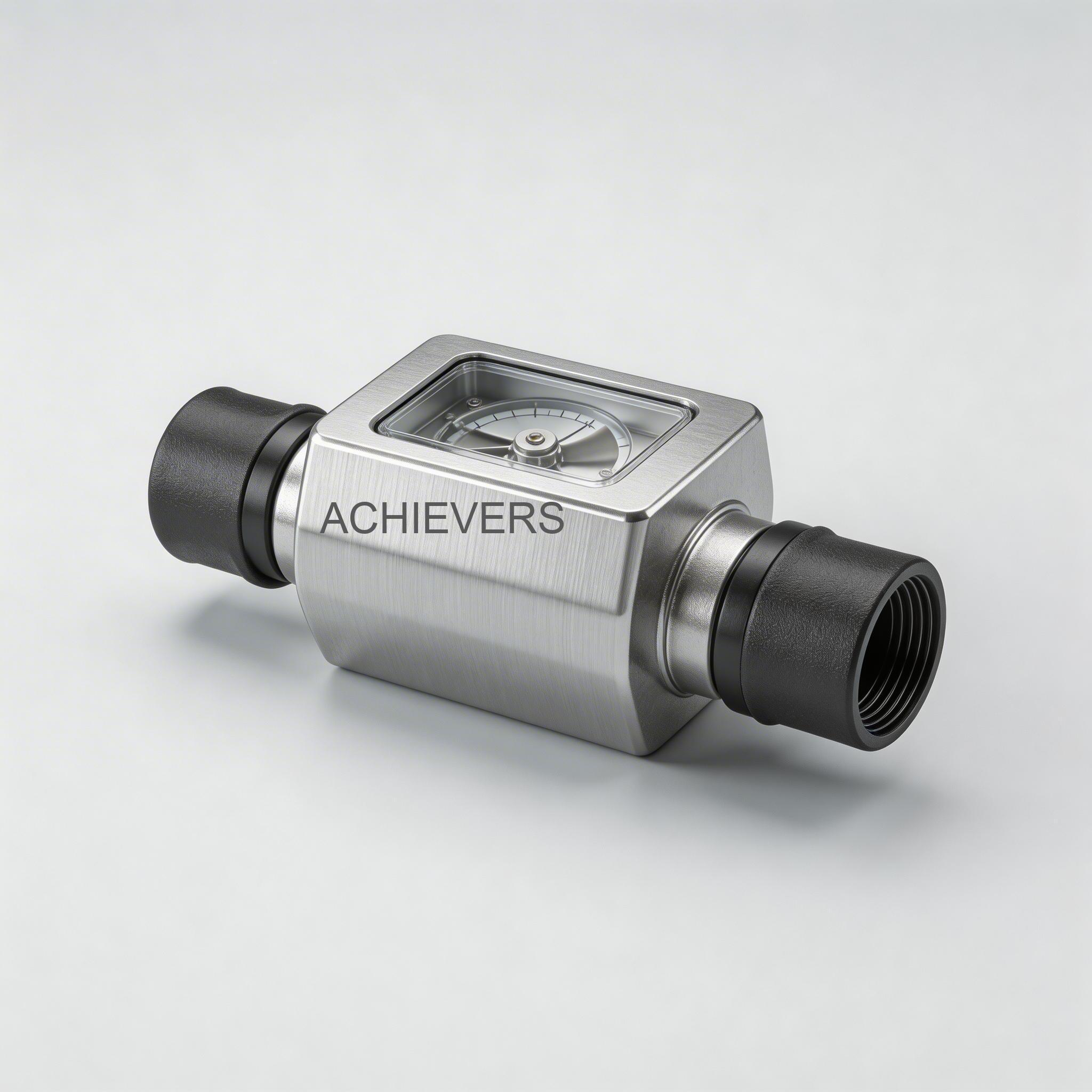
Lumen Instruments’ base Fuel Flow Meters utilizing this technology are crafted from rugged, lightweight anodized aluminum. They feature a precision turbine measuring system capable of handling flow rates from 11 to 98 Liters Per Minute (LPM) operating safely at maximum pressures up to 50 psi (3.4 bar). Engineered with a 1-inch inlet and outlet (which easily reduces to 3/4 inch using an included reducer bushing), these meters provide a highly legible five-digit LCD readout with a resettable totalizer. Because turbine meters rely on velocity, they are incredibly efficient for low-viscosity fluids like diesel, kerosene, and water, offering +/- 1% accuracy when installed with the correct upstream straight-pipe runs to eliminate fluid turbulence.
Positive Displacement (PD) Meters (Volumetric Measurement)
Unlike turbine meters that measure fluid speed, positive displacement flow meters measure the actual volume of the fluid. They do this by dividing the continuous fluid stream into discrete, known volumetric segments, trapping the fluid mechanically, and passing it from the inlet to the outlet. Every mechanical rotation corresponds to a precise volume of liquid. PD meters are exceptionally accurate and do not require straight pipe runs because fluid turbulence does not affect the measurement of trapped volume. They are the go-to standard for custody transfer applications and highly viscous fluids like heavy bunker fuels or heavy lubricating oils.
Oval Gear Meters (A Sub-Type of PD Measurement)
Oval gear meters are a highly popular subset of positive displacement technology. Inside the measuring chamber, two synchronized oval-shaped gears rotate as fluid passes through. The gear rotation traps discrete pockets of fuel between the gears and the outer casing. Because of their tight internal clearances, oval gear meters provide exceptional accuracy and repeatability. They are virtually immune to changes in fluid viscosity and temperature variations, making them ideal for fluctuating industrial environments. However, these tight clearances also mean the fluid must be exceptionally clean; particulate matter can easily jam the gears, necessitating high-quality upstream filtration.
In Simple Terms
Imagine you need to measure the number of people entering a factory.
A Turbine Meter works like a turnstile that spins as people walk through it; if they walk too slowly or the crowd is too dense (thick liquid), it might not spin accurately. It's fast, affordable, and great for light liquids like diesel.
A Positive Displacement (or Oval Gear) Meter works like an elevator that only holds exactly 10 people at a time. It fills up, goes to the next floor, empties, and comes back. It doesn't care how fast people walk or how heavy they are—it just counts exactly 10 people per trip. It is highly accurate for thick, heavy oils but costs more and gets jammed easily if dirt gets in the mechanism.
2. Head-to-Head Specification Comparison
To determine the correct technology for your industrial fuel transfer line, plant managers must evaluate exactly how each meter reacts to varying flow rates, pressures, and fluid properties. The table below compares the specifications of Lumen Instruments' standard digital turbine Fuel Flow Meters against typical industrial Positive Displacement and Oval Gear configurations.
| Feature / Specification | Turbine Measuring System (Lumen HTML Spec) | Positive Displacement (Rotary Vane / Nutating Disc) | Oval Gear Technology |
| :— | :— | :— | :— |
| Measurement Principle | Velocity (Kinetic Energy) | Volumetric | Volumetric (Gear Displacement) |
| Flow Rate Range | 11 – 98 LPM (Liters Per Minute) | 15 – 300+ LPM (Model Dependent) | 5 – 500+ LPM (Model Dependent) |
| Max Operating Pressure | 50 psi (3.4 bar) | 150 psi (10 bar) and up | High pressure capable (up to 400 bar for some) |
| Accuracy Standard | +/- 1% | +/- 0.2% to +/- 0.5% | +/- 0.5% |
| Viscosity Tolerance | Low (Diesel, Kerosene, Water) | High (Heavy oils, Bitumen) | Very High (Resins, Polymers, Lube oils) |
| Housing Material | Anodized Aluminum | Cast Iron, Carbon Steel, Stainless Steel | Aluminum, Stainless Steel |
| Display & Totalizer | Five-Digit LCD with Resettable Totalizer | Mechanical Register or Digital | Digital Pulse / LCD |
| Port Sizing | 1 in. Inlet/Outlet (Reduces to 3/4 in.) | 1 in. up to 6+ in. Flanged | 1/2 in. up to 4+ in. Threaded/Flanged |
| Pressure Drop | Very Low | Moderate | High (especially with thick fluids) |
| Installation Requirement | Requires straight pipe run (e.g., 10x diameter upstream) | No straight pipe run needed | No straight pipe run needed |
| Filtration Sensitivity | Moderate (Standard strainer required) | High (Vulnerable to wear from grit) | Very High (Tight clearances jam easily) |
When running a turbine vs positive displacement fuel flow meters comparison, the most glaring operational difference is pressure drop and viscosity tolerance. Turbine meters excel in low-viscosity environments like diesel dispensing because they introduce very little resistance (pressure drop) into the line. If you are using standard Fuel Transfer Pumps, a turbine meter will not overwork your pump motor. Conversely, oval gear and PD meters force the fluid to do mechanical work to push the gears, creating a higher pressure drop, but providing unparalleled accuracy across varying temperatures.
3. Application Comparison Table
Selecting the right Fuel Flow Meters depends entirely on where and how the meter is deployed. From dusty mining operations to highly controlled pharmaceutical HVAC environments, different applications demand different technological strengths.
| Application Scenario | Recommended Option | Reason for Recommendation |
| :— | :— | :— |
| High Viscosity Fluids (Heavy lube oils, bunker C) | Oval Gear / PD | Volumetric measurement is unaffected by fluid thickness; no slippage occurs. |
| Corrosive Chemical Environments | Oval Gear (Stainless) | Can be machined from 316SS with PTFE seals; tight clearances prevent internal degradation. |
| Standard Diesel Dispensing / Day Tanks | Turbine Meter | Cost-effective, low pressure drop (50 psi max), highly accurate (+/- 1%) for light fuels. |
| Hazardous Areas (ATEX / Explosive Zones) | Mechanical PD | Mechanical registers require no electricity, ensuring intrinsic safety in explosive vapor zones. |
| Custody Transfer / Financial Transactions | Positive Displacement | Offers +/- 0.2% accuracy; legal metrology compliance often requires volumetric precision. |
| Mobile Fueling Trucks / Bowsers | Turbine Meter | Lightweight anodized aluminum, compact, insensitive to vibration during transit. |
| Low Space / Tight Pipe Bends | Oval Gear / PD | Does not require 10x-15x straight pipe diameters upstream to condition flow. |
| High Flow Gravity Unloading | Turbine Meter | Very low restriction allows maximum flow rate via gravity without pump assistance. |
4. Total Cost Comparison
Procurement teams must look beyond the initial purchase price to understand the Total Cost of Ownership (TCO). For domestic buyers operating in Indian industrial corridors or managing MSME plant operations, budgets must account for 18% GST, freight, and long-term maintenance costs. As a domestic manufacturer in Ahmedabad, Lumen Instruments eliminates the massive import duties and prolonged lead times associated with European or American brands, while still delivering export quality fuel flow meters suitable for rigorous API and ISO applications.
Note: The purchase ranges below are indicative of the typical Indian market price range for industrial-grade meters in a 1-inch to 2-inch pipe size category, inclusive of standard 18% GST. Prices scale significantly for larger line sizes or exotic materials.
| Metering Option | Purchase Range (INR, GST-inclusive cost) | Annual Maintenance Cost & Effort | Expected Operational Life | Best For |
| :— | :— | :— | :— | :— |
| Lumen Digital Turbine Meter (Anodized Aluminum) | ₹8,500 – ₹15,000 | Low. Occasional rotor inspection and battery replacement for LCD. | 5 – 8 Years (depending on fluid cleanliness) | Budget-conscious plant managers, diesel generator sets, basic dispensing lines. |
| Standard Rotary Vane Positive Displacement Meter | ₹25,000 – ₹60,000 | Moderate. Vanes require periodic replacement due to mechanical friction wear. | 10 – 15 Years | Fleet operators, custody transfer, high-volume depots. |
| High-Precision Oval Gear Meter (Stainless/Aluminum) | ₹35,000 – ₹85,000+ | High. Requires strict filter maintenance. Re-calibration needed if gears wear. | 10 – 20+ Years | Chemical processing, high-viscosity lubricants, remote automation systems. |
By manufacturing these components domestically, buyers benefit from the Make in India initiative, ensuring that spare parts—such as replacement turbine rotors, LCD circuit boards, or reducer bushings—are dispatched from Gujarat within 24–48 hours, keeping plant downtime to an absolute minimum.
5. Decision Guide: Which One for Your Plant?
Making the final call to buy fuel flow meters for manufacturers requires aligning fluid properties, site conditions, and budget. Use the following 8-step decision scenarios to identify exactly which meter configuration fits your specific plant environment.
- Scenario: Pumping Standard Diesel to a Boiler Day Tank
- Recommendation: Lumen Digital Turbine Meter.
- Reasoning: Diesel has a low kinematic viscosity. The turbine's 11 – 98 LPM flow range and 50 psi threshold perfectly match standard diesel transfer pumps. The lightweight anodized aluminum construction prevents rust, and the 5-digit LCD makes daily logging effortless for operators.
- Scenario: Dispensing Heavy Engine Oil in an Automotive Assembly Plant
- Recommendation: Oval Gear Meter.
- Reasoning: Motor oil's viscosity changes dramatically with factory temperature. A turbine meter would lose accuracy as the oil thickens in winter. An oval gear meter traps exact volumes, ensuring perfect dispensing regardless of ambient temperature.
- Scenario: Installing a Meter Immediately After a 90-Degree Pipe Elbow
- Recommendation: Positive Displacement / Oval Gear Meter.
- Reasoning: Pipe elbows cause massive fluid turbulence (swirls and eddies). Turbine meters require a conditioned, laminar flow (usually 10 to 15 pipe diameters of straight run upstream) to read accurately. PD meters are immune to flow profile disturbances and can be bolted directly after a bend.
- Scenario: Setting Up a Mobile Diesel Transfer Bowser on a Construction Site
- Recommendation: Turbine Meter.
- Reasoning: Mobile units experience heavy vibration and shock. The simple, single-moving-part design of a turbine meter is more rugged against mechanical shock than the tight, heavy internal gears of a PD meter. Furthermore, it can be easily installed either in-line or at the end of the delivery hose.
- Scenario: Selling Fuel to Third Parties (Custody Transfer)
- Recommendation: Positive Displacement Meter with Air Eliminator.
- Reasoning: When money changes hands, regulatory bodies (like Legal Metrology or global Weights and Measures organizations) mandate ultra-high accuracy (+/- 0.2%). PD meters are certifiable for financial transactions, whereas the +/- 1% accuracy of a standard turbine is better suited for internal plant inventory tracking.
- Scenario: Upgrading a Plant Using Only Gravity Feed from an Overhead Storage Tank
- Recommendation: Turbine Meter.
- Reasoning: Oval gear and PD meters cause significant pressure drop; a gravity-fed line might not have enough head pressure to force the gears to turn. A low-friction turbine meter allows the fluid to flow freely without creating a bottleneck.
- Scenario: Metering Dirty, Unfiltered Waste Oil
- Recommendation: Neither. You must install a pre-filter.
- Reasoning: No meter survives dirty fluid. Dirt will jam an oval gear meter instantly and will erode the blades of a turbine meter, destroying its calibration. Always install a Y-strainer or basket strainer upstream. If forced, a robust rotary vane PD meter with high tolerances can handle slight particulates better than tight-clearance gears.
- Scenario: Retrofitting an Old 3/4-inch Pipeline
- Recommendation: Lumen Digital Turbine Meter with Reducer.
- Reasoning: The Lumen turbine meter features a standard 1-inch inlet and outlet but comes engineered to reduce down to 3/4 inch utilizing an included reducer bushing. This saves the cost of buying external pipe fittings and welding new flanges.
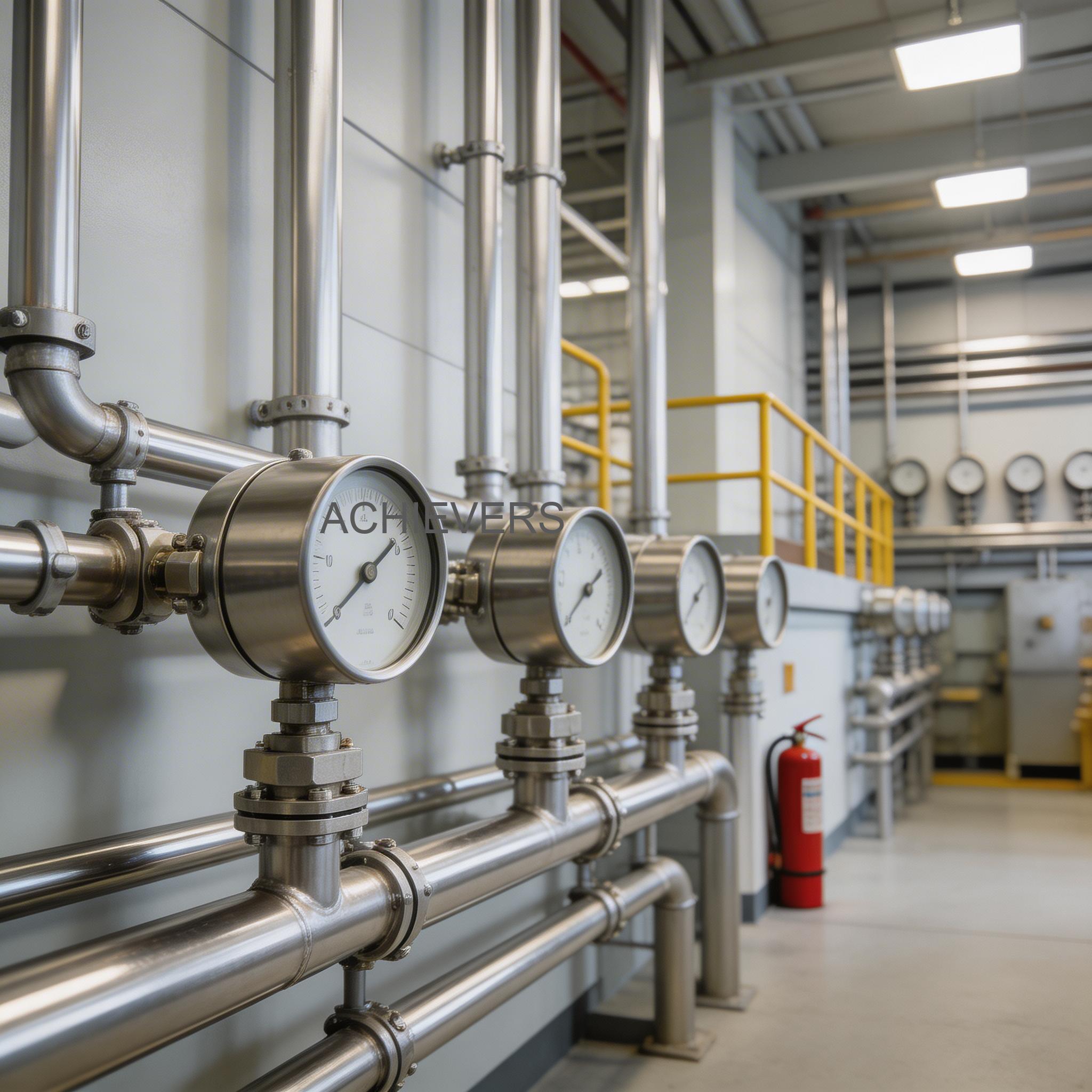
When selecting industrial fuel flow meters for diesel transfer specifications, engineers must prioritize reliability. A meter that stops working shuts down the whole line. The beauty of working with an experienced manufacturer like Lumen Instruments is the ability to customize your packaging and coordinate shipment efficiently by road or cargo, ensuring your project timelines are met whether you are outfitting a single generator or an entire petrochemical facility.
FAQ
Q: Can I use the Lumen Turbine Meter for petrol or highly flammable solvents?
A: Standard digital turbine meters with battery-operated LCDs are typically designed for diesel, kerosene, and light oils. For highly volatile fluids like petrol (gasoline) or aviation fuel, you must ensure the meter holds the necessary ATEX or explosive-proof certifications for hazardous environments to prevent spark risks.
Q: Why does my turbine meter read inaccurately when I first turn on the pump?
A: This is known as "air in the line." If the pipe is empty, the pump pushes a blast of air through the meter before the liquid arrives. Air spins the turbine blades incredibly fast, causing the meter to register ghost volume. To fix this, ensure the pipe remains flooded, or install an air eliminator upstream.
Q: How frequently should industrial Fuel Flow Meters be calibrated?
A: For internal plant monitoring (like feeding a boiler), an annual calibration check is sufficient. However, if the fluid is abrasive or if the meter operates continuously for multiple shifts, check calibration every 6 months. For custody transfer, calibration intervals are dictated by local legal metrology laws.
Q: Do I need a filter before the meter?
A: Absolutely. Regardless of whether you choose turbine, PD, or oval gear technology, an upstream strainer is mandatory. For turbine meters, a 40 to 80 mesh strainer is recommended to protect the rotor bearings from welding slag, rust, or debris.
Q: Can the 5-digit LCD display be read in bright outdoor sunlight or dark plant basements?
A: The digital readouts on anodized aluminum turbine meters are high-contrast LCDs. They are clearly visible in outdoor daylight. For completely dark environments, you may need a model with a backlit display, or external plant lighting will be required.
Q: How does the Make in India initiative benefit my purchase from an Ahmedabad manufacturer?
A: Purchasing from an Indian manufacturer eliminates exorbitant import tariffs and international shipping delays. You get transparent, GST-inclusive pricing, the capability to pay via local modes (DD, cheque, online, cash), and most importantly, rapid access to spare parts and technical support directly from the factory.
Q: What is the maximum pressure the standard aluminum turbine meter can handle?
A: The standard Lumen aluminum turbine meter is rated for 50 psi (approx. 3.4 bar). If your system runs a high-pressure pump exceeding this limit, you must specify a high-pressure model (often constructed of stainless steel) to prevent housing rupture or seal failure.
Equipping your facility with the correct fluid measurement technology guarantees operational efficiency and protects your bottom line from unaccounted inventory losses. If you are ready to upgrade your fuel transfer lines, contact Lumen Instruments today with your required flow rate (LPM), fluid type, operating pressure, and site conditions. Our technical team in Ahmedabad will help you select the perfect, export-quality metering solution tailored to your exact industrial specifications.