
Every drop of diesel wasted or unaccounted for eats directly into your operating margins. In the Indian industrial landscape, where diesel prices heavily impact overheads and fuel pilferage remains a stark reality, relying on guesswork for generator consumption, tanker unloading, or fleet fueling is a costly mistake. For plant managers and procurement heads operating in places like Gujarat Industrial Development Corporation (GIDC) estates or construction sites across India, accurate fuel tracking is not just an operational need—it is a financial imperative tied directly to your profitability and GST input reconciliations.
This buyer's guide is designed to help Indian industrial procurement teams, fleet operators, and facility managers select the perfect flow measurement equipment. By matching technical specifications like accuracy, flow range, and installation type to the harsh realities of Indian site conditions—dust, extreme summer heat, monsoon humidity, and inconsistent power supplies—you can make a confident, budget-conscious decision. We will walk you through everything from basic principles to typical pricing and common buying mistakes.
1. What Is Diesel Flow Meter and What Does It Do
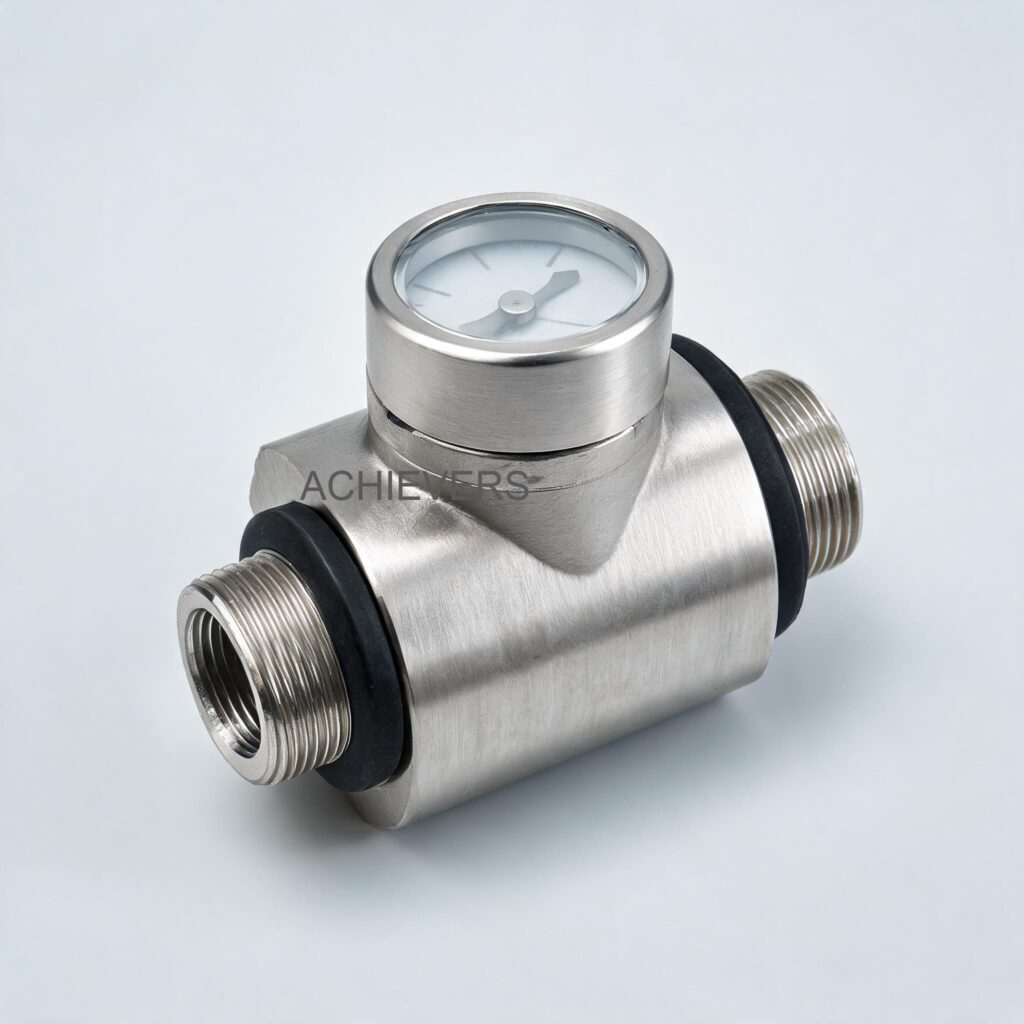
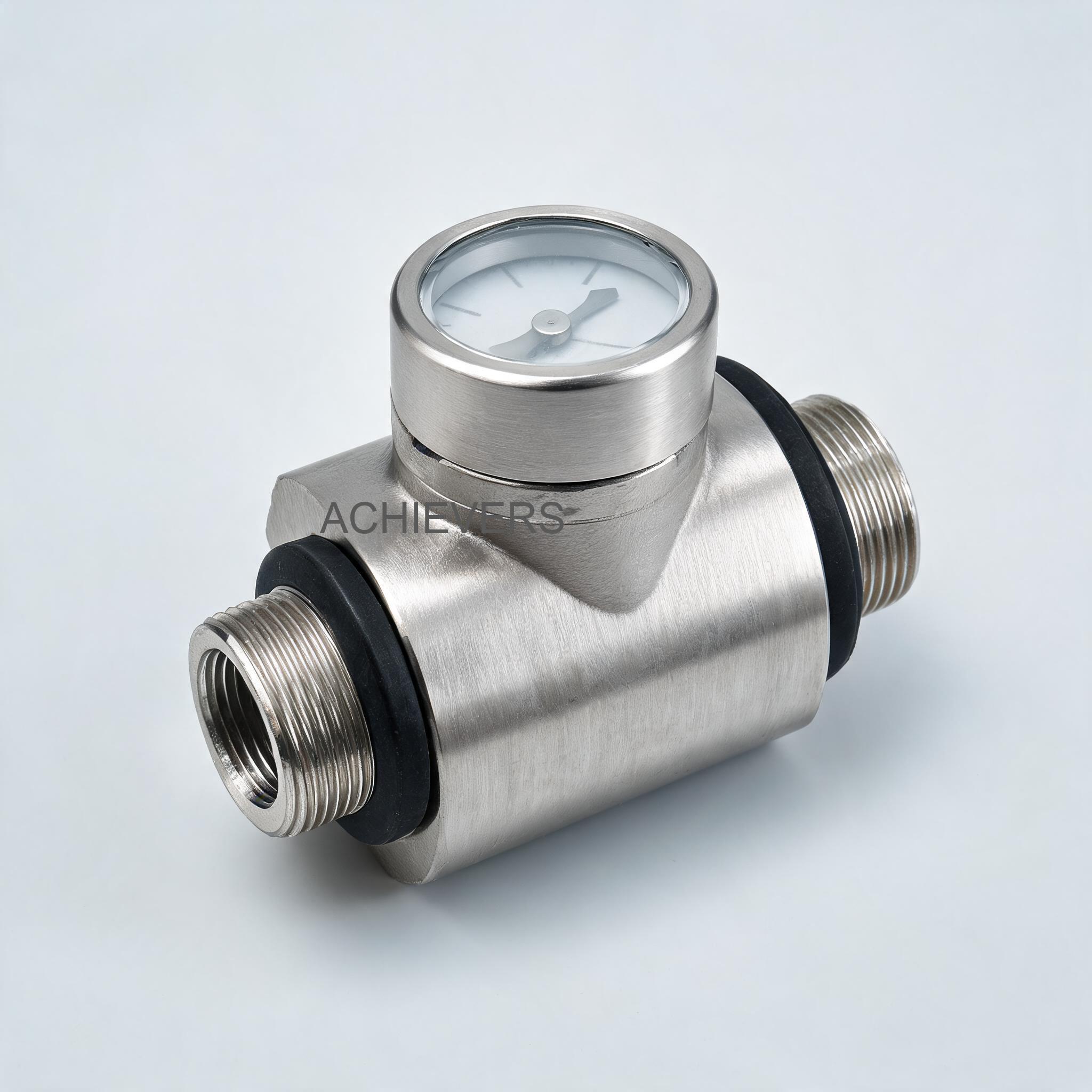
A Diesel Flow Meter is a highly precise mechanical or digital instrument installed in fuel lines to measure the exact volume of diesel passing through it. At Lumen Instruments, our meters operate on the positive displacement oval gear principle. This means the internal measurement chamber contains two precisely machined elliptical gears that mesh together.
As liquid flows into the meter, the pressure of the fluid forces these gears to rotate. Because the clearance between the gears and the outer casing is practically zero, every rotation of the gears pushes a highly specific, fixed volume of liquid through the meter. By counting these rotations (either mechanically or via digital sensors), the meter calculates the exact cumulative volume and the instantaneous flow rate of the fuel.
One of the greatest advantages of this oval gear design is its extremely low pressure drop. The bottom rotor has no rotating torque when affected by liquid pressure, but the driving gears rotate smoothly. This makes the Diesel Flow Meter exceptionally well-suited for gravity-fed applications—such as a rooftop storage tank feeding a ground-level backup generator—where line pressure is minimal.
In Simple Terms
Think of an oval gear flow meter like a revolving door at a busy mall. Just as the revolving door only lets a specific number of people through with each turn, the internal gears of the flow meter only let a fixed, precise amount of diesel pass through with every rotation. By simply counting how many times the "door" spins, the meter knows exactly how many liters of diesel have gone into your tank or generator.
Below is the technical specification table for the positive displacement oval gear Diesel Flow Meter, showing exactly what these units are capable of handling on the factory floor.
| Specification | Value | Application Note |
| :— | :— | :— |
| Accuracy | +/- 0.5% | Ensures highly reliable billing and internal auditing. |
| Repeatability | 0.03% | Exceptional consistency across multiple batch transfers. |
| Max Viscosity | 1000 CPS | Easily handles diesel, biodiesel, kerosene, and MTO. |
| Working Principle | Positive Displacement (Oval Gear) | Highly accurate; unaffected by changes in fluid viscosity. |
| Standard Flow Ranges | 20 LPM to 300 LPM | Covers everything from small DG sets to bulk tanker unloading. |
| Pressure Tolerance | Up to 3.4 MPA (on 1-inch model) | Withstands high-pressure transfer lines without leaking. |
2. Key Selection Criteria for Indian Industrial Buyers
Choosing the right equipment requires looking beyond the brochure and considering the actual environment where the equipment will operate. The Make in India initiative has empowered local manufacturers in Ahmedabad and across Gujarat to build robust, BIS-aligned products tailored specifically for domestic site conditions.
Here are the vital selection criteria you must evaluate:
Flow Rate Matching
Your flow meter must align with the capacity of your existing transfer system. If you install a 1-inch meter (max 120 LPM) on a high-speed tanker unloading line pumping at 250 LPM, the restriction will create severe backpressure, potentially damaging your Fuel Transfer Pumps and blowing out the meter's seals. Conversely, putting a massive 2-inch meter on a slow, gravity-fed 15 LPM line will result in gears not turning smoothly, leading to inaccurate readings. Always match the meter's "Min/Max Flow" capabilities to your actual operational flow rate.
Accuracy and Repeatability Needs
For internal transfers—like moving fuel from a main underground tank to a day tank—standard industrial accuracy is usually sufficient. However, if you are measuring fuel consumption to calculate the per-unit power cost of a heavy diesel generator, or dispensing fuel to a transport fleet where every drop impacts your bottom line, you need the +/- 0.5% accuracy and 0.03% repeatability offered by precision oval gear meters.
Indian Site Conditions and Build Quality
Industrial sites in India present unique challenges. In Rajasthan or Gujarat, summer ambient temperatures frequently cross 45 degrees Celsius, while monsoon seasons in coastal areas introduce extreme humidity. Mining sites in Odisha or construction sites in Maharashtra involve heavy dust and vibration. You need a flow meter with a rugged casing (often cast iron or high-grade aluminum) and robust sealing to prevent dust ingress and moisture-related corrosion.
Display Options: Digital vs. Mechanical
Power quality issues and voltage fluctuations are common in many Indian industrial zones. A mechanical display requires absolutely no external power, making it incredibly reliable for remote sites, mining camps, or areas with frequent blackouts. A digital display, however, offers easier reading, batch control features, and output signals (like 4-20mA or pulse) that can integrate with your PLC, SCADA, or fleet management software. If you choose digital, ensure the power supply is robust or battery-backed.
Typical Indian Market Price Range and Budgeting
Budgeting accurately is crucial for SME procurement. The typical Indian market price range for a high-quality, industrial-grade diesel flow meter is between ₹18,000 to ₹65,000+, depending heavily on the line size (1 inch vs. 2 inch), the material of construction, and whether you opt for basic mechanical registers or advanced digital displays with ticket printers. Always evaluate the GST-inclusive cost (usually an 18% GST slab for industrial measuring instruments) to calculate your final landed cost. Furthermore, purchasing from local Indian manufacturers ensures you get GST input tax credit seamlessly.
Calibration and Maintenance Accessibility
Indian diesel is sometimes prone to contamination, adulteration, or high sulfur and particulate content, depending on the transport chain. Your meter will eventually require cleaning and recalibration. Choosing an imported brand might mean waiting weeks for spares. Buying from an established Indian manufacturer ensures immediate access to replacement gears, seals, and local calibration services, keeping your downtime to an absolute minimum.
3. Model and Variant Comparison
To help plant engineers and buyers select the right fit, here is a direct comparison of the standard sizes available. Notice how the pressure tolerance changes as the pipe diameter increases.
| Model Size | Min Flow Rate | Max Flow Rate | Max Pressure | Best Suited Application in Indian Industries |
| :— | :— | :— | :— | :— |
| 1 Inch | 20 LPM | 120 LPM | 3.4 MPA | Backup generators, small fleet fueling, mobile bowsers, gravity feed day-tanks. |
| 1 1/2 Inch | 25 LPM | 250 LPM | 1.8 MPA | Medium transport fleets, earthmoving equipment refueling, transferring between plant storage tanks. |
| 2 Inch | 30 LPM | 300 LPM | 1.8 MPA | Bulk tanker truck unloading, large-scale depot transfers, high-volume marine fueling. |
Note: All models maintain an accuracy of +/- 0.5%, repeatability of 0.03%, and can handle fluid viscosity up to 1000 CPS.
4. Common Mistakes Indian Buyers Make When Choosing
Even experienced plant engineers occasionally overlook crucial integration details when ordering flow measurement devices. Avoid these common pitfalls to ensure long-term reliability and precise accounting.
- Skipping the Y-Strainer Installation
- Using Water Meters for Diesel
- Ignoring Minimum Flow Rates in Gravity Systems
- Overlooking Print/Ticketing Requirements
- Forgetting Legal Metrology and PESO Certifications
The biggest enemy of a positive displacement meter is solid debris. Rust from old MS (Mild Steel) storage tanks, dirt introduced during tanker unloading, or general fuel contamination can jam the precise oval gears. Failing to install a fine-mesh Y-strainer immediately upstream of the flow meter will void your warranty and cause catastrophic failure.
In an attempt to save money, some contractors install cheap rotary water meters on diesel lines. Diesel has a different specific gravity, viscosity, and chemical composition than water. The rubber seals inside a water meter will quickly swell, degrade, and leak when exposed to petrochemicals, leading to hazardous spills and highly inaccurate readings.
Buyers often purchase a large 2-inch meter thinking "bigger is better." However, if your gravity-fed line only produces a flow of 15 Liters Per Minute, the fluid pressure won't be sufficient to smoothly engage the large gears of a 2-inch meter (which has a minimum rating of 30 LPM). The fluid will bypass the gears, resulting in under-registration and massive fuel accounting losses.
If your facility requires a hard-copy audit trail for shift handovers, fleet fueling, or driver accountability, buying a standard meter without a ticket printer is a mistake. Retrofitting a printer later is expensive and complicated. Specify a "Print Flow Meter With Ticket Printer" at the time of initial purchase.
If you are using the meter for commercial custody transfer (selling fuel to third parties), the equipment must comply with the Indian Legal Metrology Act and PESO (Petroleum and Explosives Safety Organisation) regulations. Using uncertified, cheap imported meters for commercial billing can lead to severe legal penalties and sealing of your equipment by local weight and measure inspectors.
5. Enquiry Specification Checklist
To ensure fast, accurate quotations from your supplier and eliminate technical mismatches, follow this 8-step numbered procedure when preparing your purchase enquiry.
- Identify the Exact Fluid: Clearly state that the fluid is High-Speed Diesel (HSD), Biodiesel, MTO, or Kerosene. This confirms the viscosity (CPS) compatibility.
- Determine Flow Rates: Note down both your normal operating flow rate and your maximum possible flow rate in Liters Per Minute (LPM).
- Specify Line Size and Connection: State the pipe diameter (e.g., 1", 1.5", or 2") and the required connection type, such as Flange Type or Threaded (BSP/NPT).
- Confirm Operating Pressure: Record the maximum pressure your pump or gravity system will generate. Ensure it falls safely under the meter's limit (e.g., 1.8 MPA or 3.4 MPA).
- Choose the Display Type: Specify whether you need a Mechanical Display (no power required) or a Digital Display.
- Define Accuracy Needs: Request the standard +/- 0.5% accuracy for industrial transfers, and state if you need official calibration certificates.
- Select Additional Features: Explicitly mention if you need a Ticket Printer, pulse output for SCADA integration, or integration with Diesel Dispensing equipment.
- Provide Site Conditions: Briefly describe the installation environment (e.g., "Outdoor installation in Rajasthan, dusty environment, max temp 48°C") so the manufacturer can suggest appropriate weatherproofing enclosures.
FAQ
Q: Can this meter handle the low pressure of a gravity-fed tank?
A: Yes. The oval gear positive displacement design causes a very low pressure drop. The bottom rotor moves freely, allowing gravity-fed systems to pass fluid through accurately, provided the flow rate meets the meter's minimum LPM requirement.
Q: Do I need external electricity to operate this flow meter?
A: It depends on the model you select. The mechanical variant operates entirely on the kinetic energy of the flowing fluid and requires zero electricity. The digital variants require a stable power supply or battery to run the electronic display and output signals.
Q: How often does the meter require calibration in Indian conditions?
A: For internal accounting, checking calibration once a year is standard practice. However, if your site processes highly contaminated fuel or experiences massive temperature swings, a 6-month verification check is recommended to maintain the +/- 0.5% accuracy.
Q: Is it suitable for measuring fuel consumption in large diesel generators?
A: Absolutely. These meters are widely used across Indian power, telecom, and manufacturing sectors to accurately track DG set fuel consumption, helping plant managers calculate precise per-unit electricity generation costs.
Q: What happens if water or dirt enters the meter?
A: Solid dirt or rust will jam the precisely machined oval gears, causing the system to lock up. This is why a Y-strainer must always be installed upstream. While minor water contamination will pass through, prolonged exposure to hard water can cause internal corrosion, so fuel quality must be managed.
Q: Can I use the same meter for both Kerosene and Diesel?
A: Yes. Because these oval gear meters handle a maximum viscosity of up to 1000 CPS and are relatively unaffected by minor changes in fluid viscosity, they are highly suitable for diesel, kerosene, petrol, and MTO transfers.
Q: Are spare parts easily available locally in India?
A: Yes. Because these units are manufactured in our ultramodern facility in Ahmedabad, Gujarat, replacement gears, seals, and display units are readily available without the long lead times or high import duties associated with foreign brands.
Ready to secure your fuel lines and eliminate accounting discrepancies? Contact Lumen Instruments today with your required flow rate, pipe size, and application details. Our engineering team in Ahmedabad is ready to help you select the most robust, cost-effective measurement solution tailored to your specific industrial site conditions.