
When managing an industrial facility, an active logistics fleet, or a manufacturing plant, every drop of diesel, petrol, or chemical transferred represents hard cash. Many plant managers and business owners strictly monitor bulk fuel purchases but completely ignore the final point of delivery: the nozzle. A cheap, manual nozzle might seem like a cost-effective choice upfront, but it is a silent drain on your operational budget. Through daily spillage, overfilling, premature equipment failure, and safety hazards, substandard refuelling equipment rapidly inflates your operational costs.
For small to medium industrial businesses, particularly those operating in heavy-duty environments like the Gujarat Industrial Development Corporation (GIDC) estates or similar industrial hubs across India, optimizing fuel transfer is critical. Diesel prices heavily impact the bottom line, and relying on outdated dispensing methods is no longer viable. This detailed analysis will help you understand the Total Cost of Ownership (TCO) of upgrading to a high-quality, automatic shut-off nozzle. We will quantify exactly how this equipment pays for itself by reducing spillage, eliminating downtime, and outlasting cheap alternatives in real-world industrial conditions.
1. Product Overview and Cost Context
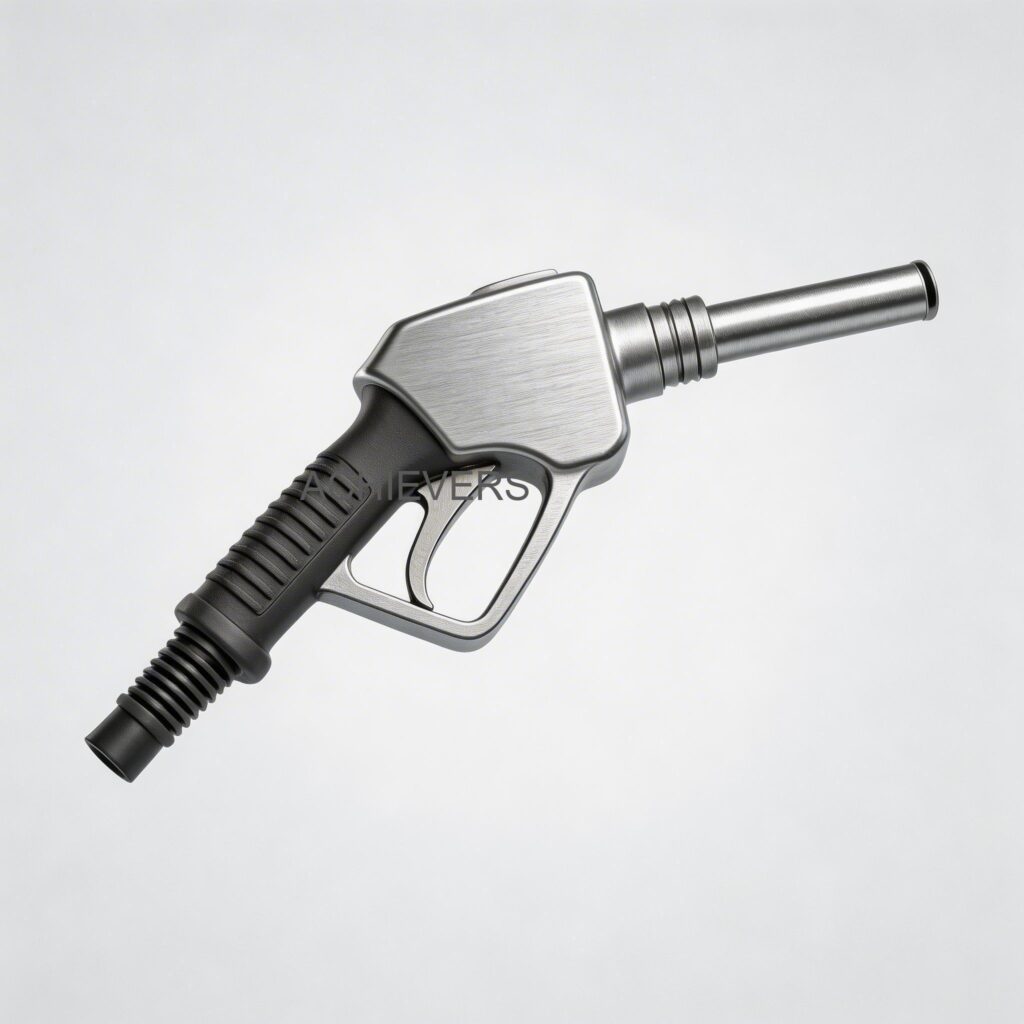
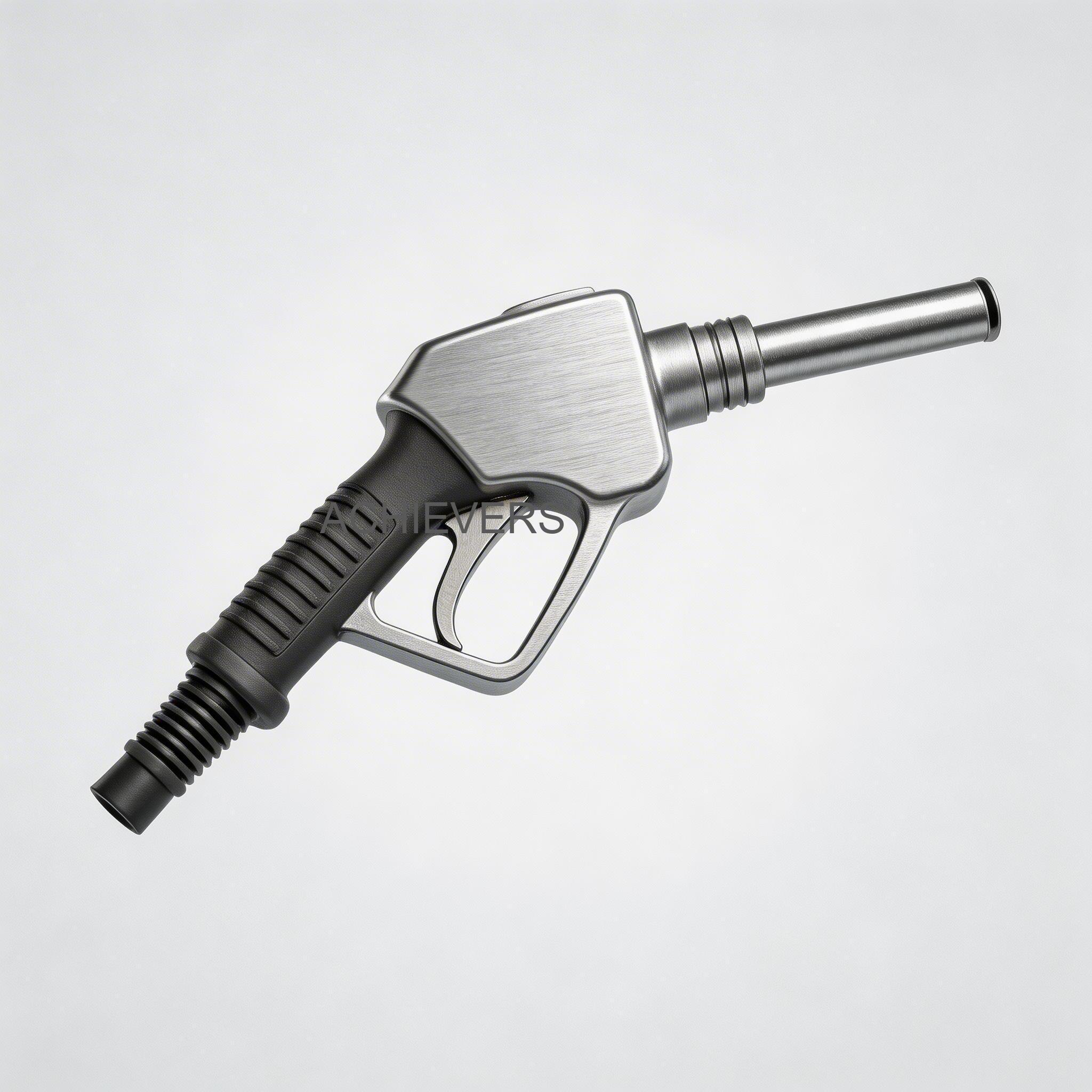
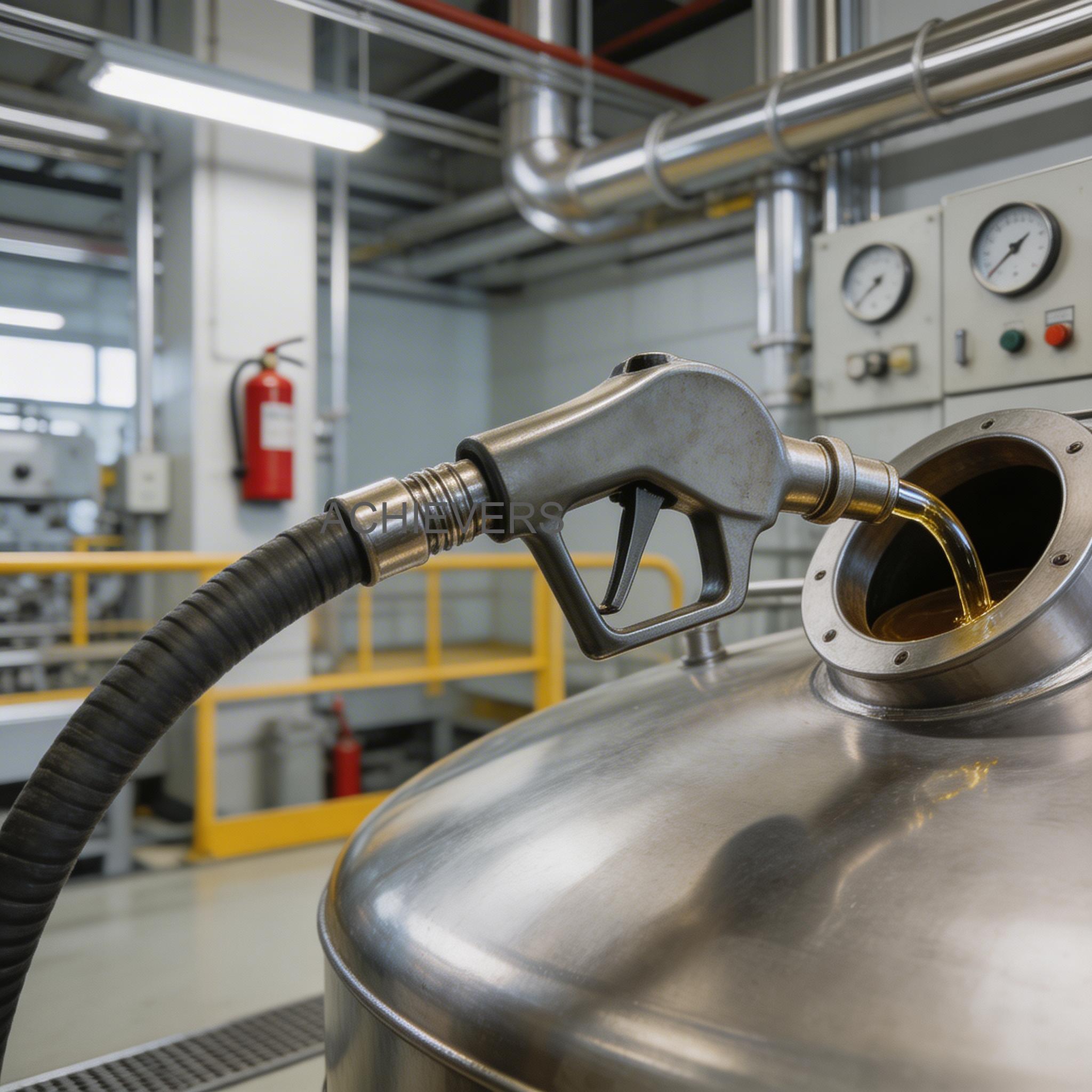
The Fuel Nozzle is the final, critical interface between your fuel storage or dispensing system and the receiving vehicle or generator tank. Unlike basic manual valves that require an operator to physically monitor and stop the flow—often resulting in human error and overflow—an automatic shut-off nozzle is engineered with internal vacuum mechanics that instantly halt the flow of fuel the moment the receiving tank is full.
Sourced from reputable Make in India manufacturers like Lumen Instruments in Ahmedabad, these nozzles are built for steady performance, minimum maintenance, and sturdy construction. They are strictly manufactured following rigorous industry standards, making them suitable for gasoline, diesel, and up to 10% ethanol blends.
What sets a premium automatic Fuel Nozzle apart is its internal engineering and build materials. Standard market nozzles often use soft aluminium spouts that wear down quickly against metal tank necks. In contrast, high-quality models feature a stainless steel spout tip that lasts four times longer. Furthermore, they are cycle-tested and proven to last longer than 1 million cycles—significantly outperforming generic variants. Features like "Flowloc" add an extra layer of safety, automatically shutting off the nozzle if it falls out of a vehicle or is tipped up, thereby limiting spillage and dangerous conditions in busy fleet yards or factory floors.
In Simple Terms:
Think of an automatic nozzle like a smart tap. Instead of standing over a bucket and trying to turn the water off exactly before it overflows, this tap senses when the bucket is full and snaps shut on its own. For a business owner, this means your workers can’t accidentally waste expensive diesel, and you don't have to replace the tap every few months because it broke.
When integrating these nozzles into larger setups, such as Diesel Dispensing units, the precise Accu-stop to-the-penny flow control technology ensures that you dispense exactly what is required. Operating at a maximum design working pressure of 50 psi (3.45 bar), these units are robust enough to handle the high-flow requirements of commercial pumps while remaining easy to install with precise dimensions.
2. Total Cost of Ownership Breakdown
To make a confident, budget-conscious buying decision, you must look past the initial purchase price. The Total Cost of Ownership (TCO) accounts for the purchase, installation, maintenance, daily operational losses (or savings), and the expected lifespan of the equipment.
In the Indian market, buyers are often tempted by unbranded manual nozzles available for ₹1,000 to ₹2,000. However, these require constant replacement and cause immense fuel waste. A high-quality automatic Fuel Nozzle represents a slightly higher initial investment but drastically lowers annual recurring costs.
Below is a detailed Total Cost of Ownership breakdown over a standard 3-year lifecycle for a high-usage industrial application.
| Cost Component | Typical Range (INR) | Frequency | Notes / Context |
| — | — | — | — |
| Initial Purchase Price | ₹3,500 – ₹7,500 | Once | GST-inclusive cost (typically 18% GST applies). Varies based on flow rate capacity and specific model features. |
| Installation & Setup Labour | ₹300 – ₹800 | Once | Minimal cost. Easy to install on existing standard hoses. Local technicians can fit it in under 30 minutes. |
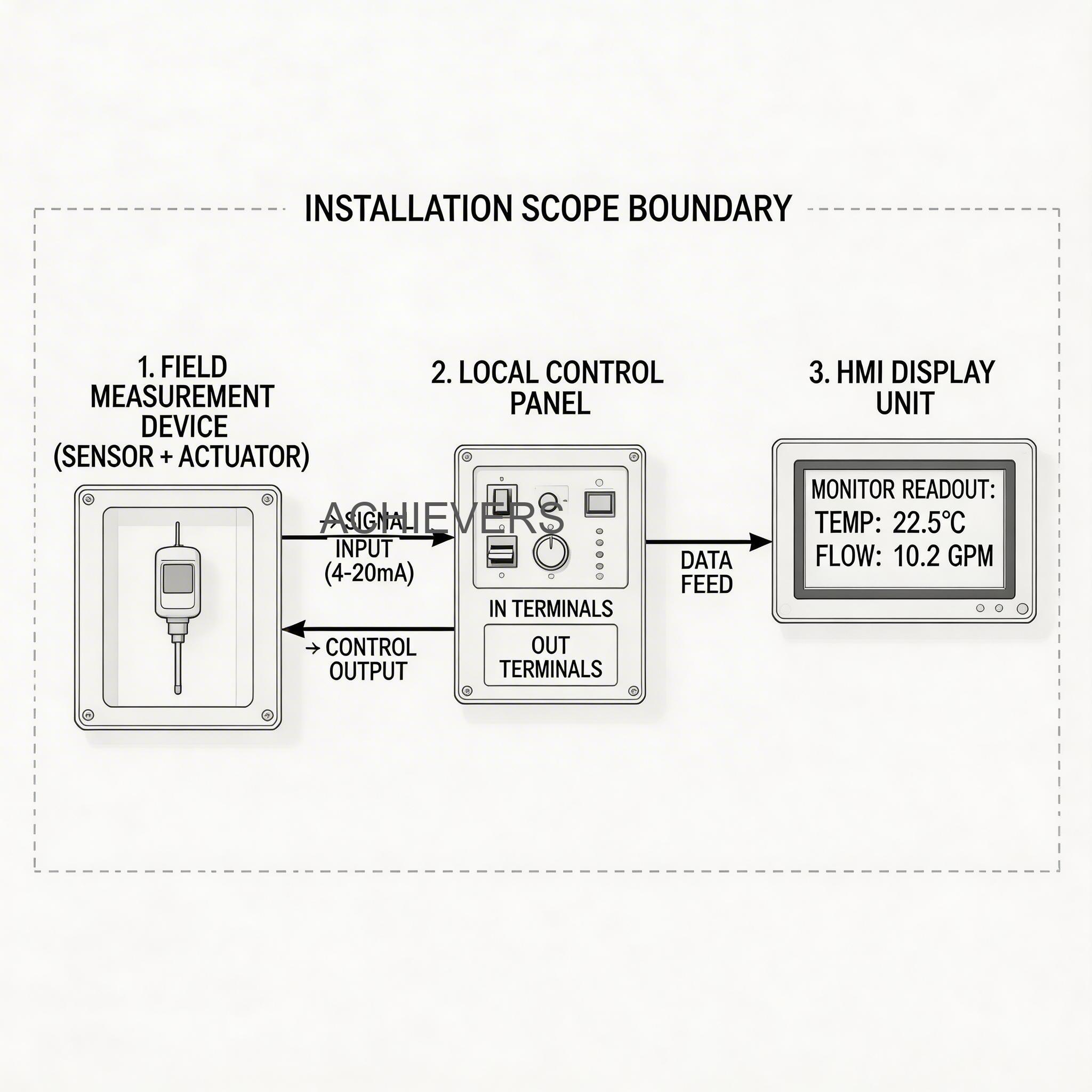
| Initial Calibration & Testing | ₹500 – ₹1,000 | Once | Ensuring the nozzle integrates perfectly with the flow meter and dispensing pump pressure (Max 50 psi). |
| Consumables (O-rings, seals) | ₹200 – ₹500 | Annually | High-quality models use durable components, keeping consumable costs incredibly low over the lifespan. |
| Annual Maintenance Contract (AMC) | ₹800 – ₹1,500 | Annually | Routine inspection of the hold-open clip spring, Flowloc mechanism, and cleaning of the vacuum port. |
| Cost of Spillage/Wastage | ₹1,000 – ₹2,500 | Annually | Accu-stop technology and automatic shut-off reduce spillage by over 95% compared to manual nozzles. |
| Downtime & Labour Loss | ₹1,000 – ₹2,000 | Annually | Ergonomic Newgard hand insulators and one-finger hold-open clips save operator fatigue and time. |
| Replacement Cost (Lifespan) | ₹0 over 3-5 years | End of Life | Rated for >1 million cycles. Stainless steel tip lasts 4x longer than standard aluminium, delaying replacement. |
3. ROI Calculation: Real-World Indian Example
To truly understand the financial impact, let us calculate the Return on Investment (ROI) using a highly realistic scenario. Imagine a mid-sized logistics company or a manufacturing plant in an industrial zone like Sanand or Ankleshwar. This facility operates a fleet of 20 delivery trucks and 3 heavy-duty backup diesel generators.
Here is the step-by-step ROI calculation comparing their old manual nozzle setup to a newly installed automatic shut-off nozzle.
Step 1: Establish the Baseline Daily Fuel Transfer
The facility dispenses approximately 1,500 litres of diesel every day to keep its trucks and generators running.
Step 2: Quantify Daily Spillage with Manual Equipment
Using a cheap manual nozzle without an automatic shut-off, operators frequently overfill tanks. A conservative estimate for spillage, overfilling, and nozzle-drip in a rushed industrial environment is roughly 0.5% of total transferred volume.
Calculation: 1,500 litres x 0.005 = 7.5 litres wasted per day.
Step 3: Calculate the Annual Financial Loss
Assuming the local diesel price is approximately ₹92 per litre, and the plant operates 300 days a year.
Calculation: 7.5 litres x ₹92 = ₹690 daily loss.
Annual Loss: ₹690 x 300 days = ₹2,07,000 lost strictly to spillage.
Step 4: Factor in Replacement Costs of Cheap Equipment
The soft aluminium spouts on cheap manual nozzles wear out quickly due to rough handling by truck drivers. The facility replaces its ₹1,500 manual nozzle three times a year.
Annual Replacement Cost: ₹1,500 x 3 = ₹4,500.
Total Annual Cost of Old System: ₹2,07,000 + ₹4,500 = ₹2,11,500.
Step 5: Determine the Investment Cost of the New Solution
The plant manager decides to upgrade to a premium automatic shut-off nozzle from an Ahmedabad-based manufacturer.
Capital Expenditure: ₹6,500 (Base Price) + 18% GST (₹1,170) = ₹7,670 Landed Cost.
Step 6: Calculate Spillage Reduction
The new automatic nozzle features the Flowloc system and a highly sensitive vacuum shut-off. Spillage is virtually eliminated, reducing waste from 7.5 litres a day down to an occasional 0.2 litres (minor drips).
New Daily Loss: 0.2 litres x ₹92 = ₹18.40.
New Annual Spillage Cost: ₹18.40 x 300 days = ₹5,520.
Step 7: Compute Total Annual Savings
We subtract the new spillage cost from the old spillage cost. We also note that the stainless steel spout and durable lever guard mean zero replacements are needed in year one.
Savings on Diesel: ₹2,07,000 – ₹5,520 = ₹2,01,480.
Savings on Replacements: ₹4,500.
Total Gross Savings in Year 1: ₹2,05,980.
Step 8: Determine the Simple Payback Period
To find out how quickly the new nozzle pays for itself, we divide the investment cost by the daily savings.
Daily Savings: ₹2,05,980 / 300 days = ₹686 per day.
Payback Period: ₹7,670 (Investment) / ₹686 (Daily Savings) = 11.18 Days.
In less than two weeks, the premium automatic nozzle has completely paid for itself. Every day thereafter, the plant adds ₹686 straight back into its operational profit margins.
4. Cost Comparison: Available Approaches
When upgrading your dispensing station, you have several equipment paths. Comparing these options side-by-side reveals why investing in properly engineered, Make in India automatic nozzles offers the best balance of cost and reliability.
| Dispensing Approach | Estimated Upfront Cost | Annual Maintenance & Spillage Cost | Accuracy & Control | Reliability & Lifespan | Best Suited For |
| — | — | — | — | — | — |
| Basic Manual Nozzle | ₹1,000 – ₹2,500 | Very High (₹50,000+ in wasted fuel) | Poor. Relies entirely on operator visual estimation. | Low. Aluminium spouts wear out; springs break easily. | Small farms or infrequent, low-volume transfers. |
| Generic Imported Auto-Nozzle | ₹2,500 – ₹4,500 | Medium (₹15,000+ due to frequent failures) | Moderate. Shut-off mechanisms often fail under pressure. | Moderate. Spare parts are difficult to source locally. | Budget-constrained setups willing to risk downtime. |
| Premium Automatic Nozzle (Local OEM) | ₹4,500 – ₹8,500 | Very Low (Minimal spillage, low AMC) | High. Accu-stop to-the-penny technology ensures precision. | Excellent. >1 million cycles, stainless steel spout, duratuff guard. | High-volume industrial fleets, GIDC plants, generators. |
| Full Dispenser Integrated Nozzle | ₹15,000+ (as part of a system) | Low | Exceptional when paired with digital flow meters. | Excellent. Commercial grade for continuous daily duty. | Large retail fuel stations or massive mining operations. |
In Simple Terms:
Buying a cheap nozzle is like buying cheap shoes for a marathon. You save a little money on day one, but you end up paying for it in blisters, replacements, and poor performance. A premium nozzle costs a bit more upfront but runs perfectly for years, saving you massive amounts of wasted fuel.
5. Hidden Costs to Budget For
When planning a procurement cycle for fluid transfer equipment, standard line-item budgeting often misses several secondary expenses. For a practical Indian business owner, ignoring these hidden costs can quickly derail your maintenance budget.
- Wastage and Evaporation Allowances:
Manual nozzles frequently result in minor overfills that spill down the side of vehicles or storage tanks. In hot Indian climates, this spilled diesel or gasoline evaporates rapidly or seeps into the ground. While it looks like a small stain, a daily cup of spilled fuel equates to tens of thousands of rupees lost annually.
- Premature Wear of Aluminium Components:
Standard nozzles utilize aluminium spouts to keep manufacturing costs down. However, when repeatedly inserted into the steel necks of heavy-duty truck tanks or generator reservoirs, aluminium grinds down. This leads to poor seating, leaks, and requires the nozzle to be replaced up to three times faster than a stainless steel spout tip.
- Integration with Flow Meters:
If you upgrade your nozzle, you must ensure it does not create excessive backpressure that could skew the readings of your Diesel Flow Meter. A mismatched nozzle can cause a digital meter to under-report or over-report volume, throwing off your entire inventory accounting.
- GST Input Tax Credit (ITC) Compliance:
Many small buyers purchase unbranded spares from local hardware markets in cash to save money. However, buying highly durable, Make in India products from registered manufacturers like Lumen Instruments allows you to claim the 18% GST Input Tax Credit. Buying cheap, unbilled items actually increases your effective tax burden and reduces formal asset valuation.
- Operator Inefficiency and Fatigue:
Heavy, poorly designed manual nozzles cause operator hand fatigue, leading to mistakes. An automatic nozzle with an attractive 2-piece Newgard™ hand insulator and a convenient one-finger hold-open clip makes the job effortless. This speeds up the refuelling queue in a busy factory, minimizing idle time for truck drivers.
- Safety Hazards and Fire Compliance:
Industrial safety audits are becoming stricter across Indian manufacturing sectors. Spilled fuel is an extreme fire hazard and an environmental violation. The "Flowloc" feature—which shuts off the nozzle if it falls out of a vehicle or tips upward—prevents catastrophic spills, helping you avoid hefty safety fines and expensive cleanup operations.
6. How to Justify the Purchase to Management
If you are an industrial engineer, maintenance head, or procurement officer, you often have to convince upper management or the business owner to approve capital expenditures. When upgrading from a ₹1,500 manual tool to a premium ₹6,000+ automatic unit, you need a solid business case.
Here are the exact steps to justify this purchase:
- Conduct a Baseline Spillage Audit:
Do not just tell management that fuel is being wasted; prove it. Place a drip tray under your current refuelling station for three days. Measure the exact volume of diesel collected. Multiply this by 300 working days to present a hard, undeniable annual loss figure in rupees.
- Highlight the Equipment Lifespan:
Point out that the proposed automatic nozzle is cycle tested and proven to last longer than 1 million cycles. Explain that the stainless steel spout tip lasts four times longer than the standard aluminium spouts currently being thrown away every few months.
- Present the Payback Calculation:
Use the ROI calculation from Section 3. Management responds to numbers. Show them that by investing ₹7,000 today, the company will save ₹2,00,000 over the next 12 months. A payback period of under 15 days makes the approval an absolute no-brainer.
- Emphasize Localized Support and Reliability:
Remind them that sourcing from an established manufacturer in Ahmedabad ensures localized support, easy availability of genuine spares, and standard warranties. Highlight the benefits of supporting local industries and avoiding the supply chain headaches associated with imported, unbranded equipment.
- Focus on Safety and Liability Reduction:
Mention the built-in safety features like the blocker on the lever guard (which prevents consumers from jamming the nozzle in an open position) and the Flowloc system. Explain that preventing just one major fuel spill or fire incident saves the company from massive operational downtime, safety audits, and potential legal liabilities.
By shifting the conversation from "the cost of the nozzle" to "the cost of wasted fuel," you easily demonstrate that failing to upgrade is the true financial risk.
FAQ
Q: What is the maximum pressure this automatic nozzle can handle?
A: The nozzle has a maximum design working pressure of 50 psi (3.45 bar). This makes it highly compatible with standard commercial dispensers and heavy-duty transfer pumps without risking internal seal blowout.
Q: Can this nozzle be used for liquids other than standard diesel?
A: Yes. It is engineered for use in gasoline, diesel, and up to 10% ethanol blends. However, it is not recommended for highly corrosive chemicals unless specifically rated for those applications.
Q: What makes the spout on this product better than standard market nozzles?
A: This premium nozzle features a stainless steel spout tip. In rigorous industrial environments, stainless steel lasts up to four times longer than standard aluminium spouts, which wear down quickly against metal tank openings.
Q: What is the "Flowloc" feature and why is it important for safety?
A: Flowloc is a safety mechanism that automatically forces the nozzle to shut off if it falls out of a vehicle tank or is tipped upward. This limits accidental spillage and prevents unsafe, highly flammable conditions on the plant floor.
Q: Will upgrading to this nozzle affect my digital flow meter accuracy?
A: No. In fact, a smooth, consistent shut-off helps prevent the sudden pressure spikes and hydraulic shocks (water hammer effect) that can sometimes throw off the calibration of sensitive inline digital flow meters.
Q: How long can I expect this nozzle to last in a busy transport fleet?
A: This specific design has been cycle-tested and proven to last longer than 1 million cycles. With basic maintenance and a durable duratuff lever guard that resists physical impacts, it offers an exceptionally long operational life.
Q: Can I claim GST input tax credit on this purchase?
A: Yes. When purchasing from a legitimate, registered Make in India manufacturer like Lumen Instruments, you will receive a proper GST invoice (typically at 18% for industrial machinery components), allowing you to claim full input tax credit for your business.
To stop fuel wastage and upgrade your dispensing systems with high-quality, reliable equipment, contact Lumen Instruments today. Let our team know your specific application, required flow rates, and site conditions, and we will provide a comprehensive quotation for the exact automatic nozzles and flow control accessories your facility needs.