
Accurate fluid measurement is the backbone of industrial efficiency, especially when dealing with high-value, viscous liquids like hydraulic oils, synthetic lubricants, and heavy furnace fuels. In modern industrial plants, whether processing chemicals in a global export facility or managing heavy machinery in a bustling Indian GIDC (Gujarat Industrial Development Corporation) estate, selecting the wrong flow measurement technology can lead to catastrophic machinery failure, off-spec product blending, and massive financial losses.
This comprehensive buyer’s guide is designed for plant managers, industrial engineers, and procurement heads navigating the complexities of fluid dynamics. We will explore exactly how to match viscosity ranges, system pressure drops, and output signals to real-world industrial duties. Furthermore, we will highlight the engineering strengths of Oil Flow Meters manufactured in Ahmedabad, showcasing how "Make in India" precision is delivering quality testing, reliable customization, and export-ready documentation for global B2B operations.
1. What Is Oil Flow Meters and What Does It Do
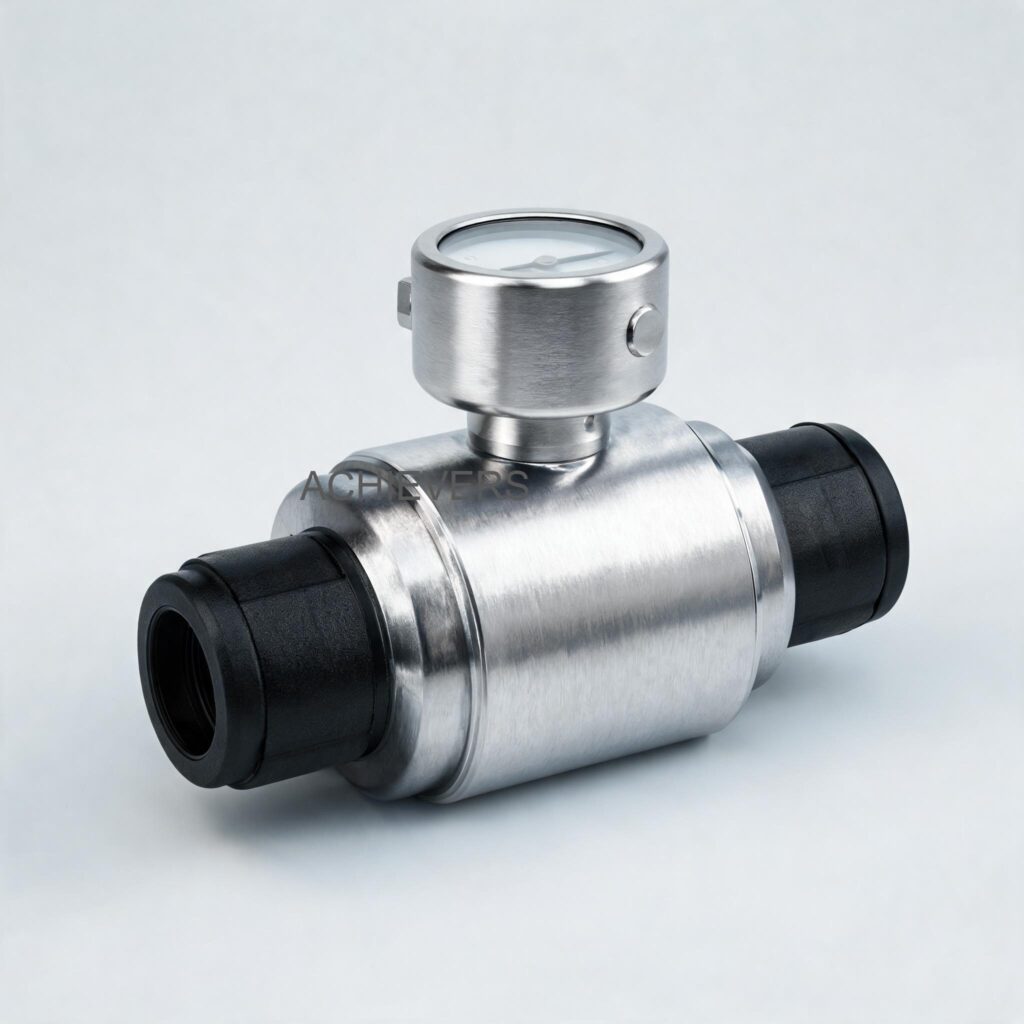
At their core, Oil Flow Meters are precision instruments designed to measure the exact volumetric flow rate of viscous fluids. For industrial oils, the industry standard is Positive Displacement (PD) technology, specifically utilizing an oval gear mechanism.
Unlike velocity-based meters (like turbine or ultrasonic meters) which struggle when fluid viscosity changes, positive displacement meters transport defined, incremental volumes of liquid in individual, sealed measuring chambers. The internal measuring element consists of two high-precision toothed oval gears. Driven exclusively by the flow of the oil itself, these gears mesh perfectly with each other, turning in opposite directions.
As the gears rotate, they create four distinct measuring cavities. Liquid enters, fills the cavity, and is discharged downstream. Because the volume of these cavities is precisely machined to tight tolerances, every single rotation of the gear pair represents a specific, mathematically defined volume of liquid. A magnetic or inductive sensor detects these rotations, converting them into a highly accurate volumetric reading.
This design provides a smooth, repeatable action that is virtually immune to changes in liquid viscosity, temperature, or pressure. Furthermore, because the measurement relies purely on volume displacement rather than flow profile, these meters do not require straight inlet or outlet pipe runs, making them exceptionally easy to install in cramped skid assemblies.
| Technical Specification | Operating Parameter / Value | Engineering Notes |
| :— | :— | :— |
| Measurement Principle | Positive Displacement (Oval Gear) | Highly accurate for volumetric flow and totalization |
| Fluid Compatibility | Lubrication oils, mineral oils, hydraulic oils, furnace oils | Suitable for clean, non-abrasive fluids |
| Viscosity Handling | Immune to normal viscosity shifts | Slippage actually decreases as viscosity increases |
| Installation Requirements | No straight pipe runs required | Ideal for compact blending skids and OEM machinery |
| Construction Quality | High-precision machined tolerances | Ensures long service life and high repeatability |
In Simple Terms
Imagine a revolving door at a busy hotel. Every time the door completes one full rotation, exactly four people pass through. It doesn't matter if they are walking fast or slow, or if they are wearing heavy winter coats (representing high viscosity) or light summer clothes (low viscosity). The door strictly counts the volume of space moving through, completely unaffected by the "thickness" of the crowd. That is precisely how positive displacement Oil Flow Meters measure industrial fluids.
2. Key Selection Criteria for Indian Industrial Buyers
Selecting the correct flow meter is not as simple as matching pipe sizes. For both global operators and local Indian plant managers dealing with fluctuating grid power, high ambient heat, and demanding duty cycles, a rigorous technical evaluation is required. Here is how to choose oil flow meters for high viscosity industrial oils:
1. Viscosity Range and Temperature Profile
Viscosity is the most critical parameter in oil measurement. As ambient temperatures drop (especially in winter months or in cooler geographic regions), oil thickens significantly. While oval gear meters excel with high-viscosity fluids, extremely thick fluids require slower operating speeds to prevent excessive pressure drops and internal shear forces. Conversely, at high temperatures, the fluid thins, which can slightly increase internal "slippage" past the gear clearances. You must specify both your minimum and maximum operating temperatures to ensure the meter's internal tolerances are machined correctly for your specific thermal profile.
2. Flow Rate and Turndown Ratio
Every flow meter has a "sweet spot" for accuracy. You must define your normal, minimum, and maximum flow rates. Oval gear meters typically offer excellent turndown ratios (often 10:1 or better), meaning they maintain high accuracy even when flow drops to 10% of the maximum rated capacity. Do not simply size the meter based on your pipeline diameter; size it based on your actual flow rate in Liters Per Minute (LPM) or Cubic Meters Per Hour (m³/hr). Oversizing a meter for a low flow rate will result in inaccurate readings.
3. Maximum Allowable Pressure Drop (ΔP)
Because the fluid's energy physically pushes the gears, there is always a pressure drop across a positive displacement meter. As fluid viscosity increases, the pressure required to turn the gears also increases. Engineers must calculate the system's total head pressure and ensure the pump can handle the meter's pressure drop at the fluid's lowest temperature (highest viscosity). If the pressure drop is too high, it can starve lubrication lines or overwork your Fuel Transfer Pumps.
4. Output Signals and Digital Integration
Modern plants rely on data. While traditional mechanical registers are excellent for remote areas without power, automated blending skids and export-ready OEM machinery require digital integration. If you want to buy oil flow meters with pulse output and digital display, ensure the signals match your PLC or SCADA system. Options include high-resolution raw pulse (for rapid batching), 4-20mA analog signals (for continuous flow monitoring), or RS485 Modbus (for comprehensive digital networking).
5. Materials of Construction and Chemical Compatibility
While industrial oils are generally non-corrosive, the presence of additives, synthetic compounds, or trace moisture can dictate material choices. Standard applications often use aluminum bodies with hardened steel or PPS (Polyphenylene Sulfide) resin gears. However, for specialized chemicals, high-temperature furnace oils, or offshore applications requiring ATEX/CE certification, stainless steel (SS316) bodies with specialized Viton or PTFE seals are mandatory. Always cross-reference your fluid's chemical makeup with the meter's wetted parts.
6. Environmental and Site Conditions
Operating conditions heavily influence meter selection. In an Indian manufacturing context, equipment in open-air plants or dusty GIDC zones must possess high Ingress Protection ratings (IP65 or IP67). High ambient temperatures can affect the electronics in digital displays. If the meter is installed outdoors, ensure the digital LCD is UV-protected and the electronic enclosure is adequately shielded against heavy monsoon rains and high humidity.
3. Model and Variant Comparison
Lumen Instruments offers a versatile range of configurations tailored to diverse industrial requirements. Below is a comparative breakdown of standard oil flow meter variants designed to meet stringent industrial oil flow meter specifications for OEMs.
| Meter Variant / Model | Typical Flow Range | Output & Display | Power Requirement | Best Suited Application |
| :— | :— | :— | :— | :— |
| Mechanical Oil Flow Meter | 10 to 150 LPM | Mechanical Register (Totalizer) | None (Gravity/Pump driven) | Remote lubrication stations, areas with unstable grid power |
| Digital Oil Flow Meter | 5 to 120 LPM | LCD Display, Pulse Output | Battery or 24V DC | Modern blending skids, PLC integration, precise batching |
| Flange Type Oil Flow Meter | 50 to 500 LPM | Mechanical or Digital | Application dependent | Heavy furnace oil lines, standardized petrochemical pipelines |
| 4 Inch Large Capacity Meter | Up to 2,500 LPM | Digital with Modbus/4-20mA | 24V DC / 220V AC | Bulk terminal transfers, ship bunkering, large OEM export machinery |
4. Common Mistakes Indian Buyers Make When Choosing
Procurement teams and plant managers often face budget constraints and aggressive timelines, leading to rushed purchasing decisions. Avoiding these common engineering pitfalls will save significant maintenance costs and prevent downtime.
- Failing to Install Adequate Filtration: Positive displacement meters have extremely tight internal clearances (often fractions of a millimeter). The single most common cause of meter failure is solid debris—such as weld slag, rust scale, or un-dissolved additives—jamming the gears. Always install a Y-strainer or basket filter immediately upstream of the meter.
- Sizing by Pipe Size Instead of Flow Rate: Buying a 2-inch meter simply because the existing pipeline is 2 inches is a major error. If the actual flow rate is only 15 Liters Per Minute, a 2-inch meter will barely register the flow, resulting in massive inaccuracies. Size the meter for the flow rate, and use pipe reducers if necessary.
- Ignoring Minimum Ambient Temperatures: Buyers often specify the viscosity of their oil at its nominal operating temperature (e.g., 40°C). However, during a cold startup on a winter morning, that same oil might be five times thicker. If the meter and pump are not sized for this "cold start" viscosity, the pressure drop can rupture seals or stall the pump.
- Overlooking Air Elimination: Oil flow meters measure volume. If your pipeline contains air pockets—often caused by cavitating pumps or empty storage tanks—the meter will measure that air exactly as if it were oil, leading to inflated billing and incorrect batching. In bulk transfer applications, an air eliminator must be installed before the meter.
- Neglecting Export Compliance Documentation: As an oil flow meter supplier for exporters, Lumen Instruments knows that machinery shipped to Europe, the Middle East, or North America requires strict documentation. Buyers often purchase standard meters without requesting material test certificates (MTC), calibration reports, or CE/ISO compliance documents, leading to customs delays and rejected OEM machinery at the destination.
- Misunderstanding Accuracy vs. Repeatability: Accuracy is how close the meter's reading is to the absolute true volume. Repeatability is the meter's ability to give the same reading for the same volume over multiple tests. For continuous blending and batching, high repeatability is often more critical than absolute accuracy, as batch recipes can be calibrated to a highly repeatable meter.
5. Enquiry Specification Checklist
To ensure rapid, accurate quoting and to guarantee you receive the precise instrument for your application, always provide the manufacturer with a comprehensive technical specification. Lumen Instruments, a premier Oil Flow Meters manufacturer in India, relies on this data to engineer the perfect solution.
Note on Pricing Context: For budgeting purposes, the typical Indian market price range for industrial-grade oval gear flow meters ranges from ₹12,000 for standard mechanical variants to over ₹85,000+ for large flange-type digital meters in SS316, exclusive of the standard 18% GST applicable on industrial instruments.
When submitting an enquiry, clearly define the following 8 parameters:
- Fluid Name and Grade: (e.g., ISO VG 46 Hydraulic Oil, Heavy Furnace Oil, Vegetable Blending Oil).
- Kinematic Viscosity Range: Provide the minimum, normal, and maximum viscosity in Centistokes (cSt) or Centipoise (cP).
- Operating Temperatures: State both the fluid temperature and the ambient environmental temperature.
- Flow Rate Parameters: Minimum, normal, and maximum flow rates in LPM or m³/hr.
- Operating System Pressure: Maximum pipeline pressure (in Bar or PSI) to ensure proper housing thickness and seal selection.
- Desired Output Signals: Specify if you need a simple mechanical totalizer, or digital outputs (Pulse, 4-20mA, RS485 Modbus).
- Preferred Material of Construction: Aluminum, Cast Iron, or Stainless Steel (SS316) for wetted parts.
- Connection Type and Size: Threaded (BSP/NPT) or Flanged (ANSI/DIN/JIS), and the required nominal bore size.
FAQ
Q: Why do positive displacement meters not require straight pipe runs?
A: Unlike turbine or ultrasonic meters that rely on a stable, uniform fluid flow profile to calculate velocity, PD meters physically trap and measure defined pockets of liquid. Because they measure discrete volumes rather than velocity, the turbulence caused by nearby elbows or valves does not affect their accuracy.
Q: What happens if the oil viscosity changes significantly during operation?
A: Oval gear meters are highly resilient to viscosity shifts. In fact, if the fluid becomes thicker (higher viscosity), the minimal slippage between the gear clearances actually decreases, marginally improving accuracy at lower flow rates. No recalibration is typically needed for standard temperature-induced viscosity shifts.
Q: How often should industrial oil meters be calibrated?
A: For standard industrial lubrication and internal monitoring, a calibration check every 12 to 18 months is recommended. However, if the meter is used for commercial custody transfer, raw material purchasing, or critical chemical blending, ISO standards typically require a verified calibration every 6 to 12 months.
Q: Can these meters handle fluids with solid particles?
A: No. Positive displacement meters have very tight internal tolerances. Any abrasive solids, grit, or weld scale will scratch the measuring chambers, increase slippage, and eventually jam the gears. A dedicated upstream strainer is mandatory for all installations.
Q: Can I use the same meter for both Diesel Flow Meter applications and heavy furnace oil?
A: While the operating principle is the same, meters are often factory-calibrated for specific viscosity ranges. Diesel is very thin (low viscosity), while furnace oil is heavy. Swapping a meter between drastically different fluids without recalibration and checking material compatibility (especially seals) will result in measurement errors.
Q: Does the standard Indian market price include compliance certificates?
A: The base GST-inclusive cost generally covers the physical instrument and standard factory calibration. However, if your OEM machinery requires specific third-party export certifications (like CE, ATEX, or NABL-traceable calibration certificates), these may incur nominal additional documentation charges. Always specify export requirements upfront.
Q: What is the maximum temperature an electronic display can withstand?
A: Standard LCD digital displays are typically rated for ambient temperatures up to 60°C or 70°C. If the fluid being measured is extremely hot (like 120°C furnace oil), you should opt for a mechanical register or use a remote-mounted digital display that keeps the sensitive electronics away from the heat source.
Ready to upgrade your industrial fluid management with unmatched precision? Contact Lumen Instruments today with your specific flow rate, fluid viscosity, and site conditions, and our engineering team will help you configure the perfect flow measurement solution for your plant or export machinery.