
In Indian industrial setups, construction sites, and transport fleets, diesel is one of the highest operational expenses. Yet, the equipment used to move this expensive commodity is often treated as a low-priority afterthought. Many plant managers and fleet operators in India still rely on manual bucketing, gravity-fed drums, or cheap, unbranded plastic pumps. While these methods seem cost-effective initially, they silently bleed money through spillage, inaccurate measurement, theft, and heavy labor costs.
Understanding the Total Cost of Ownership (TCO) and Return on Investment (ROI) of industrial-grade Fuel Transfer Pumps is critical for protecting your bottom line. An investment in high-quality pumping equipment pays for itself rapidly when evaluated across its entire operational lifespan. This analysis breaks down the true costs—capital, electrical, maintenance, and downtime—so Indian business owners can estimate realistic payback periods tailored to harsh local operating conditions like extreme summer heat, monsoon humidity, and erratic power supply.
1. Product Overview and Cost Context
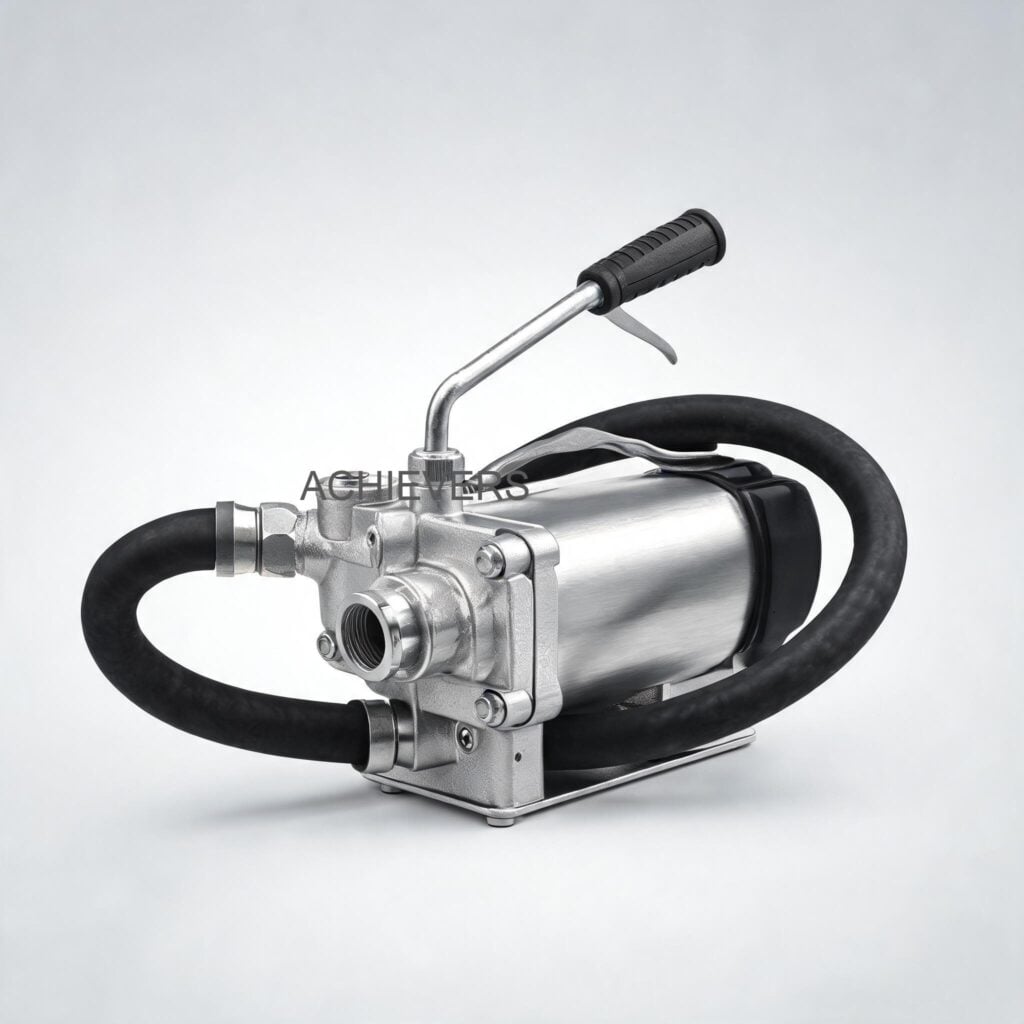
Before calculating ROI, we must understand what industrial Fuel Transfer Pumps actually are. Unlike residential water pumps, these are precision-engineered positive displacement, self-priming, rotary electric vane pumps designed specifically for the viscosity of diesel, kerosene, and lubricating oils.
A major feature of these units is the integrated bypass valve. In typical Indian operations—like filling a generator set or a backhoe loader—an operator might shut the delivery nozzle while the pump is still running. Without a bypass valve, pressure builds instantly, destroying the pump seals or burning out the motor. The bypass valve safely recirculates the fuel internally, protecting the equipment and reducing replacement costs.
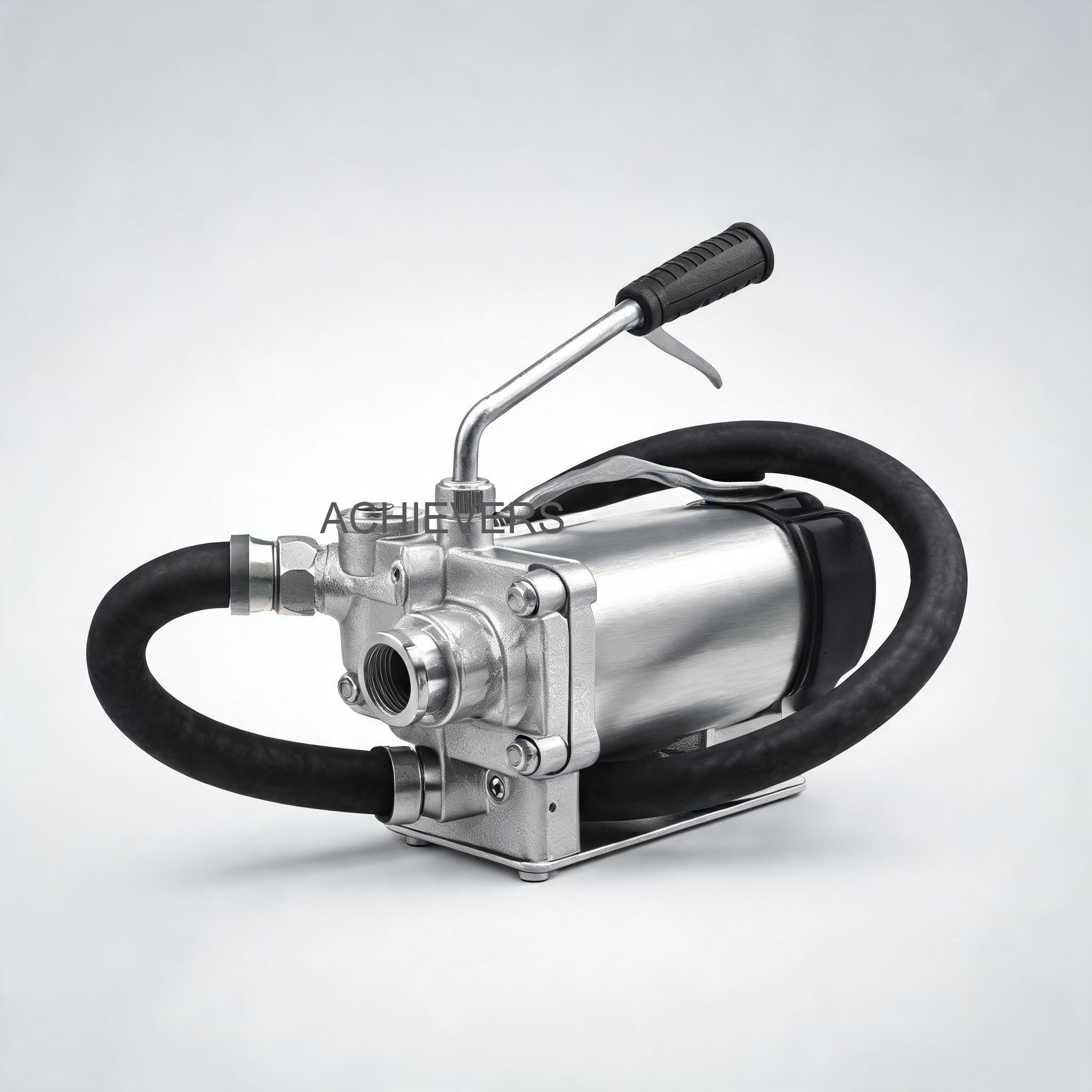
Manufactured in our state-of-the-art facility in Ahmedabad, Gujarat, under the "Make in India" initiative, our Fuel Transfer Pumps are available in 12V DC, 24V DC, and 220V AC variants. The DC models (like the CE-40DC and CE-80-DC) are ideal for earth-moving machinery, mobile bowsers, and construction yards where grid power is unavailable. The AC models (like the CE-60 A and CE-80B) are powerful 0.37 kW to 0.55 kW units suited for permanent plant installations.
In Simple Terms:
Total Cost of Ownership (TCO) means looking beyond the sticker price. If you buy a cheap pump for ₹5,000 but it burns out in three months due to voltage fluctuations, wastes ₹500 of diesel daily in leaks, and shuts down your earth-mover for two days, that pump actually cost you over ₹50,000. Buying a solid, industrial-grade pump upfront stops these hidden losses, meaning the equipment effectively pays for itself.
Typical Indian Market Price Range: Industrial-grade fuel transfer pumps in India typically range from ₹12,000 to ₹35,000 depending on the flow rate (40 LPM to 80 LPM), motor type (DC vs. AC), and accessories. When budgeting, always account for the 18% GST applicable on industrial pumping equipment, which GST-registered businesses can claim as Input Tax Credit (ITC).
To understand the equipment we are analyzing, here are the technical specifications from our standard catalog:
| Model Number | Voltage | Flow Rate | Power / Current | Key Features |
| — | — | — | — | — |
| CE-40DC | 12V / 24V DC | 40 L / MIN | 22A (12V) / 12A (24V) | 2800 RPM, 3/4" inlet/outlet, 3.5kg GW |
| CE-70-A-DC | 12V / 24V DC | 70 L / MIN | 4A | 10m head, 2-4m suction, 3/4" inlet/outlet |
| CE-80-DC | 12V / 24V DC | 80 L / MIN | 44A (12V) / 21A (24V) | High flow rate, 1" inlet/outlet, 12kg GW |
| CE-60 A | 220V AC | 20-60 L / MIN | 0.37 KW | Bypass valve, built-in strainer |
| CE-80B | 220V AC | 20-70 L / MIN | 0.55 KW | Bypass valve, built-in strainer |
2. Total Cost of Ownership Breakdown
To calculate realistic payback, we must lay out every cost component across a standard 3-year to 5-year equipment lifecycle. In Indian sites, the purchase price represents only about 20% to 30% of the pump's total lifecycle cost.
| Cost Component | Typical Range (INR) | Frequency | Notes |
| — | — | — | — |
| Initial Purchase Cost | ₹12,000 – ₹35,000 | One-time | Base price of the pump unit. GST (18%) is extra but ITC is claimable. |
| Installation & Piping | ₹3,000 – ₹8,000 | One-time | Includes MS/SS piping, isolation valves, skilled fitter labor, and electrical wiring. |
| Energy Consumption | ₹1,500 – ₹4,000 | Annual | Based on a 0.37 kW pump running 2 hours daily at ₹8 per kWh commercial rate. |
| Spares & Consumables | ₹2,000 – ₹5,000 | Annual | Replacement of carbon vanes, seals, and strainer cleaning. |
| Annual Maintenance (Labor) | ₹3,000 – ₹6,000 | Annual | In-house mechanic hours or outsourced AMC for preventative checkups. |
| Calibration & Metering | ₹2,000 – ₹4,000 | Annual | If paired with Fuel Flow Meters, legal metrology calibration fees may apply. |
| Spillage / Leakage Losses | ₹0 | Daily | A high-quality sealed pump reduces spillage to zero, saving thousands compared to manual methods. |
| Equipment Downtime | ₹10,000 – ₹50,000+ | Per Event | Cost of idle earth-movers or generator failure if a cheap pump breaks down. High-quality pumps minimize this risk. |
3. ROI Calculation: Real-World Indian Example
Let us look at a practical ROI calculation for an infrastructure project in a Gujarat Industrial Development Corporation (GIDC) estate. The site operates five earth-moving machines and consumes 1,500 liters of diesel daily.
Currently, they use manual rotary hand pumps and gravity-fed drums. The site manager decides to upgrade to a Lumen CE-60 A (220V AC, 60 L/MIN, 0.37 kW) Fuel Transfer Pump. Here is the 8-step calculation to prove the ROI:
- Calculate Daily Spillage Losses: Manual transfer of 1,500 liters typically results in a 1% spillage/wastage rate due to overfilling and pipe drips. 1% of 1,500L = 15 liters per day.
- Monetize the Spillage: At a commercial diesel rate of approximately ₹92 per liter, losing 15 liters costs the company ₹1,380 per day.
- Calculate Labor Time: Pumping 1,500 liters manually takes two laborers roughly 2.5 hours. With the CE-60 A (running realistically at 50 L/min to account for head pressure), transferring 1,500 liters takes exactly 30 minutes.
- Monetize Labor Savings: Saving 2 hours of labor daily across two workers, valued at ₹100 per hour, saves ₹400 daily. Moreover, the machines get back to digging faster.
- Determine Total Daily Savings: ₹1,380 (fuel saved) + ₹400 (labor saved) = ₹1,780 saved per day.
- Calculate Energy Cost: The 0.37 kW motor runs for 0.5 hours daily. 0.37 kW x 0.5h = 0.185 units of electricity. At ₹8/unit, the daily energy cost is ₹1.48. (This is practically negligible compared to fuel savings).
- Determine Net Annual Savings: Assuming 300 working days. 300 days x ₹1,780 = ₹5,34,000 gross savings. Minus ₹444 (annual electricity) = ₹5,33,556 net savings per year.
- Calculate Simple Payback Period: If the CE-60 A setup costs roughly ₹20,000 total (pump, hoses, GST, installation). Payback Period = Total Cost / Daily Savings. ₹20,000 / ₹1,780 = 11.2 Days.
Within less than two weeks, the pump has completely paid for itself simply by stopping diesel theft, spillage, and labor waste. Everything after day 12 is pure profit added to the bottom line.
4. Cost Comparison: Available Approaches
When upgrading your site, you have multiple methods to choose from. Here is how industrial Fuel Transfer Pumps compare to alternative methods common in India.
| Approach | Upfront Cost | Annual Operational Cost | Accuracy & Safety | Best Suited For |
| — | — | — | — | — |
| Manual Bucketing / Gravity | Low (Under ₹2,000) | Extremely High (Spillage, labor, theft) | Very Poor. High fire risk and dirt contamination. | Tiny workshops using <50L a week. |
| Unbranded Plastic DC Pumps | Low (₹3,000 – ₹6,000) | High (Frequent replacements, motor burnouts) | Low. No bypass valves mean quick failure. | Occasional farm use only. |
| High-Quality Industrial Pump | Moderate (₹15,000 – ₹35,000) | Very Low (Energy efficient, long lifespan) | High. Self-priming, bypass valve, safe electricals. | Factories, GIDC plants, transport fleets, mines. |
| Complete Dispensing Station | High (₹75,000+) | Low (High automation, data tracking) | Exceptional. Legal metrology compliant. | Large fleet depots, commercial retail. |
If you are looking for automated tracking alongside transfer, you may eventually upgrade to a full Diesel Dispensing unit, but an industrial transfer pump is the absolute minimum requirement for commercial viability.
5. Hidden Costs to Budget For
Indian operating conditions are uniquely harsh. A pump that lasts 10 years in Europe might fail in 6 months in India if the hidden site realities are not accounted for. Budgeting for TCO means factoring in these specific local challenges:
- Power Quality and Voltage Fluctuations: Industrial estates often suffer from severe voltage dips, especially in summer. If a 220V AC pump receives only 170V, the motor draws more current and overheats. Investing in basic power conditioning or a starter panel with overload relays is a hidden cost that prevents expensive motor rewinding.
- Dust and Particulate Contamination: Construction and mining sites are incredibly dusty. Dust entering the fuel drum gets sucked into the pump. Purchasing models like our CE-60 A and CE-80B that feature a built-in strainer is crucial. The hidden cost is the labor required to clean this strainer weekly; failing to do so starves the pump and burns the vanes.
- Monsoon Humidity and Electronics: For DC pumps used on mobile bowsers, exposed electrical connections corrode quickly during the Indian monsoon. Budgeting for weather-proof junction boxes and high-quality insulated wiring prevents sudden electrical shorts.
- Hose and Piping Degradation: Cheap rubber hoses swell, crack, and dissolve when exposed to diesel and UV sunlight over time. A hidden cost of ownership is replacing substandard delivery hoses. Always budget for oil-resistant, wire-braided nitrile rubber hoses.
- Dry Running Penalties: Operators sometimes turn the pump on before opening the drum valve, causing the pump to run dry. While rotary vane pumps are self-priming, extended dry running creates massive friction, melting the internal vanes. Budgeting for operator training is a mandatory hidden cost.
- Regulatory and Safety Compliance: Depending on the volume of fuel stored on-site, compliance with Petroleum and Explosives Safety Organisation (PESO) norms may be required. Ensuring your pumps, electrical grounding, and earthing meet Indian safety standards prevents costly fines and reduces industrial insurance premiums.
6. How to Justify the Purchase to Management
If you are a plant engineer or procurement head, getting budget approval for industrial-grade equipment requires a solid business case. Management often pushes back, asking why they should spend ₹25,000 when a local hardware store sells a pump for ₹4,000. Use these steps to justify the investment:
- Baseline the Current Losses: Do not talk about the pump first; talk about the diesel. Document the daily fuel consumption and calculate a conservative 1% loss to spillage and inaccuracy. Show management the rupee value of that wasted fuel over a year.
- Highlight the "Make in India" Tax Benefits: Purchasing capital equipment manufactured in India from GST-registered entities like Lumen Instruments allows the company to claim 18% ITC. Furthermore, the equipment can be written off under standard corporate depreciation rules, lowering the actual cash impact of the purchase.
- Emphasize the Cost of Downtime: Ask management what happens if the cheap ₹4,000 pump fails at 2:00 AM while refuelling a critical backup generator during a grid power cut. The factory stops. The cost of that lost production dwarfs the price of a heavy-duty pump.
- Detail the Technical Superiority: Explain why the pump costs what it does. Mention the pure copper motor windings, the internal bypass valve that prevents bursting lines, and the robust rotary electric vane design capable of 2800 RPM.
- Present the ROI Timeline: Use the calculation from Section 3. When management sees a payback period of under 30 days, capital approval becomes a simple formality.
FAQ
Q: Can these pumps run continuously for hours?
A: No. Most rotary vane fuel transfer pumps (especially 12V/24V DC models) have a duty cycle. Typically, they should run for 30 minutes, followed by a 30-minute cooling period to prevent motor overheating. For continuous 24/7 transfer, specialized heavy-duty industrial pumps are required.
Q: What is the benefit of a 24V DC pump over a 12V DC pump?
A: A 24V DC pump draws half the electrical current (Amperage) of a 12V DC pump for the same power output. For instance, our CE-40DC draws 22A at 12V but only 12A at 24V. Lower current means thinner cables can be used, there is less heat generation, and it places less strain on the heavy machinery's battery system.
Q: Will this pump handle water or chemical transfer?
A: No. These specific rotary vane pumps are designed strictly for applicable media like diesel, kerosene, and lubricating oils. The fuel itself lubricates the internal vanes. Pumping water will cause immediate rusting, zero lubrication, and rapid failure.
Q: How often do I need to clean the built-in strainer?
A: In standard Indian operating conditions, where diesel is often delivered in slightly rusty drums, the strainer should be inspected and cleaned every two weeks. If the pump's flow rate suddenly drops, a clogged strainer is almost always the culprit.
Q: Do I need a foot valve at the bottom of the suction pipe?
A: While these pumps are self-priming (suction of 2-4 meters), installing a one-way foot valve at the bottom of your drum or tank keeps the suction line full of fuel. This reduces priming time, saves battery/electrical power, and extends the lifespan of the pump vanes.
Q: What happens if the delivery nozzle is shut while the pump is on?
A: Because our pumps are equipped with an internal bypass valve, the fuel simply circulates inside the pump head. However, it should not be left in bypass mode for more than 2-3 minutes, as the friction will rapidly heat the fuel and can damage the seals.
Q: How do we claim warranty and get spare parts in India?
A: Because we are an Ahmedabad-based manufacturer, all spare parts—from carbon vanes to replacement strainers and motor coils—are dispatched locally. Unlike imported Chinese pumps where spares are unavailable, you benefit from lifetime serviceability and easy access to parts across India.
Ready to stop wasting expensive diesel and upgrade your fuel handling infrastructure? Contact Lumen Instruments today with your daily transfer volume, site power availability (AC or DC), and application details, and our engineering team will help you select the exact pump model to maximize your ROI.