
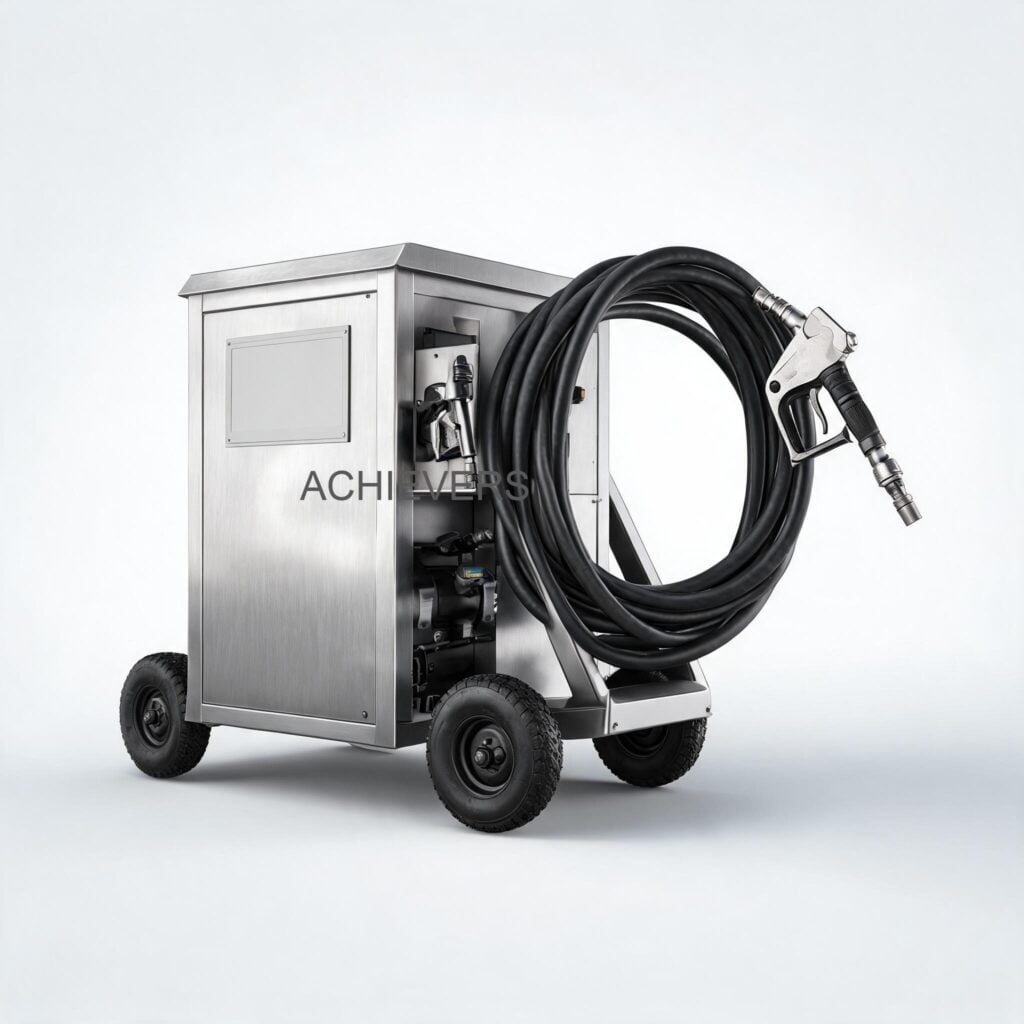
In heavy industrial sectors like mining, road construction, and large-scale agriculture, keeping heavy earth-moving machinery (HEMM) fueled is a logistical challenge. It is simply not economical to keep an excavator or a dumper idle while waiting for fuel. Moving machinery to a static petrol pump wastes time, burns expensive diesel, and reduces daily productivity.
To solve this, Indian contractors and plant managers rely on the Mobile Diesel Dispenser. Designed to reach equipment across uneven GIDC roads, deep mining pits, or remote highway construction sites, these units eliminate the unsafe, messy, and inaccurate practice of barrel refueling. However, a dispensing unit is a precision piece of equipment. Operating in harsh Indian conditions—characterized by high ambient heat, heavy dust, voltage fluctuations, and occasionally adulterated fuel—takes a toll on its internal mechanics.
A standard mobile dispensing setup in the Indian market typically costs anywhere between ₹45,000 to ₹1,50,000 (excluding 18% GST), depending on whether you choose a basic 12V DC system or an advanced unit with a hose reel, preset functions, and a receipt printer. Protecting this investment requires a strict, non-negotiable preventive maintenance schedule. Neglecting maintenance doesn't just cause breakdowns; it leads to calibration drift, resulting in massive unaccounted fuel losses and direct hits to your project's profitability.
In Simple Terms
A mobile dispenser acts like a mini petrol pump mounted on a truck or trolley. Just like your car needs timely oil changes and filter replacements to run smoothly, your dispenser needs regular cleaning, seal checks, and calibration. If you skip this, the meter will lose accuracy, the pump will overheat, and you will end up losing expensive diesel to leaks or miscalculations.
This comprehensive guide, tailored for Indian site engineers and fleet managers, outlines the critical daily, quarterly, and annual maintenance checks required to keep your Mobile Diesel Dispenser operating at peak efficiency, ensuring maximum uptime and zero fuel pilferage.
1. Product Overview and Critical Wear Components
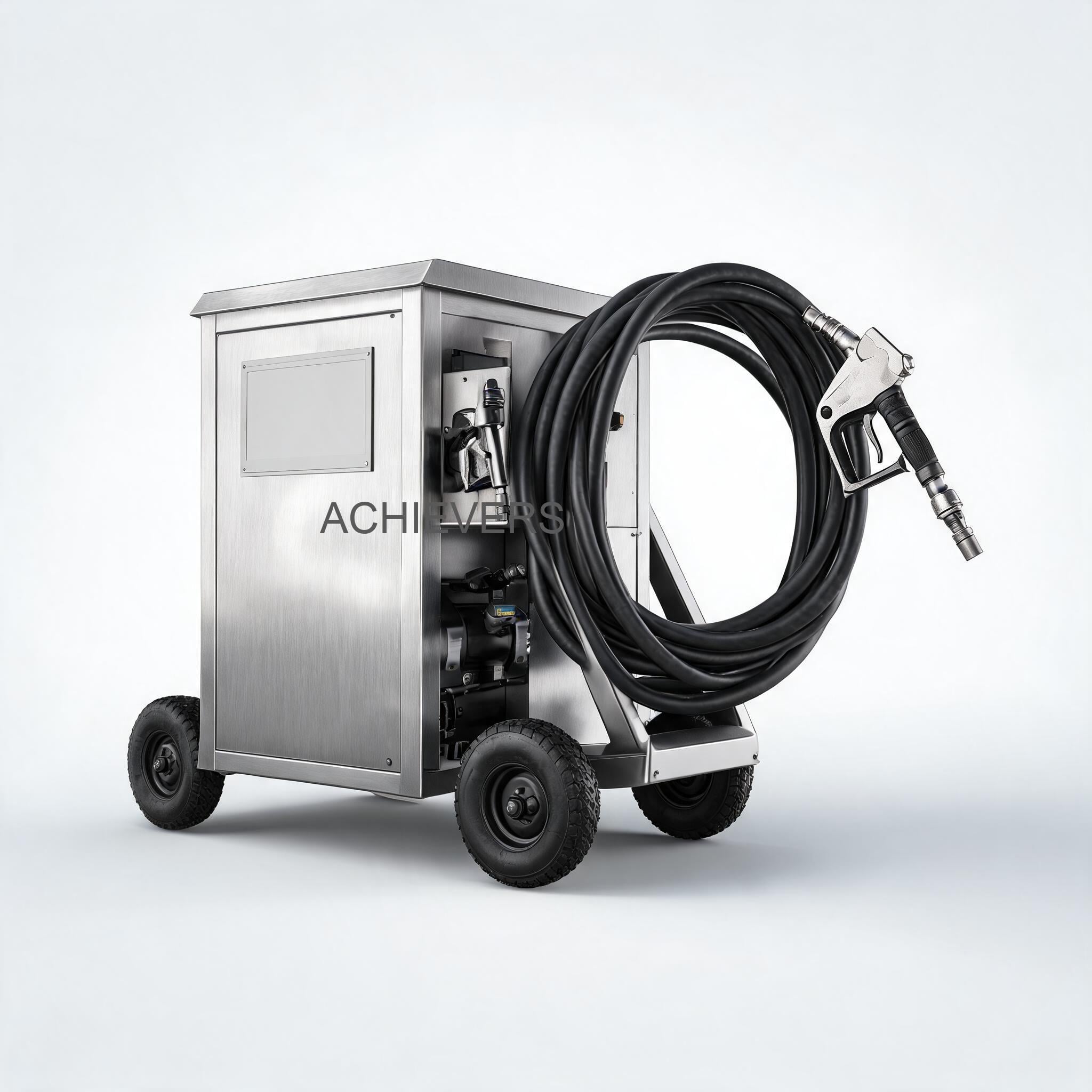
Manufactured under the "Make in India" initiative, Lumen Instruments' dispensing units are built with an uncompromising stance on quality. They feature standard high-quality components designed to deliver an impressive accuracy of +/- 0.2%, ensuring optimum utilization of fuel. Whether you are using a 12V DC, 24V DC, or an AC-powered setup, understanding the anatomy of your Mobile Diesel Dispenser is the first step in maintaining it.
Every time fuel is transferred from the storage tank to the equipment, it passes through several critical stages, each containing wear parts:
- Suction Strainer and Filters: The first line of defense against rust, dirt, and suspended particles. Indian diesel, especially when stored in older mobile bowsers, often contains particulate matter. The mesh in these filters wears out or gets clogged over time.
- Transfer Pump Vanes and Rotors: Most mobile dispensers utilize positive displacement rotary vane pumps. The carbon or polymer vanes slide in and out of the rotor. Over thousands of liters, friction causes these vanes to wear down, reducing suction capacity.
- Flow Meter Assembly: The heart of the dispenser. To maintain the +/- 0.2% accuracy, the internal gears or oscillating disks must rotate freely without friction. Debris bypassing the filter can score these components.
- Hose and Swivel Joints: The dispensing hose is dragged across abrasive concrete, gravel, and mud. The swivel joints that prevent the hose from kinking rely on rubber O-rings that degrade due to UV exposure and chemical wear.
- Dispensing Nozzle: The auto-shutoff mechanism relies on a small vacuum tube. If dirt clogs this tube, the nozzle will fail to shut off, leading to hazardous diesel spills.
- Electronics and Printers: For units equipped with receipt printers and preset keypads, the electronic boards are sensitive to battery voltage spikes and monsoon humidity.
The Financial Cost of Calibration Drift
A common misconception is that a working pump is a healthy pump. If internal wear causes the flow meter's accuracy to drift from 0.2% to just 2.0%, the financial impact is severe.
If a construction site consumes 2,000 liters of diesel a day at ₹92 per liter, a 2% error means 40 liters of fuel (worth ₹3,680) goes unaccounted for daily. Over a 300-day working year, that is a loss of over ₹11,00,000. Preventive maintenance is not an expense; it is a critical cost-saving measure.
2. Preventive Maintenance Schedule
To maintain accountability and ensure compliance with site safety protocols (such as PESO guidelines for fuel handling), plant managers should implement a structured maintenance roster.
Below is a detailed schedule designed for typical Indian industrial environments:
| Maintenance Task | Frequency | Responsible Personnel | Est. Time | Notes for the Indian Context |
| — | — | — | — | — |
| Visual Inspection & Leak Check | Daily | Operator / Driver | 5 mins | Inspect hose, nozzle, and ground under the pump for wet diesel spots before starting the shift. |
| Nozzle Auto-Shutoff Test | Weekly | Operator | 5 mins | Test during a live fill to ensure the sensor hole is not blocked by mud or dust. |
| Battery Terminal & Cable Check | Weekly | Maintenance Tech | 10 mins | 12V/24V systems draw high amps. Loose battery clamps on bad roads cause voltage drops and motor burnout. |
| Strainer & Pre-filter Cleaning | Bi-Weekly | Maintenance Tech | 20 mins | Crucial for mining and dusty sites. Wash the wire mesh with clean diesel. Do not use water. |
| Flow Meter Calibration Check | Monthly | Metrology / QC | 30 mins | Dispense into a PESO/Legal Metrology certified 20-liter proving measure to verify +/- 0.2% accuracy. |
| Earthing & Static Grounding Check | Monthly | Electrical Tech | 15 mins | Use a multimeter to ensure continuity from the pump chassis to the earth point. Vital for safety. |
| O-Ring & Swivel Joint Inspection | Quarterly | Maintenance Tech | 20 mins | Check for weeping fuel at the hose connections. Replace O-rings if hardened by heat. |
| Pump Vane Inspection | Bi-Annually | Mechanical Tech | 45 mins | Open pump head. Measure vane length. If worn beyond manufacturer spec, replace the entire set. |
| Receipt Printer Maintenance | Bi-Annually | Instrument Tech | 15 mins | Clean thermal print head with isopropyl alcohol. Check for paper dust accumulation. |
| System Flush and Tank Cleaning | Annually | Specialized Team | 4 hours | Drain the mobile bowser completely. Remove sludge, water, and microbial growth from the tank bottom. |
3. Step-by-Step Procedures for Key Tasks
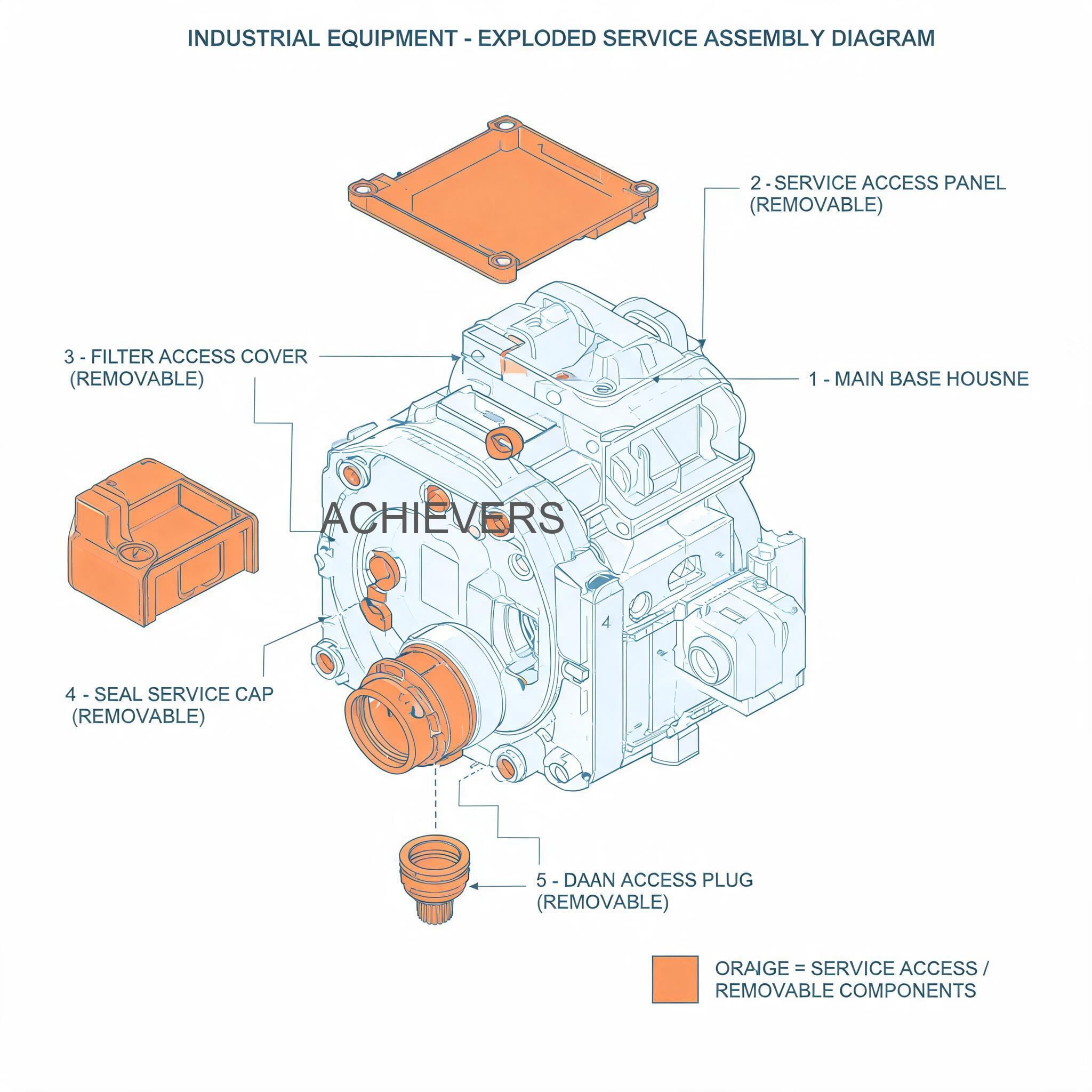
Establishing standard operating procedures (SOPs) ensures that maintenance is performed correctly and safely every time. Below are two critical procedures that account for the majority of dispenser breakdowns.
Procedure 1: Strainer and Internal Filter Cleaning
Due to the prevalent issue of diesel contamination in local supply chains, the strainer is your primary defense. A choked strainer causes the pump to cavitate (starve for fuel), which severely damages the motor and internal vanes.
- Isolate Power: Disconnect the 12V/24V power supply from the battery or switch off the main AC breaker. Lockout/tagout the system.
- Close Valves: Shut the isolation valve between the mobile diesel tank and the dispenser pump to prevent gravity-fed spills.
- Relieve Pressure: Squeeze the Fuel Nozzle into a catch can to relieve any trapped pressure in the hose.
- Open Filter Housing: Using the correct size spanner or Allen key, carefully unbolt the filter housing cover. Keep a drip tray underneath.
- Extract the Strainer: Gently pull out the cylindrical mesh strainer. Inspect it against a light source to gauge the level of blockage.
- Clean the Mesh: Wash the strainer in a bucket of clean diesel or kerosene. Use a soft nylon brush to dislodge stubborn particles (like rust flakes or tank sludge). Never use a wire brush as it can damage the micron mesh.
- Inspect O-Rings: Check the housing cover O-ring. If it is flattened, cracked, or deformed, replace it immediately to prevent air ingress.
- Reassemble and Prime: Insert the strainer, bolt the cover back evenly (star pattern), open the isolation valve, and power the unit. Run a small amount of fuel to purge any trapped air.
Procedure 2: Field Calibration Check and Adjustment
To maintain the stated accuracy of +/- 0.2%, you must periodically verify the meter against a known standard.
- Prepare the Standard: Procure a Legal Metrology certified 20-liter or 50-liter conical proving measure. Ensure it is perfectly level on the ground.
- Wet the Measure: Dispense a few liters into the measure and drain it completely. This "wets" the internal surface, replicating true measuring conditions.
- Zero the Dispenser: Reset the digital or mechanical batch display on the dispenser to exactly 0.00.
- Dispense Fuel: Dispense fuel into the proving measure at the normal operating flow rate (e.g., 40 Liters Per Minute) until the dispenser display reads exactly 20.00 liters.
- Read the Measure: Look at the sight glass on the neck of the proving measure. Note the actual volume collected.
- Calculate the Error: If the display shows 20.00 L but the measure holds 19.80 L, the pump is delivering less fuel than it registers (short fueling). If it holds 20.20 L, you are giving away free fuel.
- Adjust the Calibration: For mechanical meters, turn the calibration screw (usually located under a seal). For digital meters, enter the calibration mode on the keypad and adjust the "K-Factor" according to the manual.
- Re-Test and Seal: Repeat the test until the volume in the measure exactly matches the display. Once verified, apply a tamper-proof wire seal to prevent unauthorized adjustments by operators.
4. On-Site Spare Parts to Stock
Procurement heads must balance the cost of holding inventory against the cost of downtime. When a mobile dispenser breaks down at a remote highway construction site in Rajasthan or a mine in Odisha, waiting 5 days for a ₹200 spare part to arrive via courier is unacceptable.
Maintain a localized site inventory based on this recommended stock list:
| Part Description | Type of Component | Recommended Qty per Unit | Replacement Trigger |
| — | — | — | — |
| Filter Elements / Strainer Mesh | Consumable | 2 | Clogged beyond cleaning, torn mesh. |
| Vane Kit (Carbon/Polymer) | Wear Part | 1 set | Pump flow rate drops by >15%, excessive motor noise. |
| Complete O-Ring & Seal Kit | Consumable | 2 sets | Visible external leaks, air suction bubbles in fuel. |
| Auto-Shutoff Nozzle Spout | Wear Part | 1 | Spout gets bent, auto-shutoff fails continuously. |
| By-Pass Valve Spring | Internal Component | 1 | Pump overheats quickly, unstable dispensing pressure. |
| 12V/24V Solenoid Relay | Electrical | 1 | Pump fails to start despite good battery voltage. |
| Thermal Printer Paper Rolls | Consumable | 10 rolls | End of roll indicator line appears. |
Budgeting Note: A comprehensive annual spare parts kit for a standard mobile dispenser usually costs between ₹3,500 and ₹8,000 (plus 18% GST), a minor expense compared to the cost of equipment downtime.
5. Diagnosing Maintenance-Related Failures
Even with a maintenance schedule, harsh field conditions can trigger sudden issues. Use this troubleshooting matrix to bridge the gap between symptom and solution.
| Failure Symptom | Most Likely Missed Maintenance Task | Corrective Action |
| — | — | — |
| Pump motor runs, but no fuel is dispensed. | Bi-weekly filter cleaning ignored; tank is empty or isolation valve closed. | Clean the strainer. Check tank fuel level. Ensure no air leaks on the suction side. |
| Flow rate has dropped significantly (e.g., from 60 LPM to 30 LPM). | Annual vane inspection skipped; bypass valve stuck open by debris. | Open pump head, inspect and replace vanes. Clean the bypass valve assembly. |
| Motor becomes excessively hot within 10 minutes. | Clogged filter creating backpressure, or operating at incorrect voltage. | Clean filters. Verify battery voltage is strictly 12V or 24V under load. Use thick gauge cables. |
| Fuel leaks from the hose connection points. | Quarterly O-ring inspection skipped. | Remove the swivel/hose fitting. Replace the damaged O-ring and apply thread sealant. |
| Meter display shows erratic numbers or goes blank. | Weekly battery terminal check skipped; loose wiring due to vibration. | Clean battery terminals. Check the junction box for loose wires. Replace display battery if applicable. |
| Receipt printer jams or prints faded text. | Bi-annual printer maintenance skipped; damp paper used. | Clean the thermal print head with alcohol. Store paper rolls in a dry, sealed container. |
6. Extending Service Life in Indian Conditions
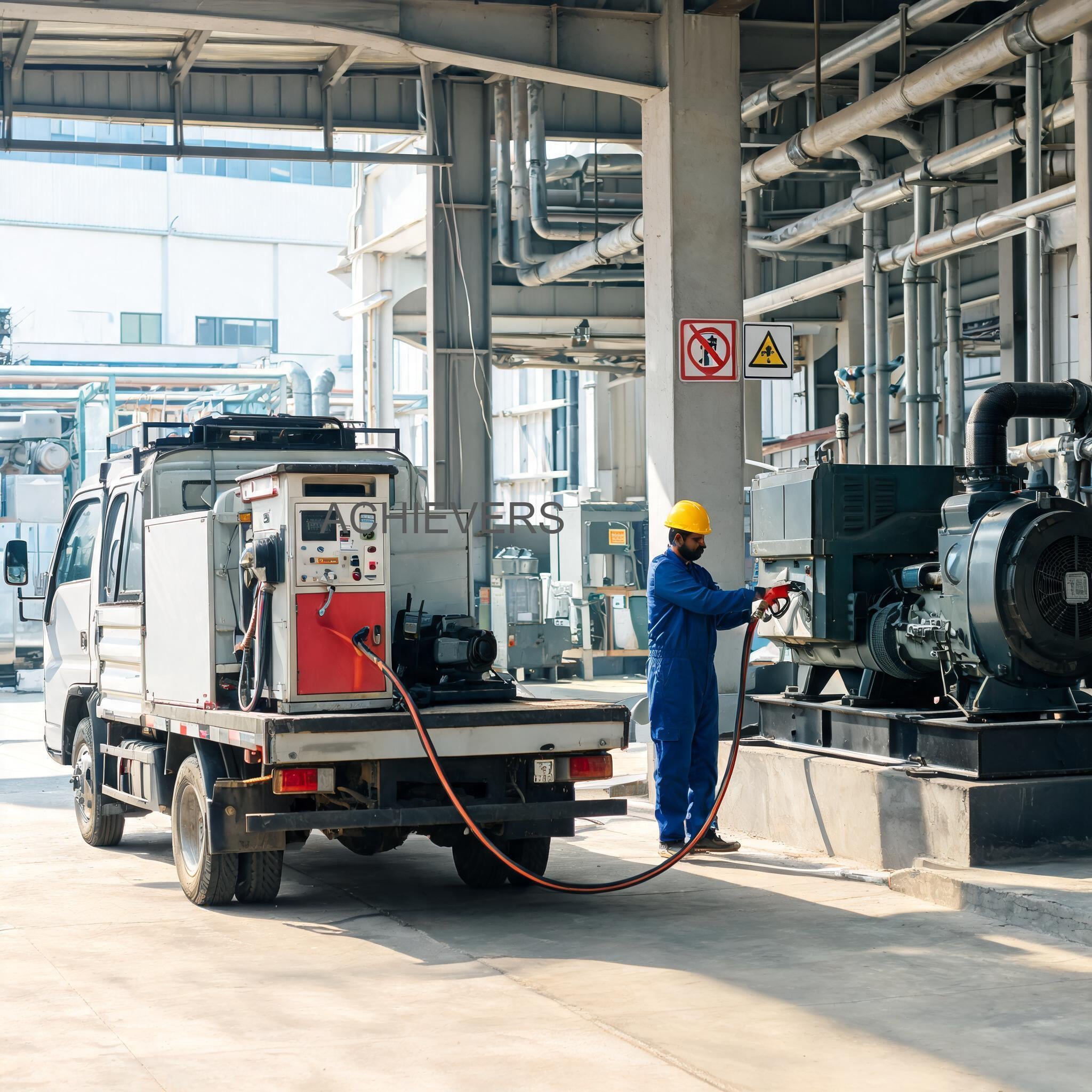
India’s geography and climate present unique challenges for fluid transfer equipment. To maximize the ROI on your mobile dispensing units, tailor your maintenance approach to your specific environmental conditions.
Handling Extreme Heat and Dust (Gujarat, Rajasthan, Central India)
High ambient temperatures (often exceeding 45°C) cause diesel to expand and increase the vapor pressure inside the mobile bowser. Ensure the tank breather valve is functioning correctly; a blocked breather can cause the tank to pressurize, forcing fuel past the pump seals. Furthermore, abrasive dust in cement plants or coal mines will quickly destroy the internal gears of a flow meter if it bypasses the filter. In these environments, filter cleaning must be upgraded from bi-weekly to weekly.
Power Quality and Battery Fluctuations
Most mobile units run on the vehicle’s 12V or 24V battery system. Heavy machinery often suffers from alternator issues, sending voltage spikes to the dispenser. A prolonged voltage drop (e.g., running a 12V pump on a degraded 10V battery) increases the amperage draw, causing the pump motor coils to overheat and eventually burn out. Always ensure the dispenser is wired with high-quality, thick-gauge copper cables, inline fuses, and is connected to a healthy battery.
Monsoon Prep and Water Contamination
Water is the greatest enemy of diesel injection systems and dispensing meters. During the Indian monsoons, high humidity causes heavy condensation inside metal diesel storage tanks. This water sinks to the bottom of the tank. If the mobile dispenser’s suction pipe is installed too low, it will suck up this water, causing internal rusting of the pump and catastrophic damage to the machinery you are fueling.
Maintenance Tip: Always drain a few liters from the bottom of your mobile bowser tank via the drain plug every morning during the monsoon to remove accumulated water before starting the dispenser. You can also integrate water-separating filters into your Fuel Transfer Pumps setup for added safety.
Dealing with Diesel Adulteration
In some regions, diesel may be mixed with kerosene or contain high sulfur content. These harsh chemicals degrade standard rubber seals faster than pure BS-VI diesel. If you operate in areas where fuel quality is suspect, consult with the manufacturer to ensure your dispenser is fitted with Viton or Teflon (PTFE) seals, which offer superior chemical resistance compared to standard Nitrile (NBR) rubber.
FAQ
Q: How often must a Mobile Diesel Dispenser be calibrated legally in India?
A: If the dispenser is used for commercial billing (selling fuel to sub-contractors), it falls under the Legal Metrology Act and must be calibrated and stamped annually by a certified Weights & Measures inspector. For internal captive use, a monthly internal check and bi-annual formal calibration is recommended.
Q: Can I use water to wash the internal strainer of the diesel pump?
A: Never. Introducing water into the fuel system causes rust inside the pump and damages the diesel injection systems of the machinery you are fueling. Always wash the strainer in clean diesel or kerosene.
Q: Why does my 12V DC pump motor get extremely hot after just 15 minutes of use?
A: DC mobile pumps generally have a specific duty cycle (e.g., 30 minutes ON, 30 minutes OFF). Running them continuously for over an hour, or running them with a clogged filter that causes high backpressure, will cause severe overheating.
Q: Does GST apply to spare parts, and can I claim Input Tax Credit (ITC)?
A: Yes, spare parts for industrial fuel dispensers generally attract 18% GST. As a registered business entity using the equipment for commercial/industrial operations, you can claim ITC on both the capital purchase of the dispenser and its subsequent spare parts.
Q: Can a diesel dispenser be used to pump petrol or chemicals?
A: No. Diesel dispensers are specifically designed with internal bypass pressures, seals, and non-explosion-proof motors suited only for diesel. Pumping highly flammable liquids like petrol requires specialized PESO-approved, ATEX-certified flameproof equipment.
Q: What is the difference between an auto-shutoff nozzle and a manual nozzle in terms of maintenance?
A: Manual nozzles are simpler and rarely fail, but require the operator to watch the tank to prevent overflows. Auto-shutoff nozzles contain a vacuum-sensing tube that automatically stops flow when the tank is full. This tube must be kept free of dirt and mud, requiring slightly more maintenance.
Q: My flow meter is counting, but no fuel is coming out of the nozzle. What is wrong?
A: This usually indicates that the internal bypass valve is stuck open due to debris, or the vanes are completely shattered. The pump is churning the fuel internally but failing to build enough pressure to push it out of the hose. Immediate internal inspection is required.
*
Preventive maintenance is the bridge between a high-performing project and a delayed one. Ensure your fleet stays fueled accurately and safely. If you need specialized guidance on selecting the right equipment, require authentic spare parts, or want to upgrade your current refueling setup, reach out to the experts at Lumen Instruments today. Contact us with your required flow rate, mobile application, and site conditions, and our team will recommend the perfect Mobile Diesel Dispenser configuration for your business.