
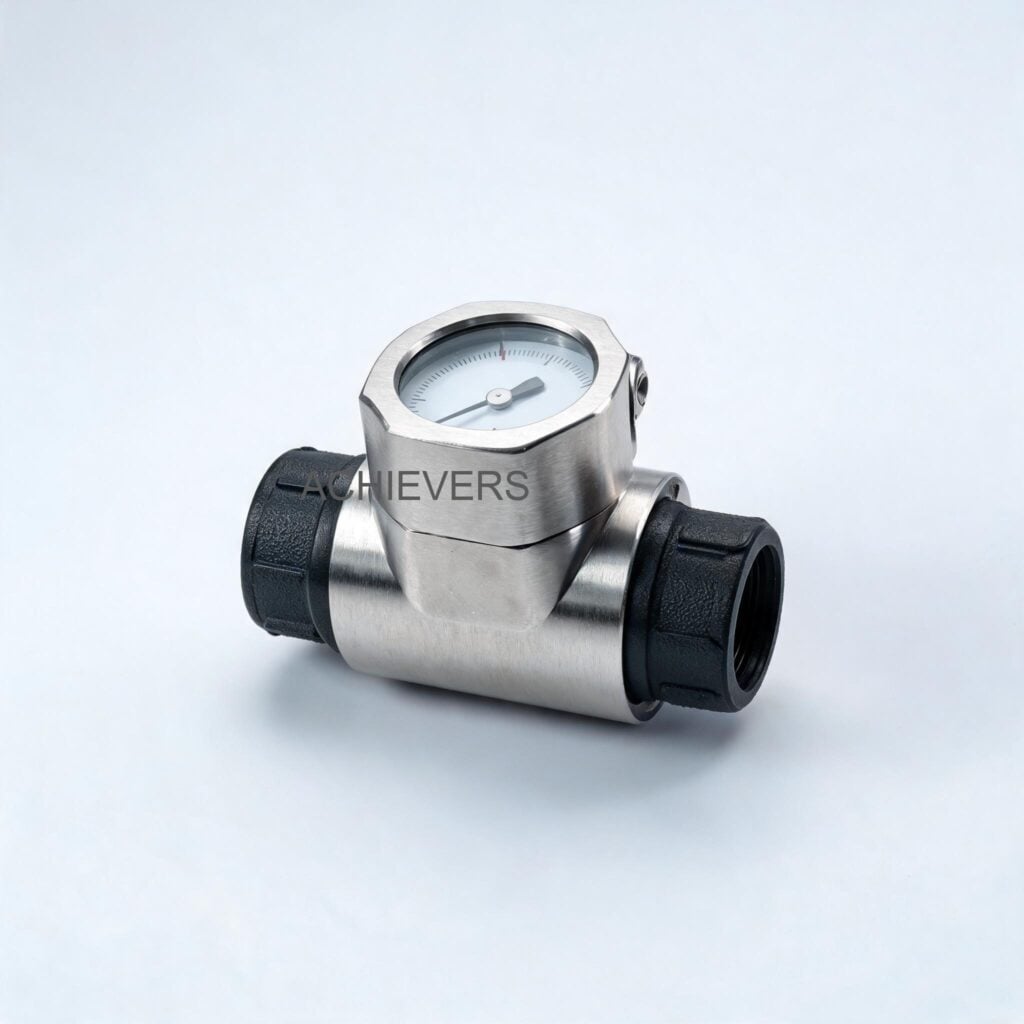
When managing industrial fuel infrastructure, every drop of diesel unaccounted for directly impacts your operational bottom line. Whether you are overseeing a bulk storage facility, an active fleet terminal, or remote generator tanks, selecting the correct measurement technology is critical. For procurement heads and plant engineers evaluating a Diesel Flow Meter, the primary decision often narrows down to one fundamental choice: digital or mechanical registration.
Both technologies utilize the same highly accurate volumetric measurement principles at their core, yet they diverge significantly in how they process, display, and transmit that data. This digital vs mechanical diesel flow meter comparison is designed to help industrial buyers—from global procurement teams to local plant managers—navigate the technical nuances. Sourcing the right equipment involves balancing accuracy, environmental durability, and total lifecycle cost. As a leading diesel flow meter supplier in India operating out of the advanced manufacturing hubs of Ahmedabad, Gujarat, we understand that buyers require robust, export-quality instrumentation that complies with international standards (ISO, ATEX) while delivering undeniable value.
This comprehensive guide breaks down the engineering specifications, application suitability, and commercial considerations you need to buy diesel flow meter for industrial fuel transfer with absolute confidence.
1. Overview of Diesel Flow Meter Family
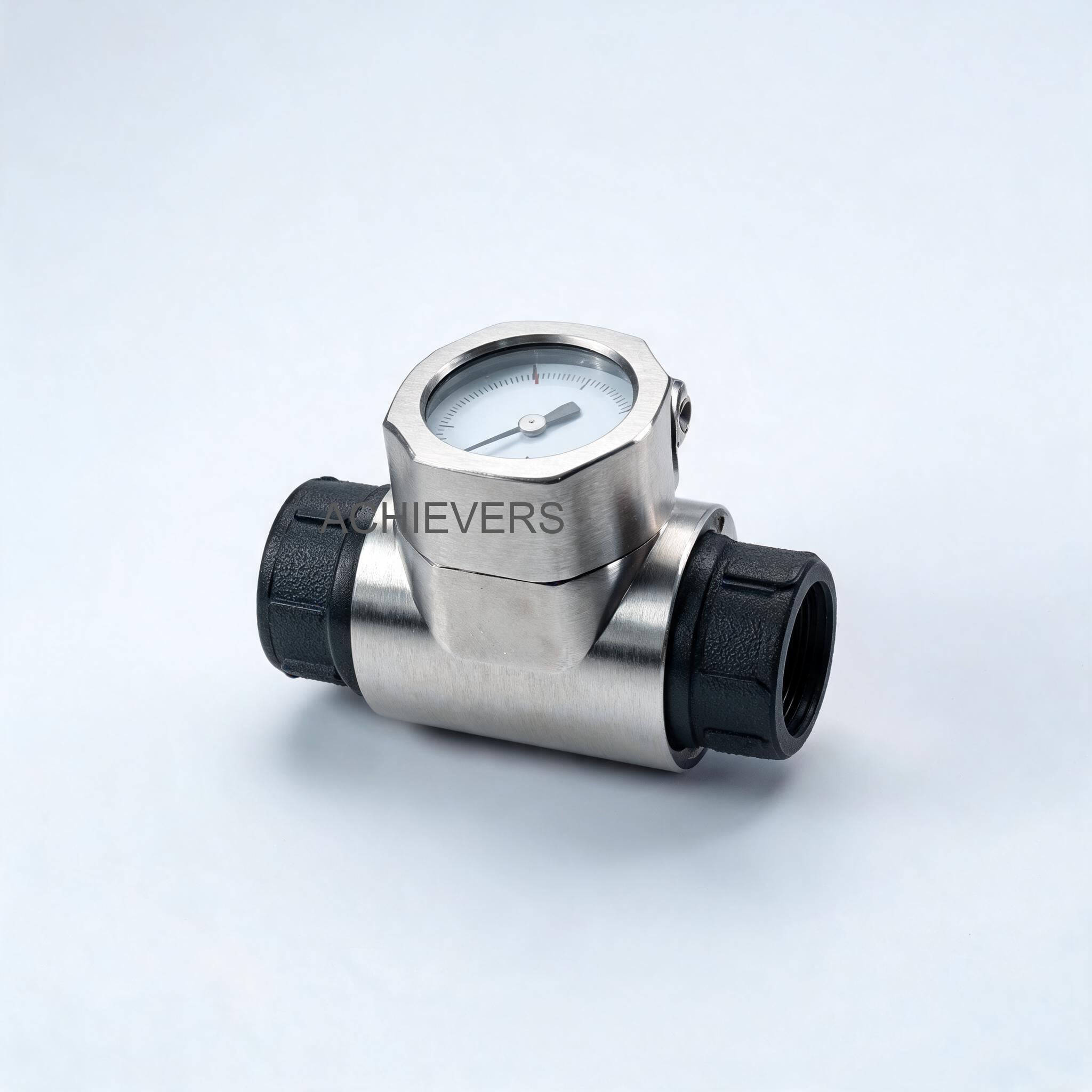
Before comparing the digital and mechanical registers, it is crucial to understand the underlying measurement mechanism. Our Diesel Flow Meter line utilizes positive displacement technology, specifically the oval gear principle. This method is universally recognized for providing exceptional repeatability and high accuracy across varying fluid conditions.
The measurement chamber contains two precisely machined elliptical (oval) gears. As liquid enters the inlet port, the fluid pressure creates a rotating torque. The bottom driving gear and top driven gear mesh together, rotating and trapping a very specific volume of liquid in the half-moon-shaped pockets between the gears and the outer housing. With every full rotation, the meter displaces a volume of liquid exactly four times the size of this measurement room. Because the measurement is strictly volumetric, changes in fluid viscosity have a minimal impact on accuracy. This makes the Diesel Flow Meter highly reliable for diesel, kerosene, biodiesel, and even higher viscosity petroleum products up to 1000 CPS.
In Simple Terms
Imagine a revolving door at a hotel. No matter how fast or slow people walk through it, the door only lets a specific number of people pass per rotation. An oval gear flow meter works the same way for liquids. The mechanical gears inside turn only when liquid pushes them, capturing and counting exact "pockets" of diesel. A mechanical meter counts these turns with physical numbered dials (like an old car odometer), while a digital meter uses sensors to show the count on an electronic screen.
The low-pressure drop through the meter makes it ideally suited for both high-pressure pump systems and gravity-fed applications. From this foundational mechanism, the rotational data is transmitted to either a mechanical register via a magnetic coupling and gear train, or to a digital display via magnetic pickups and microprocessors.
2. Head-to-Head Specification Comparison
To meet the diesel flow meter specifications for exporters and demanding domestic users, the technical parameters must be strictly defined. Below is a detailed technical comparison of how digital and mechanical configurations perform based on our standard product capabilities.
| Feature / Specification | Mechanical Diesel Flow Meter | Digital Diesel Flow Meter |
| Sizes Available | 1 inch, 1.5 inch, 2 inch | 1 inch, 1.5 inch, 2 inch |
| Display Technology | Analog rotating mechanical dials (Resettable batch, non-resettable totalizer) | LCD Display (Resettable batch, cumulative totalizer, instantaneous flow rate) |
| Power Requirement | None (Operates entirely on fluid kinetic energy) | Battery operated (Lithium) or External DC/AC power |
| Accuracy | +/- 0.5% | +/- 0.5% (Often easier to micro-calibrate via software) |
| Repeatability | 0.03% | 0.03% |
| Maximum Viscosity | 1000 CPS | 1000 CPS |
| Flow Rate (1" / 1.5" / 2") | 20-120 LPM / 25-250 LPM / 30-300 LPM | 20-120 LPM / 25-250 LPM / 30-300 LPM |
| Max Pressure Tolerance | 3.4 MPA (1"), 1.8 MPA (1.5" & 2") | 3.4 MPA (1"), 1.8 MPA (1.5" & 2") |
| Calibration Method | Mechanical gear adjustment / calibration screws | Electronic pulse factor adjustment (Software-based) |
| Signal Output / Automation | None (Visual reading only) | Pulse output, 4-20mA, or RS485 for SCADA/PLC integration |
3. Application Comparison Table
Different industrial environments demand different instrumentation strategies. The best diesel flow meter for fleet fueling and generator tanks in a clean, climate-controlled facility might fail in a highly corrosive or explosive mining environment.
| Application Scenario | Recommended Option | Reason for Selection |
| Hazardous / Explosive Areas (ATEX Zones) | Mechanical | Inherently intrinsically safe as it requires zero electricity to operate. |
| Remote SCADA & Plant Automation | Digital | Can transmit 4-20mA or pulse signals to centralized control rooms for real-time monitoring. |
| Extreme Outdoor Weather / High Humidity | Mechanical | Immune to screen blackouts from extreme UV exposure or electrical shorting from heavy monsoon ingress. |
| High Vibration Environments (Mining/Heavy Machinery) | Mechanical | Robust physical gear trains resist vibration better than sensitive LCD solder joints. |
| Precise Additive / Batch Dispensing | Digital | Software calibration allows for instantaneous flow rate viewing and pinpoint batch control. |
| Mobile Fuel Dispensing Carts | Digital | Lightweight, easy to read in low light (if backlit), and highly compact for portable units. |
| Gravity-Fed Overhead Tanks | Both | Both utilize the same low-pressure drop oval gear mechanism suitable for gravity applications. |
| Multi-Fluid Handling Systems | Digital | Easily recalibrated electronically when switching between fluids of slightly varying viscosities. |
4. Total Cost Comparison
When evaluating procurement out of Indian manufacturing hubs like the GIDC (Gujarat Industrial Development Corporation), global and domestic buyers must consider the Total Cost of Ownership (TCO). Under the Make in India initiative, Lumen Instruments manufactures world-class instrumentation that competes with European and American brands at a fraction of the lifecycle cost.
For domestic small and medium Indian businesses, the GST-inclusive cost is a major factor. Industrial flow meters typically fall under an 18% GST bracket. For international buyers, sourcing from India offers favorable FOB/CIF pricing frameworks with zero-rated export GST, providing massive procurement leverage.
| Option | Typical Indian Market Price Range (INR, Ex-Works) | Annual Maintenance Cost | Expected Lifecycle | Best Suited For |
| Mechanical Oval Gear Meter | INR 12,000 – INR 28,000 (Size dependent) | Low (Periodic cleaning of inline strainers) | 10 to 15+ years | Rugged industrial, remote sites, zero-power areas |
| Digital Oval Gear Meter | INR 15,000 – INR 35,000 (Size dependent) | Medium (Battery replacement, sensor checks) | 7 to 10 years | Automated plants, precision batching, fleet management |
| Meter with Ticket Printer | INR 35,000 – INR 55,000+ | Medium (Printer ribbon, paper rolls, battery) | 7 to 10 years | Custody transfer, commercial fuel sales, audit trails |
| Flanged Industrial Variant | INR 20,000 – INR 60,000+ | Low to Medium | 10 to 15+ years | Heavy-duty pipelines, petrochemical plants |
Note: The typical Indian market price range mentioned above is indicative. Final GST-inclusive costs or export FOB prices depend on exact sizing (1", 1.5", 2"), flange requirements, and bulk order quantities. Always request a formal quotation.
5. Decision Guide: Which One for Your Plant?
Making a confident, budget-conscious buying decision requires looking at your specific site conditions. If you are integrating these units into larger Oil Flow Meters systems or alongside heavy-duty Fuel Transfer Pumps, follow this step-by-step decision framework.
Step-by-Step Selection Procedure:
- Determine Flow Rate Requirements: Check your pump output. Use a 1" meter for up to 120 LPM, 1.5" for up to 250 LPM, and a 2" meter for high-volume bulk transfers up to 300 LPM.
- Assess the Power Situation: If the installation point lacks reliable electrical infrastructure or battery maintenance will be neglected, select a mechanical meter.
- Evaluate Integration Needs: If you need the meter to talk to a PLC, fleet management software, or a central computer, you must choose a digital meter with pulse or RS485 outputs.
- Identify the Operating Environment: For highly explosive zones (without ATEX-rated enclosures) or areas with extreme ambient dust and moisture, the mechanical meter provides fail-safe reliability.
- Consider the Fluid Viscosity: Verify that your fluid does not exceed 1000 CPS. If you are measuring thicker oils, ensure the pressure rating (up to 3.4 MPA for 1" sizes) is sufficient to push the fluid through the gears.
- Review Calibration Capabilities: If you need to make frequent micro-adjustments to calibration based on seasonal temperature changes affecting fluid density, digital meters offer an easier software-based recalibration process.
8 Common Plant Scenarios and Recommendations:
- Heavy-Duty Fleet Fueling Terminals: Recommendation: Digital. Fleet operators need to track exactly how much fuel goes into each truck. Digital screens provide easy-to-read batch totals and can often interface with fleet management software.
- Remote Standby Generator Tanks: Recommendation: Mechanical. Generators in remote telecom towers or rural industrial sites sit idle for long periods. A mechanical meter ensures that when fuel is transferred, it is recorded accurately without worrying about dead batteries.
- Chemical Industry Batching: Recommendation: Digital. When chemical applications require exact volumetric batching for recipes, the high-resolution display and instantaneous flow rate data of a digital unit are indispensable.
- Mining and Quarry Operations: Recommendation: Mechanical. Heavy vibration, constant dust, and rough handling by operators quickly destroy sensitive electronics. Mechanical displays are built for this abuse.
- Marine and Offshore Platforms: Recommendation: Mechanical. Saltwater corrosion and extreme moisture are hostile to digital displays. A properly sealed mechanical meter with marine-grade coatings is the standard choice.
- Export Automation Projects: Recommendation: Digital. For global buyers building automated skids, sourcing a digital meter from our GIDC facility provides a cost-effective, high-accuracy component that easily integrates into international SCADA systems.
- Gravity-Fed Agricultural Dispensing: Recommendation: Mechanical. The low-pressure drop of our oval gear design works perfectly for gravity feeds, and the lack of power requirements suits remote agricultural sites perfectly.
- Custody Transfer and Auditing: Recommendation: Digital with Print Flow Meter. Also known as a Print Flow Meter with Ticket Printer, this variant provides immediate physical proof of dispensed volume, crucial for resolving billing disputes in commercial sales.
FAQ
Q: Are oval gear flow meters suitable for high-viscosity fluids?
A: Yes. The positive displacement oval gear principle is actually more efficient with slightly viscous fluids because the fluid seals the gaps between the gears and the chamber. Our meters can handle maximum viscosities up to 1000 CPS with exceptional accuracy.
Q: How often does the flow meter need to be calibrated?
A: For standard industrial fuel transfer, calibration should be verified annually. However, for custody transfer or commercial sales, local legal metrology laws may require bi-annual calibration. Both our digital and mechanical meters hold their 0.03% repeatability remarkably well over long periods.
Q: Can I use this meter for water or corrosive chemicals?
A: No. As per our technical specifications, these meters are widely used to measure oil-kind liquids (diesel, kerosene, petrol MTO) and are explicitly forbidden to measure corrosive liquids or water, which lack the lubricity required to protect the internal metal gears.
Q: What happens if there is a pressure surge in the pipeline?
A: The meters are robustly designed to handle standard industrial pressures. The 1-inch model can withstand up to 3.4 MPA, while the 1.5-inch and 2-inch models handle up to 1.8 MPA. Always ensure your pump system includes pressure relief valves to prevent exceeding these limits.
Q: Why does the 1-inch meter handle higher pressure than the 2-inch meter?
A: Smaller measurement chambers have less surface area exposed to internal fluid pressure, allowing the casing to contain higher pressures safely. Larger volumetric chambers (1.5" and 2") have more surface area, hence a slightly lower maximum pressure rating of 1.8 MPA.
Q: Is it difficult to install a digital flow meter compared to a mechanical one?
A: Mechanically, the plumbing installation is identical—both use standard flanged or threaded pipe connections. The only difference is that a digital meter may require wiring if it is externally powered or if you are connecting data cables to a control panel. Battery-operated digital meters are plug-and-play.
Q: Do you export these meters outside of India?
A: Yes. While we support small and medium Indian businesses extensively, up to 20% of our business involves exporting to global markets. Our ultramodern infrastructure at Ahmedabad guarantees products that meet rigorous international specifications with highly competitive pricing and reliable packaging.
Ready to upgrade your fluid management system with precision instrumentation? Contact Lumen Instruments today with your required flow rate, pipe size, fluid type, and application details. Our team in Ahmedabad will guide you toward the perfect mechanical or digital solution, providing detailed specifications and a competitive, transparent quotation tailored to your exact industrial needs.