
In the fast-paced environment of Indian manufacturing, construction, and fleet operations, uninterrupted power and logistics are non-negotiable. Whether you are running a massive textile mill in a Gujarat Industrial Development Corporation (GIDC) estate, managing an earth-moving fleet at a highway construction site, or ensuring your critical data center's backup diesel generators are always topped up, you rely on efficient fuel handling. However, many Indian plant managers and procurement heads treat fuel transfer systems as an afterthought. Buying sub-standard or incorrectly specified equipment leads to motor burnouts, fuel spillage, inaccurate inventory, and costly downtime. Choosing the right equipment requires balancing capital expenditure with rugged reliability, especially given Indian site conditions like extreme summer heat, monsoon humidity, high dust levels, and erratic power supply.
This comprehensive buyer's guide is designed specifically to help industrial engineers and procurement heads make informed, budget-conscious decisions. We will explore how to select the right Fuel Transfer Pumps in India for industrial use, matching equipment specifications to your actual site realities. From understanding the differences between 12V/24V DC mobile units and 220V AC stationary models, to navigating typical GST-inclusive pricing and avoiding common installation mistakes, this guide delivers practical, technically accurate insights. Let us dive into the mechanics, variants, and selection criteria that will safeguard your fuel handling infrastructure.
1. What Is Fuel Transfer Pumps and What Does It Do
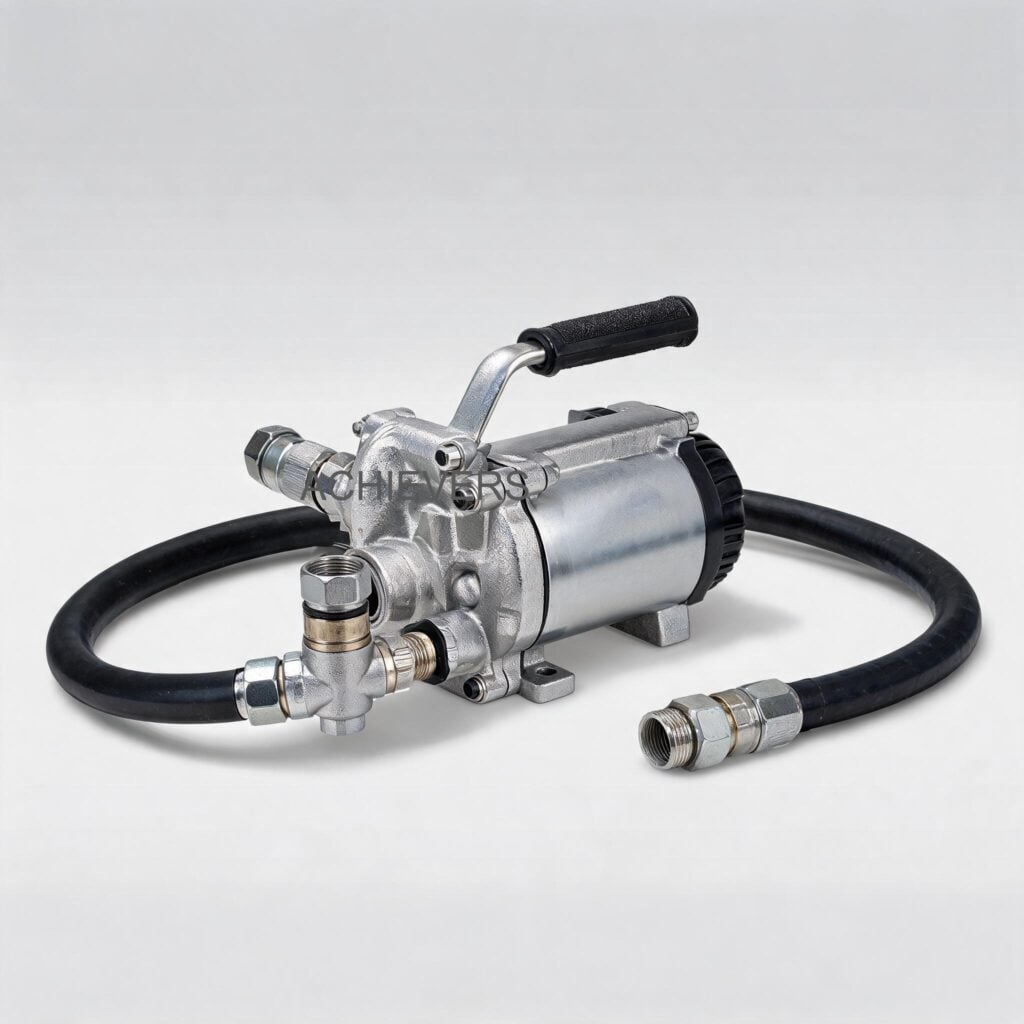
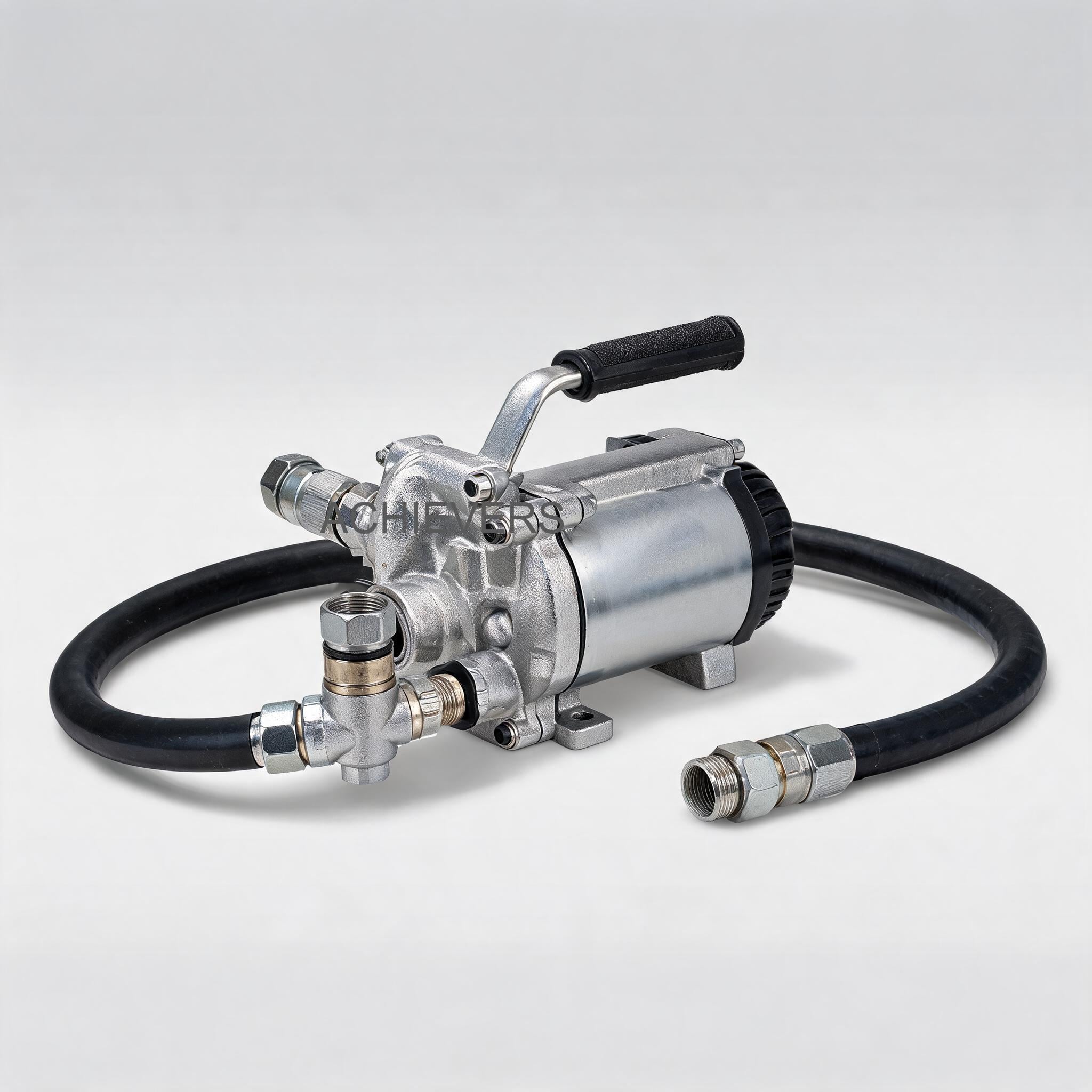
At its core, industrial Fuel Transfer Pumps are motorized, positive displacement, self-priming, rotary electric vane pumps designed specifically to move middle-distillate fuels like diesel, kerosene, lube oil, and vegetable oil. Unlike standard water centrifugal pumps, which struggle with viscosity and lack self-priming capabilities under dry conditions, rotary vane pumps use a slotted rotor with sliding vanes. As the rotor turns, centrifugal force pushes the vanes outward against the pump casing, creating a vacuum that draws the fuel into the chamber and physically pushes it out the discharge port.
Our locally manufactured Fuel Transfer Pumps are highly regarded for their compact size, noiseless operation, and exceptionally long working life. They are widely used as the primary pumping system on mobile fuel dispensers attached to vehicles, in construction yards, and for industrial bulk fluid transfer. A critical component built into all our diesel transfer models is the integrated bypass valve. This safety feature allows the pump to continue running for brief periods even if the discharge nozzle is closed, redirecting the pressurized fluid internally to prevent pipeline bursts or motor stalls.
In Simple Terms: Think of a fuel transfer pump as the mechanical heart of your diesel management system. Just like a heart pumps blood through arteries, this pump creates the suction needed to lift heavy diesel out of underground or mobile tanks and pushes it rapidly into your generator or vehicle tanks. The "self-priming" feature means it can suck up fuel even if the pipe is initially empty, saving you the hassle of manually filling the line before turning it on.
Below is an overview of the fundamental specifications shared across our premium transfer pump range:
| Core Specification | Standard Value / Feature | Engineering Benefit for the User |
| :— | :— | :— |
| Pump Technology | Rotary Electric Vane | Handles varied viscosities, provides excellent self-priming, and delivers consistent high flow rates. |
| Priming Mechanism | Automatic Self-Priming | Eliminates manual priming, reducing operator error and speeding up the transfer process. |
| Safety Mechanism | Integrated By-pass Valve | Protects the motor and pump seals from pressure spikes when the delivery nozzle is abruptly shut. |
| Filtration | Built-in Strainer (AC Models) | Captures heavy rust and particulate matter common in Indian bulk diesel, protecting internal vanes. |
| Operating Voltages | 12V DC, 24V DC, 220V AC | Offers complete flexibility for mobile battery-operated fleets or fixed-grid industrial sites. |
| Compatible Fluids | Diesel, Kerosene, Veg Oil | Versatile handling for petrochemical, food processing, and facility management applications. |
2. Key Selection Criteria for Indian Industrial Buyers
Selecting the best fuel transfer pump for generator refuelling and tanker unloading requires matching the pump's engineering limits to your site's physical conditions. The Indian industrial landscape presents unique challenges: ambient temperatures exceeding 45 degrees Celsius in summer, heavy monsoon rains, fine particulate dust from mining or construction, and notorious voltage fluctuations.
Here are the six critical criteria you must evaluate before issuing a purchase order:
1. Power Supply and Grid Stability
Your first decision is choosing between AC (Alternating Current) and DC (Direct Current) models.
- 12V and 24V DC Pumps: These are ideal for mobile bowsers, earth-moving machinery (JCBs, excavators), and remote mining sites where grid power is unavailable. They run directly off standard vehicle batteries. However, long cable runs from the battery to the pump can cause voltage drops, increasing amperage and heating the motor.
- 220V AC Pumps: Designed for stationary applications like factory fuel yards or backup generator rooms. In India, grid voltage can frequently drop from 230V down to 180V or spike unpredictably. Our CE-60A and CE-80B models feature robust 0.37 KW and 0.55 KW motors with high-quality copper winding designed to tolerate standard Indian industrial power fluctuations without burning out.
2. Flow Rate (Liters Per Minute – LPM)
Time is money. If you are refueling a 500 kVA generator with a 1,000-liter day tank, a standard 40 LPM pump (like our CE-40DC) will take 25 minutes. Upgrading to an 80 LPM pump (like our CE-80-DC or CE-80B) cuts that time in half. Always match the flow rate to the volume of your storage tanks and the time constraints of your manpower. High flow rates are essential for tanker unloading, while moderate flow rates (40-60 LPM) are safer for filling small equipment to prevent dangerous splashing and frothing.
3. Suction Lift and Head Pressure
"Suction lift" refers to the vertical distance the pump must pull the fuel up from the tank, while "head" is how high it can push it. If you are drawing diesel from an underground storage tank (UST) typical in Indian factories, the pump must have strong self-priming capabilities. For example, our CE-70-A-DC offers a solid 2 to 4 meters of suction lift and a 10-meter delivery head. Always factor in friction losses caused by long hoses, right-angle elbows, and dirty strainers.
4. Continuous Duty Cycle Limits
Unlike massive centrifugal water pumps that run 24/7, rotary vane fuel pumps generally have a specific "duty cycle" (often 30 minutes on, 30 minutes off). In the harsh Indian summer, where ambient temperatures in states like Gujarat or Rajasthan soar, running a pump continuously beyond its duty cycle will overheat the motor and melt the internal seals. If your application requires transferring 5,000 liters at once, you must select a heavy-duty continuous rating or upsize the flow rate so the job finishes within the 30-minute window.
5. Contamination and Filtration
Diesel supplied to Indian construction sites or rural facilities often contains suspended rust, tank scale, and water condensation. Pumping this directly will severely score the sliding vanes of the pump, dropping your flow rate over time. Selecting models with built-in strainers (like our 220V AC range) provides a crucial first line of defense. For complete protection, we strongly recommend installing a comprehensive inline filtration system before the Diesel Flow Meter to guarantee accuracy and longevity.
6. The By-Pass Valve Operation
In any fuel dispensing setup, the operator might shut the Fuel Nozzle while the pump motor is still running. Without a bypass valve, the sudden dead-head pressure would blow the pump seals or rupture the delivery hose. Our pumps feature an integrated bypass valve that opens under pressure, allowing fuel to circulate safely within the pump head. However, users must be trained not to leave the pump running in bypass mode for more than 2-3 minutes, as the friction will rapidly heat the diesel, leading to vapor lock and seal failure.
3. Model and Variant Comparison
Lumen Instruments manufactures a wide array of fuel handling pumps tailored to specific industrial tasks. Being a Make in India manufacturer based in Ahmedabad, we ensure that our components meet high utility standards while keeping nominal prices.
To help procurement teams compare technical specifications for manufacturers, here is a detailed breakdown of our primary 12V/24V DC and 220V AC series.
| Model Number | Power Voltage | Flow Rate | Input/Output Ports | Current / Power | Key Feature & Best Use Case |
| :— | :— | :— | :— | :— | :— |
| CE-40DC | 12V / 24V DC | 40 L/min | 3/4 inch | 22A (12V) / 12A (24V) | Lightweight (3.5kg). Best for small tractors, earth-movers, mobile utility vehicles. |
| CE-70-A-DC | 12V / 24V DC | 70 L/min | 3/4 inch | 4A | 10m Head, 2-4m Suction. Ideal for medium fleets and rapid site-to-site dispensing. |
| CE-80-DC | 12V / 24V DC | 80 L/min | 1 inch | 44A (12V) / 21A (24V) | High flow, heavy-duty (12kg). Designed for bulk mobile transfer and large mining dumpers. |
| CE-60A | 220V AC | 20-60 L/min | Standard | 0.37 KW | Built-in strainer, bypass valve. Best for stationary day-tank filling in manufacturing plants. |
| CE-80B | 220V AC | 20-70 L/min | Standard | 0.55 KW | Higher power motor, built-in strainer. Ideal for factory fuel yards, DG set rooms. |
Typical Indian Market Price Range & GST Implications
When budgeting for fluid handling equipment, Indian businesses must account for capital costs, installation, and taxes. A typical industrial-grade diesel transfer pump in the Indian market ranges from ₹8,000 for basic 40 LPM DC models up to ₹35,000 – ₹45,000 for high-capacity 80 LPM heavy-duty AC setups (excluding flow meters and auto-shutoff nozzles).
These industrial pumps fall under standard GST slabs (typically 18% for machinery and mechanical appliances). Since the readers of this guide are registered Indian businesses (manufacturing, transport, logistics), this GST is fully claimable as an Input Tax Credit (ITC). Therefore, focusing on the lowest sticker price from unbranded importers is a false economy. Investing in a robust, locally manufactured pump ensures you get valid GST invoices, prompt spare parts availability, and reliable after-sales service, ultimately delivering a lower Total Cost of Ownership (TCO).
4. Common Mistakes Indian Buyers Make When Choosing
Even with the best specifications, poor procurement and installation choices can ruin a pump. Here are the most common mistakes Indian plant managers make, and how to avoid them:
- Ignoring the Duty Cycle: This is the number one cause of motor failure. Operators leave a standard 30-minute duty cycle pump running for two hours to empty a massive 5,000-liter tanker in the blistering Indian summer heat. The motor windings burn out. If you need continuous transfer, you must specify a continuous-duty rated motor or buy a much higher flow rate pump to reduce run time.
- Mismatching Voltage on DC Pumps: Hooking up a 12V DC pump (like the CE-40DC 12V variant) to a 24V commercial truck battery system without a step-down converter will spin the motor at double the speed, instantly destroying the vanes and frying the electricals. Always match the pump voltage to your specific vehicle battery.
- Using Undersized Suction Hoses: Buyers often use a 1/2-inch garden hose for the suction side of a 1-inch pump to save money. This starves the pump of fluid, creates massive internal vacuum (cavitation), and causes the diesel to vaporize, which aggressively damages the pump's internal metal surfaces. Always use reinforced, non-collapsible hoses matching the exact port size of the pump.
- Running the Pump Dry for Too Long: While rotary vane pumps are "self-priming," they rely on the diesel fuel itself for internal lubrication and cooling. If the underground tank is empty and the pump runs completely dry for more than a few minutes, the friction will melt the carbon/steel vanes and destroy the mechanical seals.
- Using Fuel Pumps for Water or Chemical Transfer: These pumps are specifically engineered for petroleum-based fluids that provide natural lubrication. Pumping water, AdBlue, acids, or solvents through a cast-iron diesel pump will cause immediate internal rusting, seizure, and catastrophic failure.
- Neglecting Earthing on AC Pumps: In many Indian GIDC estates, electrical earthing is poorly maintained. Running a 220V AC pump (CE-60A or CE-80B) outdoors near flammable liquids without proper double earthing is a massive safety hazard. Always ensure your electrician checks the earth pit resistance before commissioning.
5. Enquiry Specification Checklist
To ensure you get exactly the right equipment from your fuel transfer pumps supplier, you need to provide clear, engineering-led requirements. Do not just ask for "a diesel pump." Use this checklist when submitting your technical enquiry:
- Fluid Type & Viscosity: Specify exactly what you are pumping (e.g., High-Speed Diesel (HSD), Kerosene, or Light Diesel Oil). Mention if the fluid is clean or potentially contaminated.
- Required Flow Rate: State your desired speed in Liters Per Minute (LPM). Do you need to fill a small 50-liter tank (requires 40 LPM) or transfer 2,000 liters quickly (requires 80 LPM)?
- Power Availability: Clearly state if you need a mobile battery-operated unit (12V DC or 24V DC) or a stationary grid-connected unit (Single Phase 220V AC).
- Suction and Discharge Distances: Measure and state the vertical depth of your tank (Suction Lift, e.g., 3 meters deep) and how far/high you need to push the fluid (Discharge Head, e.g., 10 meters horizontally and 2 meters vertically).
- Run Time / Duty Cycle: Tell the manufacturer how many continuous minutes the pump will need to run per session.
- Operating Environment: Note if the pump will be installed indoors (like a generator room) or outdoors exposed to monsoon rain and heavy construction dust.
- Port Size Preferences: Specify if your existing piping requires 3/4-inch or 1-inch threaded connections (BSP/NPT).
- Required Accessories: Let the supplier know if you require a complete dispensing kit, including a strainer, reinforced suction/delivery hoses, a mechanical or digital flow meter, and an auto-shutoff nozzle.
FAQ
Q: Can I use these fuel transfer pumps to pump petrol (gasoline) or aviation fuel?
A: Absolutely not. These pumps are designed for middle-distillate fuels like diesel, kerosene, and lube oil. Petrol is highly volatile and requires explosion-proof (PESO/ATEX certified) pumps. Using standard diesel pumps for petrol is a severe fire hazard.
Q: How long can I run a 12V DC diesel transfer pump continuously?
A: Most standard DC rotary vane pumps have a 30-minute duty cycle. You should run it for a maximum of 30 minutes, then allow it to cool down for 30 minutes to prevent motor overheating, especially in high Indian ambient temperatures.
Q: Why is my pump making a loud whining noise and dispensing fuel very slowly?
A: This usually indicates cavitation or a blocked suction line. Check if the internal strainer or external filter is clogged with rust or dirt. Also, ensure your suction hose hasn't collapsed under vacuum and that there are no air leaks at the inlet joints.
Q: Do I need a foot valve installed at the bottom of my diesel tank?
A: While rotary vane pumps are self-priming and can lift fuel from a dry start, installing a one-way foot valve at the bottom of the suction line keeps the pipe flooded. This provides instantaneous flow the moment you turn the pump on and reduces wear on the internal vanes.
Q: Are spare parts easily available for these pumps in India?
A: Yes. Because Lumen Instruments manufactures and assembles these pumps at our ultramodern facility in Ahmedabad, Gujarat, we maintain a complete inventory of spares, including vanes, rotors, bypass valve springs, and motor windings, ensuring zero downtime for our industrial clients.
Q: Does the quoted price of the pump include GST?
A: Industrial price quotes are typically provided ex-factory, exclusive of GST. Diesel transfer pumps currently attract standard machinery GST rates (usually 18%). Registered Indian businesses can claim this entirely as Input Tax Credit (ITC).
Q: Can I connect an automatic shut-off nozzle to these pumps?
A: Yes, all our pumps are equipped with an internal bypass valve. This allows you to safely use an auto-shutoff nozzle. When the tank is full and the nozzle clicks shut, the bypass valve opens, preventing pressure buildup until you switch off the motor.
Ready to upgrade your industrial fuel handling infrastructure with reliable, Make-in-India equipment? Contact Lumen Instruments today with your required flow capacity, fluid application, and site conditions. Our technical team in Ahmedabad will help you select the perfect Fuel Transfer Pumps to ensure accurate, safe, and efficient diesel management for your business.