
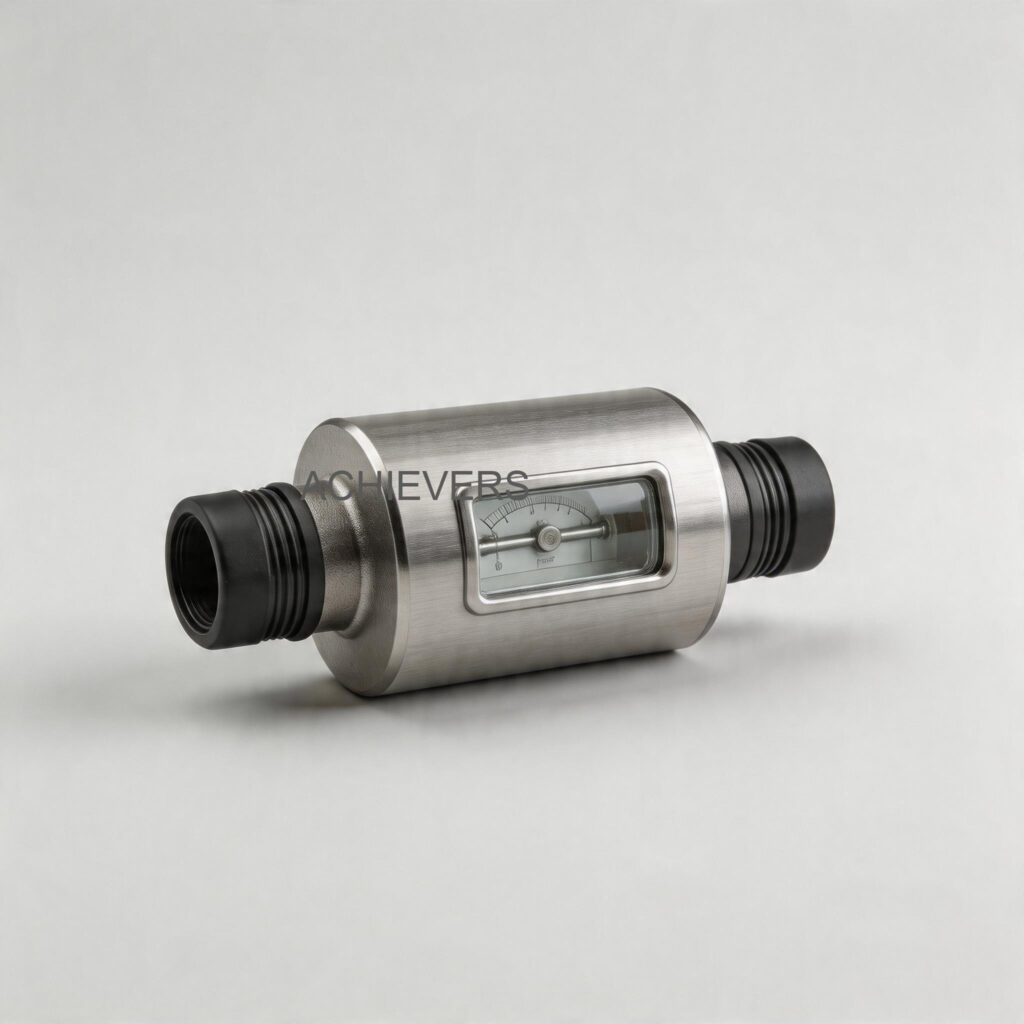
For industrial facility managers, transport fleet operators, and plant heads across India, bulk diesel consumption represents one of the largest monthly operational expenses. Whether you are running massive backup generators in a pharmaceutical plant in Baddi, managing a logistics fleet out of a transport hub in Gujarat, or operating heavy machinery in a GIDC manufacturing estate, fuel is practically liquid gold. Yet, many businesses rely on outdated, inaccurate measurement methods like manual dipsticks or low-quality flow meters that result in massive, untracked fuel losses.
When businesses finally decide to upgrade their fuel tracking, they often focus entirely on the initial purchase price of the metering equipment. This is a critical mistake. Understanding the true Total Cost of Ownership (TCO) and the aggressive Return on Investment (ROI) of a high-quality Diesel Flow Meter is essential for protecting your bottom line. Better accuracy translates directly into shrinkage control, elimination of supplier disputes, and rapid payback. This guide breaks down exactly what a plant manager needs to know to make a confident, budget-conscious buying decision that aligns with local GST frameworks and Make in India quality standards.
1. Product Overview and Cost Context
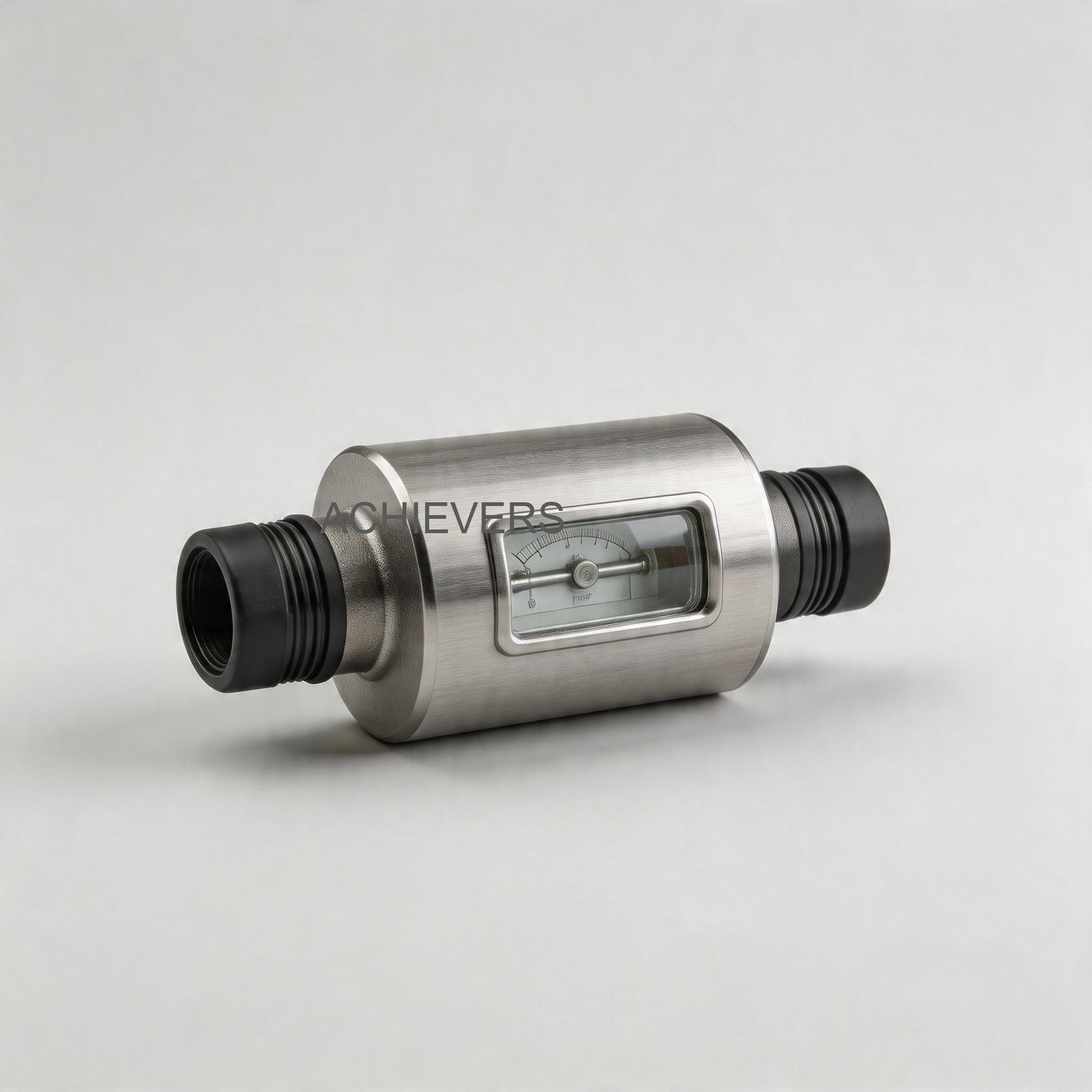
A Diesel Flow Meter is a highly specialized positive displacement meter designed specifically to measure the volumetric flow of diesel, kerosene, and petrol MTO in bulk transfer lines. Unlike basic turbine meters that lose accuracy when flow rates fluctuate, the positive displacement design—specifically utilizing oval gear technology—guarantees precision regardless of pipeline pressure variations or the fluid's physical characteristics.
Manufactured in Ahmedabad by Lumen Instruments, these mechanical and digital meters incorporate two perfectly machined elliptical (oval) gears that mesh together inside a measuring chamber. As fluid enters the inlet, the pressure drives the gears. The bottom driving gear and the top driven gear rotate, capturing exact, fixed volumes of fluid in a "half-moon" space between the gear and the outer shell. Every single full rotation of the gears pushes out a volume equal to four times the capacity of this measuring room. Because the volume is fixed and mechanically sealed, counting the rotations gives a remarkably precise measurement of the total fuel transferred.
In Simple Terms:
Imagine a revolving door at a hotel. Only one person can fit in each section of the door. If you know exactly how many times the door spins, you know exactly how many people entered the building, regardless of how fast or slow they walked. An oval gear meter does the same thing with liquid—trapping a precise pocket of diesel and pushing it through, ensuring not a single drop passes uncounted.
This design inherently provides exceptional repeatability (0.03%) and high accuracy (+/- 0.5%). Furthermore, because there is very little pressure drop through the meter body, these devices are highly suitable for gravity-fed applications as well as pumped systems utilizing industrial Fuel Transfer Pumps. For an Indian business manager, accurate measurement and control have direct financial value. Every 0.5% of inaccuracy on a 20,000-liter daily diesel consumption equals 100 liters of lost fuel per day. At typical local fuel prices, this single-day loss often exceeds the cost of routine maintenance.
Technical Specifications Context
To understand the cost, you must match the meter to your specific line size and flow requirements. Purchasing an oversized meter wastes capital, while undersizing causes excessive wear and pressure drops. Below are the verified technical parameters for standard oval gear positive displacement meters:
| Specification Parameter | 1" (One Inch) Model | 1 1/2" (One & Half Inch) Model | 2" (Two Inch) Model |
| :— | :— | :— | :— |
| Minimum Flow Rate | 20 LPM | 25 LPM | 30 LPM |
| Maximum Flow Rate | 120 LPM | 250 LPM | 300 LPM |
| Measurement Accuracy | +/- 0.5% | +/- 0.5% | +/- 0.5% |
| Repeatability | 0.03% | 0.03% | 0.03% |
| Maximum Viscosity | 1000 CPS | 1000 CPS | 1000 CPS |
| Maximum Pressure | 3.4 MPA | 1.8 MPA | 1.8 MPA |
2. Total Cost of Ownership Breakdown
Evaluating a Diesel Flow Meter based merely on the vendor's basic invoice value leaves you exposed to hidden operational costs. Total Cost of Ownership (TCO) calculation is a standard global engineering practice that tracks every rupee spent on an asset over its entire working life.
For Indian buyers, considering GST implications (typically 18% on industrial measuring instruments under current HSN codes), freight charges, and local labor rates for installation is vital. Below is a comprehensive TCO breakdown reflecting typical Indian market price ranges for a standard 1.5-inch or 2-inch industrial installation over a typical 5-year lifecycle.
| Cost Component | Typical Range (INR) | Frequency | Notes / Context |
| :— | :— | :— | :— |
| Initial Purchase Price (Base) | ₹25,000 – ₹55,000 | Once | Varies by size (1" to 2") and type (Mechanical vs. Digital). Ensure Make in India certification for quality assurance. |
| GST (18%) | ₹4,500 – ₹9,900 | Once | Can be claimed as Input Tax Credit (ITC) for GST-registered industrial buyers. |
| Installation & Fabrication | ₹3,000 – ₹8,000 | Once | Includes local piping modifications, flange welding, and skilled fitter labor at plant site. |
| Accessories (Strainers/Filters) | ₹2,500 – ₹6,000 | Once | Oval gears require clean fuel. A Y-strainer is non-negotiable to prevent gear jamming from debris. |
| Initial Commissioning & Calibration | ₹2,000 – ₹5,000 | Once | On-site testing to ensure alignment and accurate zeroing before production use. |
| Annual NABL Calibration | ₹3,000 – ₹6,000 | Annually | Required by ISO 9001 audits and to settle bulk supplier disputes. Cost applied per year. |
| Routine Maintenance & Consumables | ₹1,500 – ₹3,500 | Annually | Gasket replacements, minor cleaning, and strainer basket clearing. |
| Downtime / Opportunity Cost | ₹0 – ₹10,000 | Per Event | High-quality meters rarely fail, but bypassing the line for maintenance takes 2-4 hours. |
By mapping out these costs, a plant manager can present a realistic 5-year budget to the finance department. While a cheaper, unbranded imported meter might save ₹10,000 upfront, the lack of local spare parts in Gujarat or Maharashtra will cause days of downtime when a gasket fails, costing lakhs in halted production or paralyzed transport fleets.
3. ROI Calculation: Real-World Indian Example
How quickly does a precision meter pay for itself? Let us look at a realistic, step-by-step Return on Investment (ROI) calculation for a medium-sized manufacturing plant operating inside a Gujarat Industrial Development Corporation (GIDC) estate.
The Scenario: A textile mill uses diesel to fire boilers and run backup generators. They receive bulk deliveries and dispense fuel internally. They currently use dipsticks and tank level gauges, which have an accepted error rate of around 2%. They are upgrading to a 2-inch Oval Gear Meter with an accuracy of +/- 0.5%.
- Establish Baseline Consumption: The plant consumes exactly 4,000 liters of diesel per day.
- Determine Local Fuel Cost: The current commercial rate of diesel is approximately ₹92 per liter (inclusive of local taxes).
- Calculate Daily Financial Spend: 4,000 liters x ₹92 = ₹3,68,000 spent per day on fuel.
- Quantify Existing Measurement Loss (Shrinkage): The 2% error margin means the plant is either being shortchanged by suppliers or losing fuel to internal pilferage and spillage. 2% of 4,000 liters = 80 liters unaccounted for daily.
- Calculate Daily Financial Loss: 80 liters x ₹92 = ₹7,360 lost every single day.
- Apply the New Meter Accuracy: The new positive displacement meter tightens accuracy to 0.5%. The maximum error is now only 20 liters per day.
- Calculate Net Daily Savings: The plant recovers 60 liters of fuel accountability per day. 60 liters x ₹92 = ₹5,520 saved daily.
- Determine the Payback Period: If the total installed cost of the new 2-inch meter (including GST, strainer, and installation) is ₹60,000.
Calculation: ₹60,000 / ₹5,520 daily savings = 10.8 days.
Within exactly 11 days, the meter has entirely paid for itself. Every day after day 11, the plant retains an extra ₹5,520 that was previously bleeding out through poor measurement practices. Over a standard 300-day working year, this translates to ₹16,56,000 in recovered revenue.
4. Cost Comparison: Available Approaches
When upgrading bulk fuel transfer lines, Indian buyers generally have four approaches. Understanding how positive displacement oval gear meters compare to alternatives is crucial for a balanced technical decision.
| Measurement Approach | Typical Upfront Cost | Annual Maintenance Cost | Measurement Accuracy | Long-Term Reliability | Best Industrial Application |
| :— | :— | :— | :— | :— | :— |
| Manual Dipstick / Sounding | Practically Zero | None | Very Poor (2% – 5%) | High (Nothing to break) | Small, non-critical backup tanks only. Not for daily bulk use. |
| Standard Turbine Flow Meter | Low | Low | Moderate (1% – 2%) | Moderate (Blades wear out) | High-velocity, continuous flow water or very thin fluids. Fails in gravity drops. |
| Oval Gear Positive Displacement | Moderate | Low to Moderate | High (+/- 0.5%) | High (Robust cast casing) | Diesel, lubricating oils, chemicals. Handles varying viscosities (up to 1000 CPS). |
| Coriolis Mass Flow Meter | Very High | High | Ultra-High (+/- 0.1%) | Very High | Custody transfer at massive oil terminals where budget is unlimited. |
For most manufacturing facilities, transport fleets, and regional fuel depots, the Oval Gear Positive Displacement Meter represents the absolute sweet spot. It provides near-custody-transfer accuracy without the exorbitant price tag of a Coriolis meter, and it drastically outperforms cheap turbine meters that suffer from slippage at lower flow rates.
5. Hidden Costs to Budget For
Experienced plant engineers know that a vendor's quotation is only part of the story. To avoid budget overruns during your capex cycle, you must account for site-specific integration costs. Here are six hidden costs to factor into your deployment:
- Piping Modifications and Flange Welding: Industrial meters do not just plug into the wall. Your existing MS (Mild Steel) or SS (Stainless Steel) pipelines must be cut, and mating flanges must be welded. You must budget for a certified welder and the cost of the counter-flanges, nuts, bolts, and gaskets.
- Filtration Upgrades: Oval gears operate with incredibly tight tolerances to maintain their 0.5% accuracy. If a piece of pipe rust or welding slag enters the chamber, the gears will jam. You must install a primary Y-strainer (usually 80-100 mesh) upstream of the meter.
- Air Elimination Devices: Flow meters measure volume, not liquid density. If your pump sucks in air because a tank is running low, the meter will measure that air as fuel. If you are pumping from underground tanks, an air separator is a necessary hidden cost to prevent false readings.
- Power Conditioning (For Digital Models): If you opt for a digital display meter over a mechanical print-ticket model, it requires electrical power. In many Indian industrial zones, voltage fluctuations are rampant. Installing a small stabilizer or running a dedicated UPS line to the meter ensures the digital PCB does not fry during a power surge.
- Periodic Calibration Certificates: In ISO-certified plants, your instruments must be audited. Hiring an external agency with NABL-traceable master meters to verify your flow meter annually incurs a recurring service fee.
- Mobile Dispensing Integration: If you are mounting the meter on a tanker rather than a fixed plant wall, you must factor in vibration mounts and flexible hoses. Integrating the meter into a Mobile Diesel Dispenser requires specialized chassis brackets to endure rough Indian roads.
6. How to Justify the Purchase to Management
Getting budget approval for upgraded instrumentation can be challenging. Management often sees flow meters as passive hardware that does not directly produce a saleable product. To secure capital expenditure (CapEx) approval from your procurement heads or company directors, follow this structured justification process:
- Conduct a 30-Day Audit: Manually record the variance between the supplier's invoiced fuel delivery and the actual consumption logged by your generators or fleet over one month.
- Quantify the Financial Bleed: Convert the volume discrepancy into rupees using the current local diesel price. Show management the annualized cost of doing nothing.
- Highlight Regulatory and Audit Compliance: Remind management that ISO 9001 and environmental audits increasingly require documented, highly accurate fuel tracking. Relying on manual dipsticks creates audit vulnerabilities.
- Present the Quotation as an Investment: Frame the cost of the Ahmedabad-manufactured oval gear meter not as an expense, but as a high-yield investment. Present the "11-Day Payback" ROI calculation outlined in Section 3.
- Emphasize Make in India Advantages: Sourcing from an established domestic manufacturer like Lumen Instruments guarantees immediate availability of spare parts (gears, digital boards, seals) and local technical support, eliminating the 60-day import delays associated with foreign meters.
- Leverage GST Input Tax Credit (ITC): Ensure the finance team knows that the 18% GST charged on the instrument can be fully claimed as input tax credit against the company's output tax liability, effectively reducing the actual cash impact of the purchase.
When presented as a tool for shrinkage control and rapid payback, procurement teams quickly transition from seeing the meter as an expense to recognizing it as a profit-protection necessity.
FAQ
Q: Will this meter work if my diesel is gravity-fed from an overhead tank, without a pump?
A: Yes. Because the oval gear design has a very low pressure drop, it is highly suitable for gravity applications. However, ensure there is sufficient head pressure to meet the minimum flow requirements (e.g., 30 LPM for a 2-inch meter) to maintain high accuracy.
Q: We occasionally pump light oils and kerosene through the same line. Do we need a different meter?
A: No. Oval gear positive displacement meters are highly versatile and are suitable for diesel, kerosene, and petrol MTO. They can handle viscosities up to 1000 CPS with excellent accuracy, provided the fluids are not highly corrosive.
Q: Do I need a mechanical or a digital display?
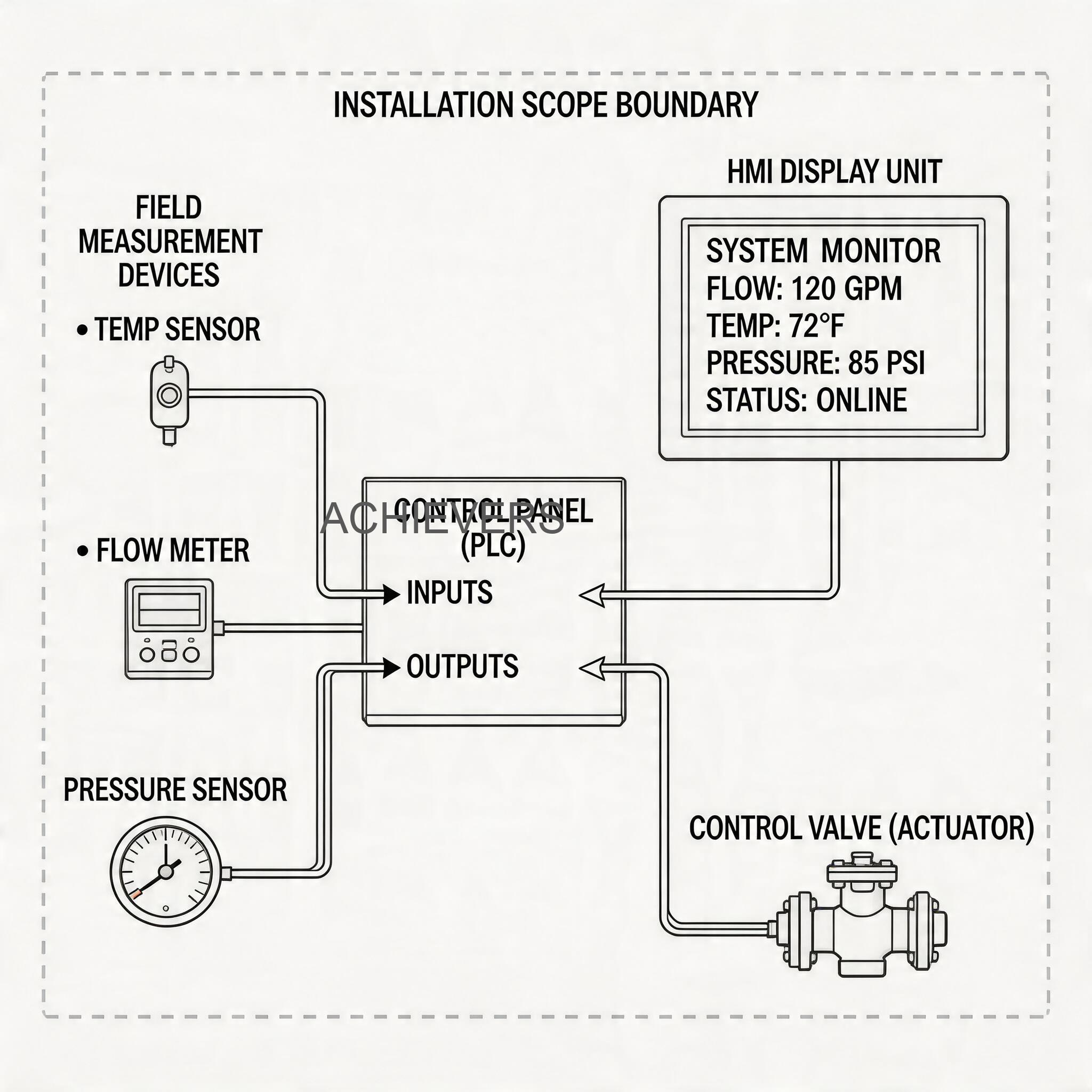
A: Mechanical displays are virtually indestructible, require no power, and are ideal for remote, harsh environments or hazardous zones. Digital displays offer easier readability, batch control options, and the ability to send pulse signals to a centralized SCADA system or building automation software.
Q: Can we claim the GST paid on this meter?
A: Yes. If you are a registered Indian business purchasing the meter for industrial or commercial operational use, the 18% GST is generally eligible for Input Tax Credit (ITC), effectively lowering your final TCO. Consult your company's CA for specific confirmation.
Q: What happens if dirt or rust gets into the meter?
A: The elliptical gears are precision-machined. Solid debris will jam the gears and halt flow, or score the measuring chamber, ruining accuracy. It is absolutely mandatory to install an appropriate Y-strainer immediately upstream of the meter inlet.
Q: How often does the meter require calibration?
A: For internal accounting, a well-maintained meter holds its calibration for years. However, if you are operating under strict ISO standards or using the meter to dispute bulk deliveries from oil companies, an annual calibration by an accredited local laboratory is recommended.
Q: What is the maximum pressure the meter can handle?
A: The 1-inch model is rated for a maximum pressure of 3.4 MPA. The 1.5-inch and 2-inch models are rated for 1.8 MPA. These thresholds are more than sufficient for standard industrial fuel transfer and high-volume dispenser applications.
Ready to eliminate fuel shrinkage and bring pinpoint accuracy to your operations? Stop losing money to outdated measurement methods. Contact us today with your required pipe size, average daily flow rate, and application details, and our technical team will provide a precise, cost-effective metering solution tailored to your plant's specific needs.